


Listen to the article
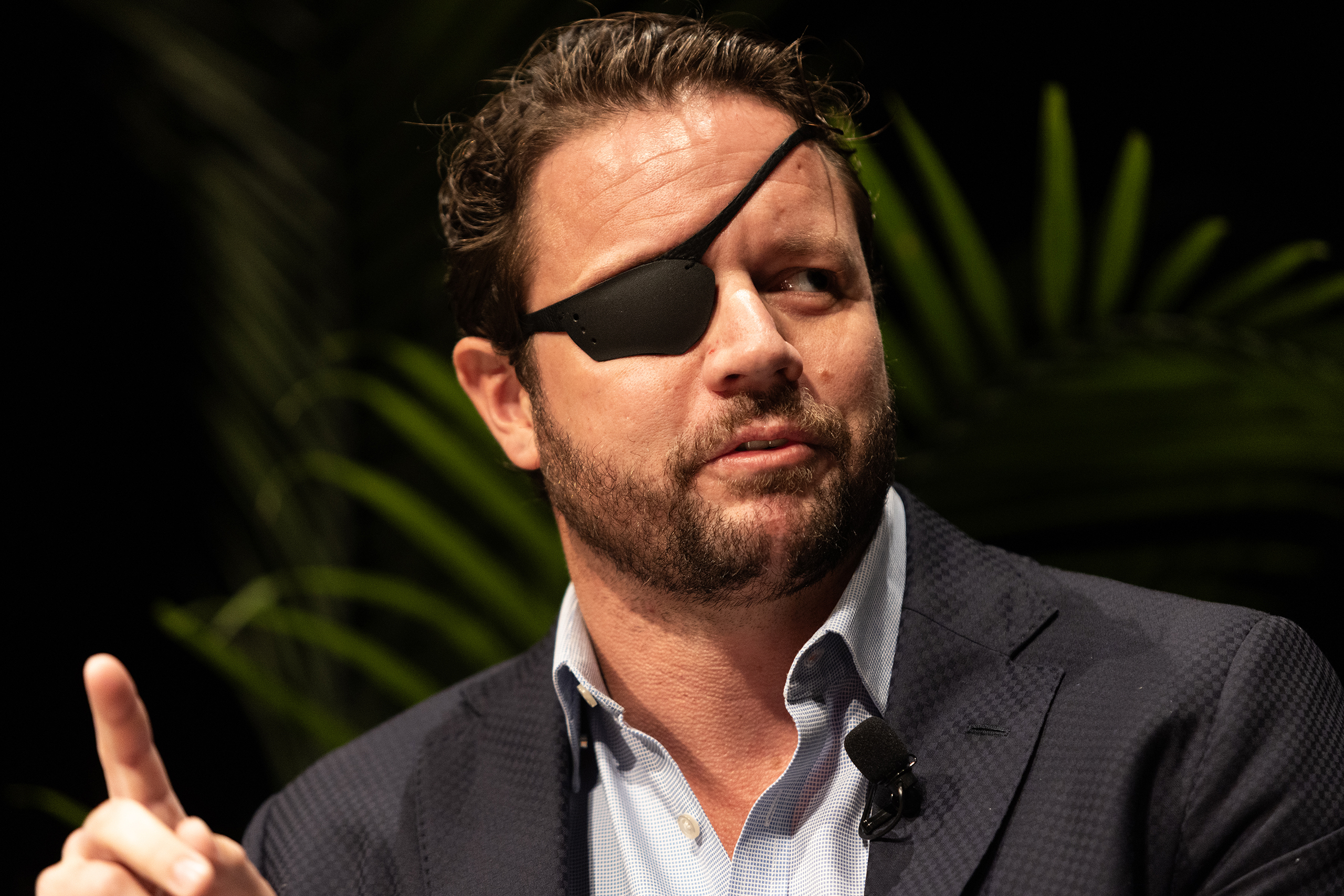
Following his surprising defeat in the Republican primary, Congressman Dan Crenshaw has attributed his loss to what he describes as unfounded attacks and rampant misinformation that overwhelmed his campaign.
Crenshaw, a four-term representative from Atascosita, lost by a substantial 15-point margin to state Rep. Steve Toth, one of the Texas Legislature’s most conservative members, according to unofficial election results.
The congressional district, which encompasses Kingwood, Lake Houston and The Woodlands, straddles Harris County and Montgomery County. The latter has emerged as a stronghold of conservative activism, where Attorney General Ken Paxton received twice as many votes as incumbent John Cornyn in the Senate Republican primary.
“A large part of this election was about the power of clickbait,” Crenshaw told The Texas Tribune in a post-election interview. “Memes became truth. Too many people are not discerning through the clickbait.”
As one of Congress’s more visible Republicans, Crenshaw has long attracted outsized attention and criticism, particularly from hardline conservatives and members of the House Freedom Caucus. His frequent media appearances and outspoken positions on national security have made him a lightning rod within his own party, especially after he referred to some fellow Republicans as “grifters.”
Recent opinion pieces in the Houston Chronicle and Wall Street Journal lamented Crenshaw’s defeat, suggesting his real transgression was his willingness to tell uncomfortable truths to Republican voters—including acknowledging that Donald Trump lost the 2020 election and condemning the January 6, 2021, Capitol attack.
Crenshaw pointed to specific allegations that he believes cost him the election, particularly claims about insider trading and his stance on red flag laws. He noted that, contrary to accusations, he has made less than $50,000 from stock trades during his entire congressional career and hasn’t made any trades since March 2023.
Regarding red flag laws, Crenshaw explained that a 2019 comment suggesting state legislators should discuss such measures was twisted by opponents, despite his subsequent introduction of legislation prohibiting federal funding for these laws in every congressional term.
Toth repeatedly labeled his opponent “Red Flag Law Crenshaw” and shared edited clips of Crenshaw’s 2019 comments throughout the campaign. Conservative media personality Tucker Carlson also joined the attacks, criticizing Crenshaw over alleged stock market profits.
“People voting—one after the other—literally thought I was making millions in the stock market doing inside trading,” Crenshaw said. “The truth didn’t matter to people.”
The congressman also highlighted the role of billionaire GOP donor Robert Marling from The Woodlands, who contributed $675,000 to a pro-Toth super PAC. Marling has previously donated substantial sums to Senator Ted Cruz, who endorsed Toth during early voting. CNN has reported that Cruz and Crenshaw have a longstanding feud.
Freedom Caucus Fund’s executive director Allison Weisenberger celebrated Crenshaw’s defeat, saying he “found out the final consequence for being a RINO” — Republican in Name Only — and criticizing members of the hard-right caucus.
Crenshaw suggested his high profile made him an attractive target for political influencers seeking clicks and engagement, unlike other controversial representatives facing what he described as “real scandals.”
The growing influence of political podcasters and online commentators marks a troubling trend in elections, according to Crenshaw, particularly in the Houston area where conservative hosts publish full endorsement slates that many voters follow without question.
“It’s troubling for the future,” Crenshaw concluded. “Only voters can stop it.”
The primary result highlights the escalating tensions within the Republican Party between traditional conservatives and the increasingly powerful MAGA wing, suggesting potential challenges for moderate Republicans in future primaries as the influence of social media and political influencers continues to grow.
Fact Checker
Verify the accuracy of this article using The Disinformation Commission analysis and real-time sources.

18 Comments
It’s concerning to see how misleading information can sway election outcomes. Transparent and objective reporting is crucial for a healthy democracy.
I hope this serves as a wake-up call for voters to be more vigilant in scrutinizing the information they encounter online and in the media.
Interesting to see how misinformation and partisan rhetoric can impact election outcomes. It’s crucial for voters to seek out reliable, fact-based information rather than relying on sensational social media posts.
Agreed. Candidates should focus on substantive policy discussions rather than engaging in personal attacks and unsubstantiated claims.
This highlights the challenges of navigating the modern media landscape. Voters need to be discerning consumers of information and fact-check claims before forming their views.
Absolutely. Relying too heavily on social media ‘memes’ can lead to the spread of misinformation and skewed perspectives on important issues.
This is a cautionary tale about the dangers of the echo chamber effect on social media. Voters need to actively seek out diverse perspectives and fact-check claims.
Agreed. Crenshaw’s defeat highlights the need for elected officials to maintain strong connections with their constituents and address their concerns directly.
The rise of ‘clickbait’ politics is worrying. Voters should prioritize nuanced policy discussions over sensationalized narratives when making their choices.
Absolutely. This underscores the importance of media literacy and critical thinking skills in the digital age.
This is a complex issue with no easy solutions. Improving civic education and promoting digital literacy could help voters navigate the information landscape more effectively.
Agreed. Fostering a more informed and engaged electorate is crucial for the health of our democratic institutions.
This is a concerning trend that deserves further scrutiny. Voters should be wary of echo chambers and seek out diverse, fact-based sources of information.
Agreed. Restoring trust in democratic institutions will require a concerted effort to combat the spread of misinformation and promote civic engagement.
Crenshaw’s experience underscores the need for greater media literacy and critical thinking skills among voters. Fact-checking and nuanced policy discussions should take priority over sensational narratives.
Absolutely. This serves as a wake-up call for voters to be more discerning consumers of information and to hold elected officials accountable for their actions and claims.
Crenshaw’s comments highlight the challenges of running for office in an era of heightened polarization and misinformation. Voters should strive to look beyond partisan rhetoric.
Absolutely. This serves as a reminder that elected officials must work to build trust and maintain open lines of communication with their constituents.