


Listen to the article
Innovative Solutions to Combat Misinformation Unveiled at Tokyo Event
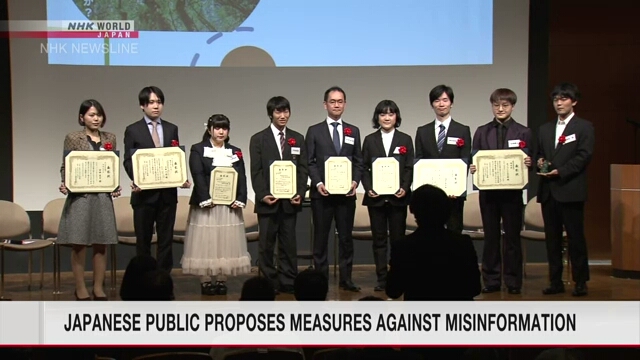
Amid growing concerns about information overload in society, citizens and organizations presented practical strategies to combat misinformation and disinformation at a recent gathering in Tokyo. The event, organized by the NHK Foundation, showcased winning proposals from an open call that attracted 246 submissions from across Japan.
Saturday’s award ceremony highlighted innovative approaches to maintaining balanced information consumption in an era when misleading content can spread rapidly through social media and other channels.
Company employee Furui Natsuki claimed the top prize in the ideas category with her thoughtful approach titled “Checking news’ answers 365.” Her method encourages individuals to save news articles and social media posts that make strong impressions, along with notes about their initial reactions to the content.
“The key is to revisit these saved items a year later and compare your initial impressions with what eventually proved to be true,” Furui explained during her presentation. This retrospective analysis helps people recognize how initial judgments can sometimes be misleading.
Furui shared a personal experience that inspired her approach. “Years ago, I formed a strong opinion based on a news report. Later, when I encountered updated information on the same topic, I realized my initial reaction had been incomplete,” she said. “This taught me the importance of taking a long-term view when consuming information.”
Her recommendation emphasizes cultivating a habit of calm, measured news consumption rather than making snap judgments based solely on first impressions. In today’s fast-paced media environment, this deliberative approach stands in contrast to the instant reactions often encouraged by social media platforms.
The event also recognized technical solutions to the misinformation problem. TDAI Lab, a technology company, won in the social implementation category for developing a tool that identifies logical fallacies in emotional social media posts. Such posts are particularly problematic because their emotional appeal can lead to rapid sharing despite containing inaccurate information.
The TDAI Lab tool represents an emerging trend in technological countermeasures against misinformation. As social media platforms struggle with content moderation at scale, third-party tools are increasingly filling gaps in the verification ecosystem.
Japan, like many developed nations, has seen rising concern about the societal impact of misinformation. The NHK Foundation’s initiative reflects broader efforts by media organizations, educational institutions, and civic groups to promote media literacy and critical thinking skills among the general public.
Media experts note that combating misinformation requires both individual responsibility and systemic approaches. While technical tools can help identify problematic content, personal habits like those suggested by Furui play an equally important role in fostering information resilience.
The diversity of proposals submitted to the NHK Foundation—ranging from technological solutions to behavioral approaches—underscores the multifaceted nature of the misinformation challenge. No single strategy appears sufficient to address the problem comprehensively.
As societies worldwide grapple with polarization fueled partly by information bubbles, initiatives like this Tokyo event provide valuable platforms for sharing practical countermeasures. The winning proposals offer accessible methods that individuals can incorporate into their daily media consumption routines.
The event comes at a time when Japan and other countries are considering regulatory frameworks to address misinformation while balancing free speech concerns. Grassroots approaches like those showcased at the Tokyo event complement legislative efforts by emphasizing individual agency and critical thinking.
Fact Checker
Verify the accuracy of this article using The Disinformation Commission analysis and real-time sources.

9 Comments
Interesting to see these public-proposed strategies for combating misinformation. The ‘Checking news’ answers 365′ concept in particular resonates – developing the habit of revisiting past coverage and our own reactions is a valuable way to cultivate more critical thinking about news consumption.
Maintaining balanced information consumption is critical, especially as misinformation can spread rapidly online. I like the simplicity and practicality of the ‘Checking news’ answers 365′ method – it’s a tangible way for individuals to develop more discerning news consumption habits. Curious to see if other communities adopt similar approaches.
Agreed, this community-driven approach seems like a smart way to build media literacy at the grassroots level. Reviewing past impressions is a humbling but important exercise to avoid falling for misleading narratives.
Maintaining balanced information consumption is crucial in today’s media landscape. I like the concept of saving articles and notes to review later – it can reveal how our initial perceptions don’t always align with reality. Proactive steps like this are needed to combat the spread of misinformation.
Agreed, this ‘Checking news’ answers 365′ method seems like a smart way to build media literacy. Reflecting on our past judgments is humbling but important to avoid falling for misleading narratives.
It’s great to see the public proposing practical solutions to address misinformation. Fostering critical thinking skills and encouraging people to fact-check their own assumptions over time is a valuable approach. Curious to learn more about the other innovative ideas showcased at this event.
This ‘retrospective analysis’ concept is an intriguing way to build awareness around confirmation bias and the malleability of our initial impressions. Revisiting past news coverage a year later to see what was true versus false could be a powerful exercise. Kudos to the organizers for soliciting these community-driven solutions.
Kudos to the NHK Foundation for soliciting these innovative community solutions to misinformation challenges. The ‘Checking news’ answers 365′ approach seems like a practical way for individuals to build more discerning news consumption habits. Reflecting on past impressions is a humbling but important step to avoid knee-jerk reactions to misleading narratives.
Fascinating ideas to combat misinformation. Fact-checking and revisiting past impressions are great strategies to stay informed and avoid knee-jerk reactions. Curious to see how these community-driven approaches could be scaled up and adopted more widely.