


Listen to the article
Navajo Nation Leader Warns About AI-Generated Misinformation Targeting Tribal Communities
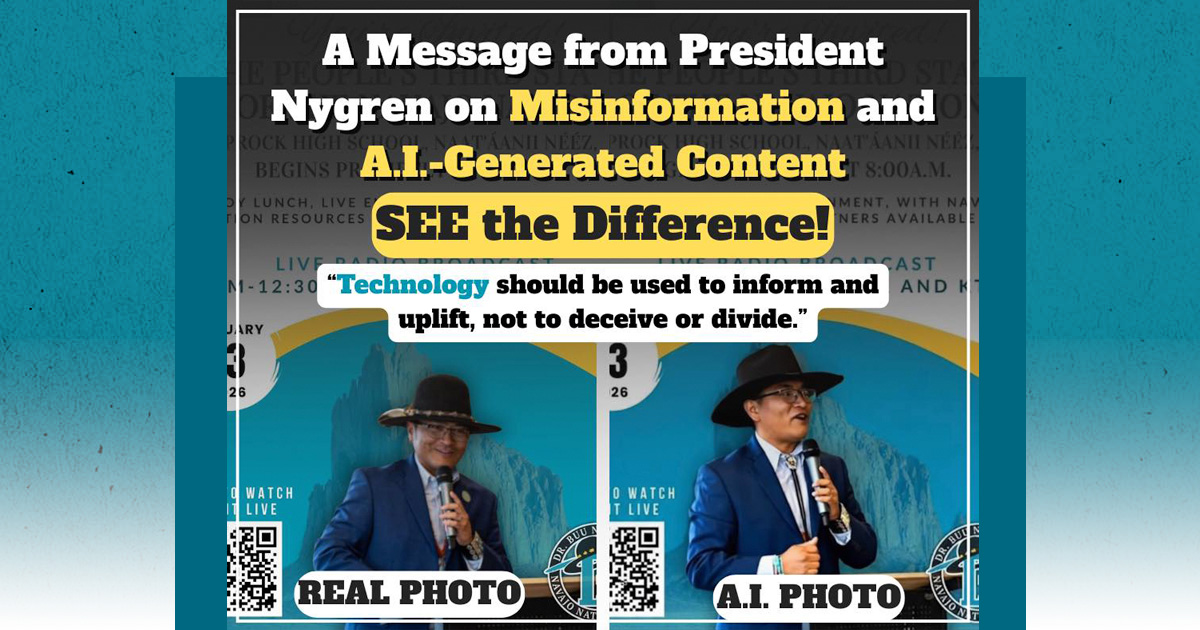
Navajo Nation President Buu Nygren issued a stark warning this week about the proliferation of artificial intelligence-generated content that falsely depicts him and potentially misleads tribal citizens. The statement comes amid growing concerns about digital misinformation specifically targeting Indigenous communities.
“Recently, fabricated videos and images have circulated that claim to show me saying or doing things that never occurred,” President Nygren stated in an official release. “These are not real. They are artificially created to mislead and cause confusion.”
The Navajo Nation, with over 400,000 enrolled members and a reservation spanning 27,000 square miles across Arizona, New Mexico, and Utah, has been increasingly targeted by sophisticated digital misinformation campaigns. Tribal leaders report that false content appearing to show official statements has circulated widely on social media platforms, particularly among older tribal members who may be less familiar with detecting AI manipulations.
The phenomenon mirrors a broader national trend. According to a recent report from the National Association of Tribal Information Officers, AI-generated disinformation targeting Indigenous communities increased by 47% in the past six months, with content often crafted to exploit existing social divisions or undermine tribal governance.
“Misinformation is very dangerous,” Nygren emphasized. “False content can be used to incite anger, hatred, or even violence within our communities. It can divide families, damage reputations, and erode trust.”
The tribal president’s warning highlights a concerning vulnerability in Native communities, where traditional values of trust and oral communication can sometimes make verification processes less rigorous. Cultural experts note that in many tribal settings, information from apparent authority figures is often given significant weight, making AI-generated content particularly problematic.
Dr. Melanie Begay, a digital media specialist at Northern Arizona University who studies misinformation in Indigenous communities, explained the unique challenges faced by tribal nations. “The intergenerational divide in digital literacy creates particular vulnerabilities. When younger tribal members share content with elders without context or verification, it can lead to significant community confusion.”
President Nygren specifically addressed this concern, urging families to exercise extra caution when sharing digital content with elderly relatives. “Many of our elderly relatives did not grow up with this technology and may not be able to easily tell the difference between AI-generated content and real events.”
The Navajo Nation government has begun implementing digital literacy programs in community centers and senior facilities across the reservation. These initiatives aim to equip citizens with basic tools to identify potentially fraudulent content, including looking for visual inconsistencies, verifying information through official tribal channels, and questioning content that provokes strong emotional reactions.
Tribal officials also noted that misinformation campaigns often intensify around critical tribal decisions regarding land use, resource management, and elections. With upcoming Navajo Nation Council deliberations on significant water rights agreements scheduled for next month, the timing of President Nygren’s warning appears strategic.
“My administration is committed to raising awareness about this growing concern, but addressing it requires all of us,” Nygren stated. “Use discretion. Ask questions. Verify before sharing.”
The Navajo Nation’s Digital Communications Office has established a verification hotline where tribal members can submit questionable content for authentication. The office reports receiving over 200 submissions in the past month alone, with approximately 65% identified as containing manipulated or entirely fabricated elements.
As artificial intelligence technologies become more sophisticated and accessible, experts predict that tribal communities across North America will face similar challenges. The Navajo Nation’s proactive approach may serve as a model for other Indigenous governments grappling with this emerging threat to information integrity and community cohesion.
Fact Checker
Verify the accuracy of this article using The Disinformation Commission analysis and real-time sources.

11 Comments
This is a concerning issue. AI-generated misinformation can be very damaging, especially when it targets vulnerable communities like the Navajo Nation. It’s crucial that tribal leaders and citizens remain vigilant and learn to spot these manipulated videos and images.
I agree. Spreading false information can have serious consequences, so it’s good to see President Nygren addressing this proactively. Educating people on how to identify AI-generated content is an important step.
It’s troubling to hear about the Navajo Nation being targeted by these sophisticated misinformation campaigns. Tribal communities should be able to rely on accurate information from their leaders, not have to worry about deceptive AI-created content.
Absolutely. Maintaining trust and transparency is crucial, especially for marginalized groups. I hope the Navajo Nation is able to effectively counter these campaigns and protect their citizens.
This is a serious issue that deserves attention. AI-generated misinformation can have profound consequences, especially for marginalized communities. I commend President Nygren for taking a strong stance and raising awareness about this threat.
The proliferation of AI-generated content is a growing concern, and it’s particularly troubling to see it used to target Indigenous communities. President Nygren’s warning is a stark reminder of the need for vigilance and critical thinking when it comes to online information.
Absolutely. Educating people on how to spot AI manipulations is crucial. Tribal leaders like President Nygren have an important responsibility to protect their communities from these deceptive tactics.
This is an alarming development. AI-generated misinformation is a growing concern, and it’s especially worrying when it’s used to mislead vulnerable populations. I commend President Nygren for speaking out and raising awareness about this issue.
As technology advances, the potential for misinformation and manipulation only increases. It’s critical that tribal leaders like President Nygren remain vigilant and educate their communities on how to spot AI-generated content. Transparency and truth are essential.
Agreed. Maintaining open communication and empowering people to discern fact from fiction is key to combating this problem. I hope the Navajo Nation is successful in their efforts to protect their citizens.
This is a concerning development that highlights the dark side of technological advancement. AI-generated misinformation can be incredibly damaging, especially when it’s used to mislead vulnerable populations. I applaud President Nygren for taking a stand and raising awareness.