


Listen to the article
Malawi Launches Massive Polio Vaccination Campaign After New Outbreak
As a seven-year-old boy receives treatment for polio in a Malawian hospital, the country has mobilized an extraordinary vaccination effort to contain a concerning new outbreak of the disease.
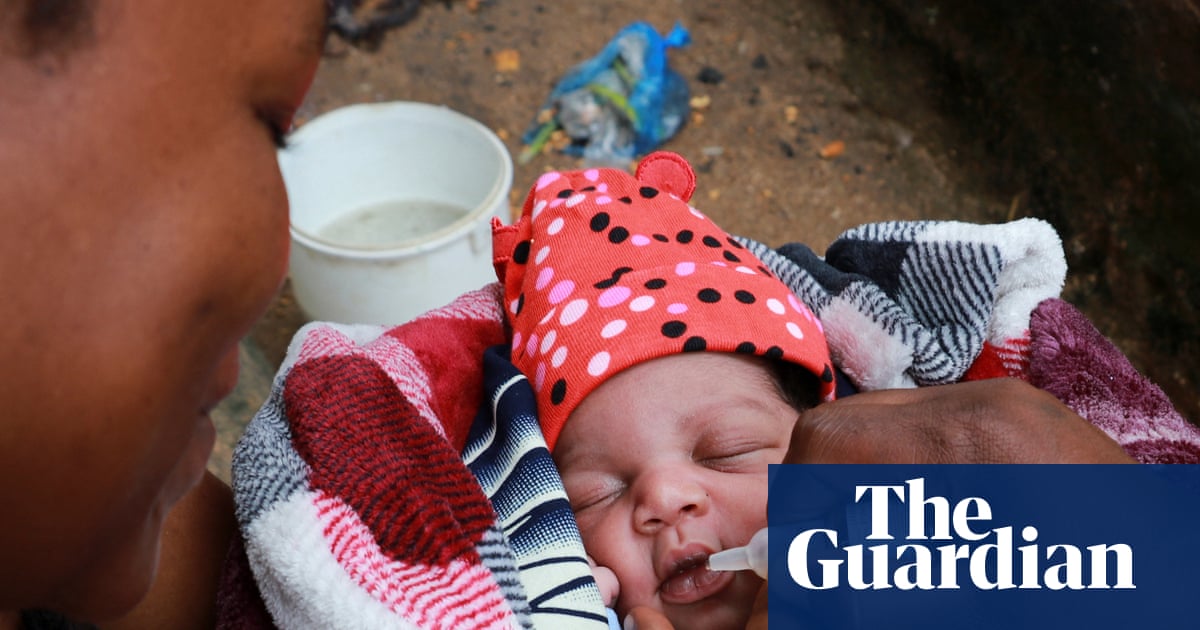
In just four days, health authorities have vaccinated 1.3 million children across Malawi following emergency supplies airlifted by the World Health Organization (WHO) last week. The campaign represents a rapid response in one of the world’s poorest countries, which has been severely impacted by international aid reductions.
Malawi declared the outbreak after detecting the virus in sewage samples from two plants in Blantyre, the country’s second-largest city and home to the only known case. Health officials emphasize that even a single polio case presents significant danger, particularly in areas with low vaccination coverage, due to the virus’s highly infectious nature and often silent spread.
“Remember that eradication is all or nothing. You’re either done with it, or it comes back in full force,” warned Dr. Jamal Ahmed, the WHO’s polio chief, earlier this year.
The disease, which can cause permanent paralysis or death, particularly in children, has not been detected in Malawi since 2022. This latest outbreak represents a setback to global eradication efforts that once seemed within reach 28 years ago, when cases had dropped to just 2,880 across 20 countries.
The campaign in Malawi has faced challenges with vaccine hesitancy. In Ndirande township near Blantyre, some parents expressed reluctance or complete disinterest in the vaccination program.
“My child is four years old but I don’t know much about the vaccine. I am also not interested in getting the child vaccinated. I feel my child has had enough vaccines in her life,” said 21-year-old Frida Seva.
At Chisime primary school, approximately 10% of children remained unvaccinated because their parents had withheld consent. “There are some reasons including religion but to some parents it is just a choice,” explained teacher Georgina Donasi.
To combat hesitancy, Malawian health authorities have mobilized community leaders, religious figures, and local influencers to correct misinformation and reassure families. Their efforts have proven effective – in Ndirande alone, 45 of 84 initially hesitant households were eventually persuaded to accept vaccination.
The importance of community engagement echoes experiences in polio’s remaining strongholds in Afghanistan and Pakistan. Sheeba Afghani, a senior manager with UNICEF’s polio eradication program, has witnessed the power of local influencers firsthand.
“You can give a mother any argument,” Afghani explains. “It doesn’t matter. And then you have a local influencer walk in, and he says ‘vaccinate’, and she just hands you the child.”
Social media has complicated these efforts by accelerating the spread of misinformation. “Now, even before we’ve had the opportunity to arrive in the community, it’ll be on social media,” Afghani notes.
The outbreak in Malawi involves variant poliovirus, also known as circulating vaccine-derived poliovirus, which occurs when the weakened virus in the oral vaccine mutates after being excreted in areas with poor sanitation and low vaccination rates. There were 225 such cases reported globally last year.
Professor Heidi Larson, director of the Vaccine Confidence Project at the London School of Hygiene & Tropical Medicine, points out that the term “vaccine-derived” itself creates confusion. “It makes it sound like you get the vaccine and you can get polio, which is not the case.”
Larson also expressed concern about the impact of vaccine skepticism from influential American figures. “A lot of the misguided things coming out of the US now are really causing confusion. And when there’s uncertainty, it’s fertile ground for rumors.”
Funding constraints pose another significant challenge. The Global Polio Eradication Initiative faces a $1.7 billion shortfall in its 2022-29 strategy, following cuts in aid spending from major donors including the United States and Britain. This financial gap means the initiative can no longer respond “at scale” to all outbreaks.
Dr. Mike Chisema, Malawi’s immunization program manager, acknowledged these constraints while emphasizing the importance of continued vigilance. “Every time we have a case, we tend to mount a huge response because we don’t want to see it any more. So we want to control it from the source.”
The polio outbreak comes at a particularly difficult time for Malawi, which depends on external donors for 55% of its total health expenditure. Despite these challenges, many parents remain supportive of vaccination efforts.
At Malabada health center in Ndirande, Ruth Kutaombe brought her eight-month-old boy for vaccination. “It will protect him from contracting the disease,” she said. “I visited the hospital for the routine under-five clinic but after hearing they are giving the vaccine, I made a choice to have him vaccinated.”
As Malawi continues its vaccination campaign, health officials remain hopeful about protecting the country’s children from a disease that once devastated communities worldwide. “It’s very important that we work very well with our stakeholders, the communities who are the beneficiaries of this important response,” says Chisema. “[Otherwise] people will die, because polio can get hold of the respiratory muscles. We have a huge history of polio in Malawi.”
Fact Checker
Verify the accuracy of this article using The Disinformation Commission analysis and real-time sources.

11 Comments
The news about Malawi’s polio outbreak and the difficulties they’re facing is really disheartening. Polio eradication has been such an important global health priority, and to see it threatened by factors like misinformation and funding shortages is frustrating. I sincerely hope they are able to contain this outbreak and get their vaccination efforts back on track.
The impact of misinformation and aid cuts on polio eradication efforts is deeply concerning. It’s a stark reminder that public health challenges don’t exist in a vacuum – social, political and economic factors can significantly undermine progress.
Absolutely, this situation in Malawi illustrates how interconnected these issues are. Tackling misinformation and securing sustainable funding are just as crucial as the medical response itself. A holistic approach is needed to truly eradicate polio.
The rapid vaccination campaign in Malawi is an impressive feat, but the broader context is quite worrying. Misinformation, aid cuts, and resource constraints are major obstacles to their polio eradication efforts. This is a stark reminder that public health doesn’t exist in a vacuum – social, political, and economic factors can significantly undermine progress.
This is a concerning situation in Malawi. Containing polio outbreaks is critical, but the challenges from misinformation and aid cuts make it an uphill battle. Glad to see the rapid vaccination response, but ongoing vigilance will be key to eradication efforts.
Absolutely, even a single case can be devastating if left unchecked. The WHO’s warning underscores how precarious the situation is – all or nothing when it comes to eradicating polio.
It’s crucial that the world doesn’t lose sight of the fight against polio, even as other health crises emerge. Malawi’s situation underscores how fragile the progress can be, and how vigilance is required to maintain hard-won gains. I hope this serves as a wake-up call for the global community to recommit to polio eradication.
As a global community, we can’t afford to let polio make a comeback. The WHO’s warning is a sobering wake-up call. Malawi’s efforts show what’s possible with determination, but long-term success requires overcoming complex socioeconomic hurdles.
Malawi’s rapid vaccination campaign is impressive, but the broader context of the challenges they face is quite troubling. Misinformation, aid cuts, and resource constraints are formidable obstacles to polio eradication. I hope the international community steps up to support their efforts.
It’s admirable that Malawi has managed to vaccinate over 1.3 million children in just 4 days despite the resource constraints. Containing a polio outbreak requires a massive coordinated effort, so their rapid response is impressive.
You’re right, that scale of vaccination in such a short timeframe is really remarkable, especially for a country facing significant economic challenges. Kudos to the health authorities for their commitment to protecting children.