


Listen to the article
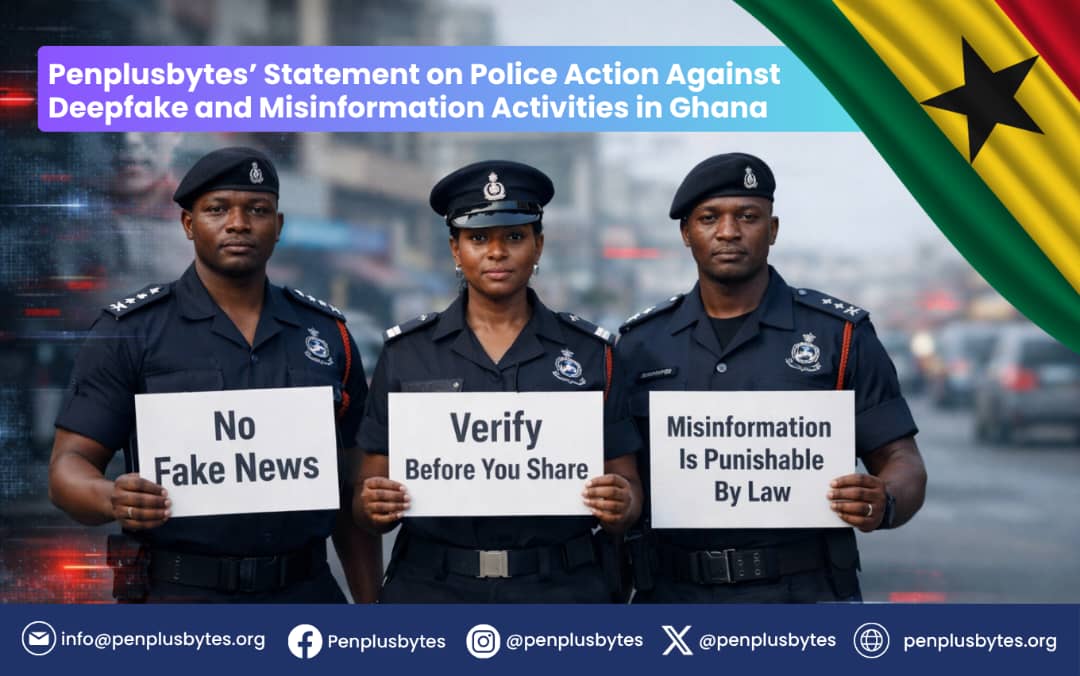
In a significant move against digital misinformation, the Ghana Police Service’s Cybercrime Unit has earned praise from Penplusbytes for its decisive action against creators and distributors of deepfake content targeting high-profile Ghanaian figures.
The police recently apprehended suspects involved in impersonating prominent personalities, including former President John Dramani Mahama, First Lady Lordina Mahama, and other public officials. These arrests come amid growing concern over the sophisticated use of artificial intelligence to create deceptive content that undermines public trust and exposes citizens to fraud and manipulation.
This development is particularly troubling within Ghana’s recent electoral context. The 2024 general elections witnessed a marked increase in manipulated and synthetic media, including deepfakes, strategically deployed to mislead voters, distort political narratives, and heighten tensions across the country.
Penplusbytes, a leading organization in promoting Media and Information Literacy (MIL) and countering misinformation in Ghana, has welcomed the enforcement action while calling for a comprehensive approach to address the evolving threat landscape.
“The proliferation of deepfakes during our recent elections demonstrated how easily manipulated content can influence public perception and decision-making,” said a representative from Penplusbytes. “We need sustained nationwide public education campaigns to help citizens identify and respond to AI-generated content responsibly.”
The organization has outlined several key recommendations for strengthening Ghana’s defense against digital misinformation. Primary among these is intensifying public education on deepfakes and digital manipulation techniques, equipping citizens with the knowledge to detect synthetic content.
Penplusbytes also advocates for scaling up Media and Information Literacy through strategic partnerships between government agencies, civil society organizations, development partners, and private sector actors. The organization has implemented various MIL initiatives over the years but notes that the scale and complexity of today’s information disorder require expanded investment and coordination.
In 2025, Penplusbytes conducted a comprehensive review of Ghana’s legal and policy frameworks related to misinformation. Their analysis revealed significant gaps in addressing emerging threats like AI-generated content, with existing laws suffering from vague definitions and potential for misapplication. The organization urges policymakers to develop a comprehensive, fit-for-purpose legal framework that reflects current technological realities while protecting fundamental freedoms.
Multi-stakeholder collaboration represents another critical recommendation. Effective responses to misinformation and deepfakes require coordinated action across sectors, including law enforcement, electoral bodies, technology platforms, media organizations, academia, and civil society.
Penplusbytes has also called for enhanced capacity and resources for the Cybercrime Unit of the Ghana Police Service. As digital threats evolve in sophistication, equipping law enforcement with advanced tools, training, and expertise will be essential for timely detection, investigation, and prosecution of offenders.
The organization has placed particular emphasis on holding technology platforms accountable for deepfake and harmful content. Social media and digital platforms serve as primary vectors for the amplification of synthetic disinformation, and Penplusbytes urges tech companies operating in Ghana and across West Africa to implement robust content moderation policies and cooperate with national authorities.
Ghana’s regulatory bodies, including the National Communications Authority and Cyber Security Authority, are encouraged to develop clear platform accountability frameworks and enforce compliance standards that reflect the seriousness of AI-enabled information manipulation.
Through initiatives such as the Fact-Checking Marketplace and various MIL interventions, Penplusbytes continues to provide Ghanaian citizens and institutions with practical tools to identify, verify, and counter disinformation. The organization remains committed to strengthening Ghana’s information ecosystem while promoting a digitally safe and informed society.
As Ghana navigates the complex terrain of digital misinformation, this collaborative approach between law enforcement, civil society, and regulatory bodies represents an essential step toward safeguarding the country’s information integrity in an increasingly complex digital landscape.
Fact Checker
Verify the accuracy of this article using The Disinformation Commission analysis and real-time sources.

19 Comments
The use of deepfakes to impersonate public figures is a concerning tactic that undermines trust and can have serious consequences. This enforcement action is a necessary response.
Absolutely. Addressing the threat of deepfakes and misinformation requires a comprehensive approach involving both legal action and public education.
The growing use of deepfakes to spread disinformation is deeply troubling. I’m glad to see the authorities in Ghana taking this issue seriously.
Agreed. Strengthening digital media literacy and fact-checking capabilities will be key to combating the spread of these manipulative technologies.
Tackling the problem of deepfakes and misinformation is essential for safeguarding the integrity of elections and public institutions. This is an encouraging development.
Agreed. Vigilance and a multi-stakeholder approach are needed to stay ahead of the evolving tactics used to spread disinformation.
The increasing prevalence of deepfakes is a worrying trend that can undermine democratic processes. This enforcement action is a step in the right direction.
Indeed. Strengthening digital media literacy and fact-checking efforts will be crucial to counter the spread of these manipulative technologies.
This is a positive step in addressing the growing threat of deepfakes and misinformation. Preserving public trust and electoral integrity is crucial for democracy.
Agreed. Proactive enforcement coupled with media literacy initiatives can help mitigate the risks posed by these sophisticated AI-driven deception tactics.
The use of deepfakes to impersonate public figures is a concerning tactic that undermines democratic processes. This enforcement action is a necessary response.
Combating deepfakes and misinformation is crucial for protecting the integrity of elections and public discourse. This enforcement action is a step in the right direction.
The use of deepfakes to impersonate public figures and spread disinformation is deeply concerning. I’m glad to see the authorities taking decisive action on this issue.
Absolutely. Combating misinformation and restoring public confidence should be a top priority, especially in the lead-up to critical elections.
This is a positive development in the fight against digital misinformation. Addressing the deepfake problem is essential for maintaining public trust.
Deepfakes pose a serious threat to public discourse and trust. I’m glad to see the authorities in Ghana taking proactive measures to address this issue.
Deepfakes and misinformation can have serious consequences for society. I commend the Ghana Police Service for taking decisive action to address this threat.
Absolutely. Proactive enforcement, coupled with public education, is crucial to build resilience against these manipulative techniques.
Kudos to the Ghana Police Service for cracking down on the creators and distributors of deepfake content. This sets an important precedent for addressing digital misinformation.