


Listen to the article
Prime Minister Kim Min-seok has launched a decisive campaign against the spread of fake news in South Korea, emphasizing that disinformation poses a serious threat to the country’s democratic processes, particularly as the June 3 local elections approach.
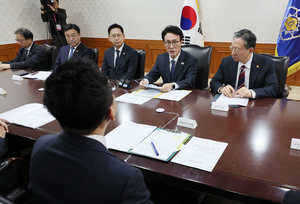
During a high-level government meeting in Seoul on Thursday, Kim addressed key ministers and agency heads, describing fake news as “a public enemy of democracy.” The Prime Minister expressed particular concern about misinformation targeting government policies, officials, and political candidates ahead of the upcoming elections, which are now less than four months away.
“While guaranteeing the freedom of expression as much as possible, acts of intentionally creating and distributing fake news in whatever form for whatever purpose and disrupting the political order or election order must be handled strictly in accordance with the law and principles,” Kim stated during the meeting.
The government’s initiative comes at a critical time in South Korea’s political calendar. The nationwide local elections scheduled for June 3 will determine key regional leadership positions across the country, making the integrity of information flow especially important during the campaign period.
Kim took a firm stance, warning that individuals involved in producing false information would face consequences regardless of their social status or position. He emphasized a zero-tolerance approach, describing it as essential for safeguarding democratic principles.
“The prosecution and the police must root out fake news through swift and thorough investigations,” the Prime Minister directed, highlighting how disinformation can significantly influence electoral outcomes.
South Korea’s battle against fake news reflects a growing global concern about the impact of misinformation on democratic processes. In recent years, countries worldwide have grappled with how to balance free speech protections with the need to combat deliberately false information, especially during election periods.
The South Korean government has previously implemented various measures to counter misinformation, including media literacy programs and fact-checking initiatives. However, this latest directive signals a more aggressive approach involving law enforcement agencies directly in the fight against fake news.
Media experts note that South Korea faces unique challenges in this area, with its high internet penetration rate and active social media landscape creating fertile ground for the rapid spread of misinformation. The country’s political polarization also contributes to the problem, with partisan content often blurring the line between opinion and factual reporting.
Critics of government anti-fake news initiatives have expressed concerns about potential overreach and the risk of suppressing legitimate political discourse. Free speech advocates warn that overly broad definitions of “fake news” could potentially be used to silence government critics or opposition voices.
However, supporters of the Prime Minister’s approach argue that deliberate disinformation campaigns undermine the democratic process by preventing voters from making informed choices based on accurate information.
As South Korea moves closer to its June elections, the effectiveness of this crackdown will likely be closely watched by both domestic stakeholders and international observers interested in how democracies worldwide are adapting to the challenges of the digital information age.
The Prime Minister’s directive represents one of the most direct government interventions against fake news in South Korea’s recent history, signaling that information integrity will be a top priority during the upcoming election cycle.
Fact Checker
Verify the accuracy of this article using The Disinformation Commission analysis and real-time sources.

7 Comments
It’s concerning to hear about the spread of fake news ahead of the upcoming local elections in South Korea. Ensuring the integrity of information and the democratic process is crucial. I hope the government’s initiative can address this issue effectively.
Yes, the government’s stance on tackling misinformation is understandable given the importance of the upcoming elections. It will be interesting to see how they balance free speech with the need to maintain electoral integrity.
Misinformation can undermine the integrity of elections. While freedom of expression is important, strict enforcement against deliberate fake news disrupting the electoral process seems prudent. Curious to see how this crackdown will be implemented in practice.
Fake news poses a serious threat to democratic processes. I appreciate the Prime Minister’s acknowledgment of this issue and the need for strict enforcement, while also preserving freedom of expression as much as possible.
Agreed. Finding the right balance between protecting free speech and safeguarding the electoral process is a delicate challenge. I hope the government’s approach can address misinformation effectively without unduly infringing on legitimate discourse.
Combating the spread of misinformation ahead of elections is a complex and important issue. I’m curious to see the specific measures the government plans to implement and how they will be enforced in a way that respects democratic principles.
The Prime Minister’s call for a crackdown on fake news is understandable given the potential impact on the upcoming local elections. However, the implementation will be critical to ensure that legitimate political discourse is not unfairly suppressed.