


Listen to the article
Planned Parenthood’s Claims About Defunding Impact Face Scrutiny
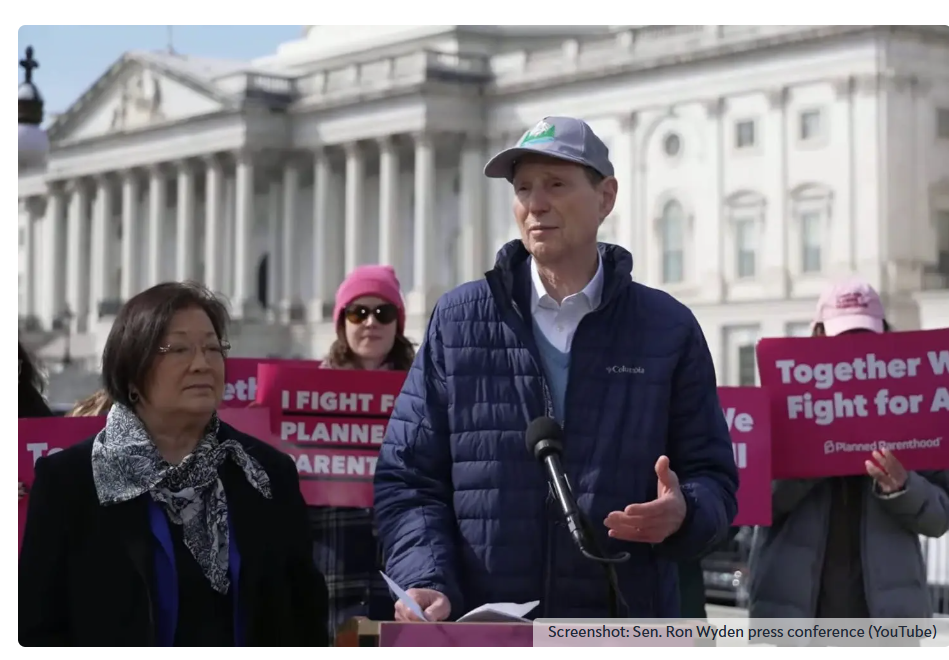
A recent report by several Democratic senators, including Elizabeth Warren and Ron Wyden, has characterized the one-year defunding of certain abortion providers in former President Trump’s “Big Beautiful Bill” as a “disaster” for healthcare access. However, an analysis of Planned Parenthood’s operational history suggests a more complex reality behind the organization’s recent facility closures.
The senators’ report, which cites Planned Parenthood Federation of America and Planned Parenthood Action Fund data, claims that 23 Planned Parenthood health centers have been forced to close since the implementation of the defunding provision that temporarily cut off Medicaid reimbursements to abortion providers.
However, the underlying context reveals that Planned Parenthood had already been experiencing significant changes to its operational model well before the defunding measure took effect. The organization had been transitioning toward telehealth services and experiencing declining non-abortion services for years, raising questions about whether the facility closures can be attributed primarily to the defunding.
“Blaming the one-year defunding for Planned Parenthood’s closures overlooks several important factors,” said Mark Wiltz, Director of Government Affairs at Live Action. “The facts are straightforward. When you stop funding abortion providers, those providers lose revenue and begin to shut down locations. That is already happening.”
Planned Parenthood’s own annual reports show a significant decline in many of its healthcare services over the past decade. Cancer screenings have decreased by more than 80% since 2004, while contraceptive services have fallen nearly 40% from 3.7 million in 2012-2013 to 2.2 million in 2022-2023. Meanwhile, abortion services reached record highs, with over 400,000 procedures reported in the organization’s latest annual report.
The senators’ report claims the defunding led to decreased healthcare services, citing specific declines: breast exams fell by 25%, STI testing declined 11%, and visits for IUDs and other long-acting contraceptives dropped by 36%. But these services had been declining for years before the defunding measure.
Notably, breast exam services offered by Planned Parenthood dropped over 10% from 2022-23 to 2023-24, and have plummeted by more than 82% since 2000. Clients served by the organization have decreased by nearly 33% since 2006, while prenatal care services have fallen 77% from their 2010 high.
In July 2025, President Trump signed the “One Big, Beautiful Bill,” which included a one-year provision to defund elective abortion providers of federal taxpayer dollars from Medicaid. At that time, Planned Parenthood claimed the measure could result in the closure of up to 200 facilities.
Healthcare experts point to Federally Qualified Health Centers (FQHCs) as alternatives that provide more comprehensive care without performing abortions. In 2024, these centers saw nearly 16 times more patients than Planned Parenthood and outnumbered Planned Parenthood facilities by a factor of 29 to 1. They provided 87 times more prenatal care services and performed nearly 13 times more Pap tests than Planned Parenthood.
Since the defunding measure took effect, 13 states have allocated approximately $300 million to help fill funding gaps for Planned Parenthood, according to the senators’ report. However, critics note that despite these state efforts, the organization “still faces a significant shortfall.”
Financial records show Planned Parenthood received nearly $800 million in taxpayer funding in its 2023-24 fiscal year while performing more than 402,000 abortions – both record numbers. Over the past 25 years, the organization has seen taxpayer funding increase by nearly 300%, collecting a total of $11.4 billion from taxpayers during that period.
As the debate continues, many observers note that Planned Parenthood’s current operational challenges reflect a combination of factors beyond just the one-year defunding measure, including its own strategic shift toward telehealth services and away from brick-and-mortar facilities – a transition that began years before the defunding provision was implemented.
Fact Checker
Verify the accuracy of this article using The Disinformation Commission analysis and real-time sources.

12 Comments
The allegations of a ‘misinformation campaign’ are concerning and warrant a closer look. Planned Parenthood’s operational changes do seem relevant, but the potential impact of defunding also needs to be carefully examined. A balanced, data-driven analysis from impartial experts would be valuable here.
Absolutely. Cutting through the political rhetoric and focusing on the underlying facts and trends will be crucial for understanding the true drivers behind the facility closures. An objective, comprehensive assessment is needed.
The senators’ report raises important questions about the impact of defunding, but Planned Parenthood’s own transitions to telehealth and declining non-abortion services also seem to be relevant factors. This is a complex issue that deserves a balanced, fact-based assessment.
Absolutely, there appear to be multiple forces at play here. Untangling the underlying dynamics will require a careful, impartial examination of the data and trends over time.
This is a highly contentious issue, and it’s understandable that both sides would want to frame the narrative in their favor. However, the public deserves an objective, fact-based assessment that considers the full context and historical trends. Maintaining impartiality and transparency will be key.
This is an interesting and complex issue. The defunding debate seems to have brought Planned Parenthood’s operational changes into sharper focus. It will be important to carefully examine the full context and data to understand the real drivers behind the facility closures.
Agreed, the details and historical trends around Planned Parenthood’s service model are crucial here. A nuanced, data-driven analysis is needed to separate political rhetoric from the on-the-ground realities.
It’s concerning to see allegations of a ‘misinformation campaign’ from Planned Parenthood. Transparency and objective analysis will be key to understanding the true drivers behind the facility closures. The public deserves a clear, fact-based picture of what’s really happening.
Well said. Maintaining an open and honest dialogue, grounded in reliable data, is essential for addressing this complex issue effectively and fairly.
This debate seems to highlight the need for a nuanced, data-driven approach when it comes to sensitive issues like healthcare access. Simplistic political narratives often overlook important underlying factors and trends. A more thorough, impartial analysis is warranted here.
The senators’ report raises valid concerns, but Planned Parenthood’s own operational changes also appear to be a significant factor. It will be important to examine the full picture, including historical trends, to understand the real drivers behind the facility closures.
Agreed. Separating political rhetoric from on-the-ground realities is crucial in a debate like this. A comprehensive, data-driven analysis is needed to shed light on the complex interplay of factors at play.