


Listen to the article
Canadian Opposition Leader Pierre Poilievre Makes Controversial Appearance on Joe Rogan’s Podcast
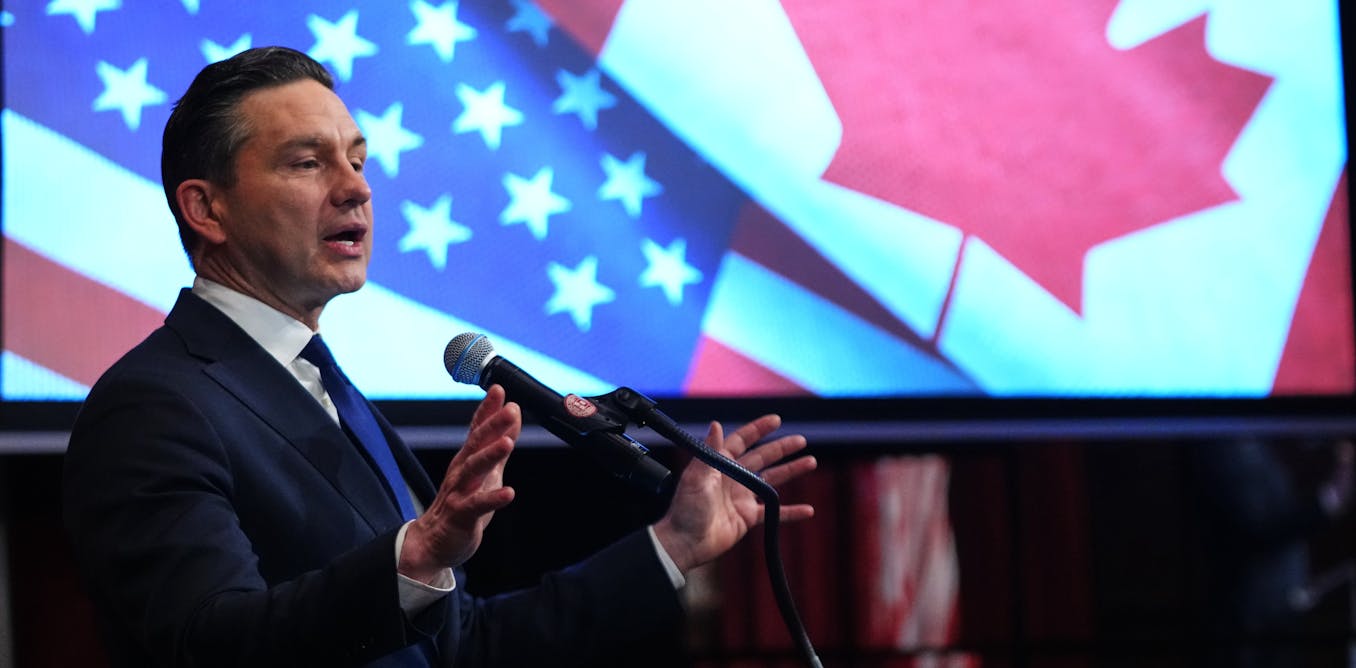
Conservative Leader Pierre Poilievre recently became the first Canadian political leader to appear on the Joe Rogan Experience podcast, a platform known for its massive global reach and controversial discussions. The appearance, which included Poilievre presenting Rogan with a maple leaf-inscribed kettlebell, has sparked debate about the potential consequences of the opposition leader’s statements to an audience of approximately 11 million listeners per episode.
Poilievre told media his primary motivation was appealing to the United States to lift tariffs on Canadian goods. However, analysis of the interview reveals several instances where Poilievre made questionable claims on issues ranging from immigration to public health.
During the three-hour conversation, Poilievre stated that Canada admits one million immigrants annually, a figure that significantly exceeds official government targets. According to Canada’s immigration department, the combined targets for 2026 include 385,000 temporary residents and 380,000 permanent residents—substantially lower than Poilievre’s claim. Experts note that inflating immigration numbers is a common tactic in far-right spaces that can fuel anxieties about demographic change.
When discussing Alberta’s oilsands, Poilievre claimed the industry has “no impact to groundwater… no impact to the environment” and that people living near operations are “very healthy.” These statements contradict scientific research, including a 2024 University of British Columbia report that documented significant environmental and health impacts from oilsands development.
The conversation also touched on dietary health, with both men criticizing seed oils in favor of animal fats like beef tallow and butter. Poilievre failed to challenge Rogan’s assertions despite these claims being repeatedly debunked by the Harvard School of Public Health. This is particularly notable as Canada is the world’s largest exporter of canola oil, making the conversation potentially damaging to a key Canadian export industry.
Poilievre also made controversial claims about Canada’s safer drug supply initiatives, suggesting that people in these programs sell medications to children—a narrative that has been fact-checked and found lacking credible evidence by Canadian media outlets including The Walrus. Public health experts argue this mischaracterization reinforces harmful stigmas and has been used to justify aggressive U.S. tariff threats against Canada.
On economic issues, Poilievre attributed post-pandemic inflation solely to the Liberal government’s monetary policies, stating “all that money filtered into the economy, bid up all the goods we buy, and everybody got smoked with higher prices.” Economic analysts have previously assessed this explanation as overly simplistic, failing to acknowledge the complex global factors behind recent inflation.
The appearance comes at a critical juncture for Canada-U.S. relations, with ongoing trade tensions between the countries. Critics suggest Poilievre’s statements on immigration and drug policy align with narratives that have been used to justify American tariffs against Canadian goods.
Poilievre has previously faced criticism for associations with far-right figures, and some observers view the Rogan appearance as an attempt to appeal to his political base rather than engage in nuanced policy discussions. Polling suggests most Canadian voters remain wary of political approaches that mirror the divisive tactics employed by the Trump administration.
Political analysts note that by promoting contested information on a platform with Rogan’s reach, Poilievre risks deepening political polarization and undermining constructive dialogue on complex issues facing Canadians—from public health and environmental challenges to social cohesion and economic stability.
As Canada navigates increasing challenges from misinformation in democratic discourse, the incident highlights questions about the responsibilities of political leaders when communicating to mass audiences, especially on platforms known for controversial content and limited fact-checking.
Fact Checker
Verify the accuracy of this article using The Disinformation Commission analysis and real-time sources.

6 Comments
While I understand the desire to appeal to a large US audience, it’s troubling to hear allegations of spreading misinformation. Responsible leaders should strive for transparency and accuracy, even in informal settings. I hope further analysis provides more clarity on the specific claims made.
Interesting to see a Canadian political leader appearing on such a high-profile podcast. I’m curious to learn more about the specific claims made and how they compare to the facts. It’s important for public figures to provide accurate information, especially on complex topics like immigration policy.
This is an interesting development in Canadian politics. I’m curious to hear more about the reaction and potential fallout from Poilievre’s appearance on the Rogan podcast. Maintaining public trust is crucial for any political leader, so handling this situation carefully will be important.
The immigration numbers cited by Poilievre do seem to be significantly higher than the official government targets. I wonder if there was any context or nuance missing that could explain the discrepancy, or if it was simply an inaccurate statement. Fact-checking is crucial in these situations.
Agreed, it’s important for politicians to be precise with their facts, especially on sensitive issues like immigration. Providing misleading information, even unintentionally, can have negative consequences.
As someone interested in mining and commodities, I’ll be curious to see if Poilievre discussed any related issues during the interview. Factual, nuanced discussions of topics like resource development and trade policies can be valuable. But misinformation should be avoided at all costs.