


Listen to the article
In the shadow of Mayon Volcano’s ongoing unrest, a different kind of hazard has emerged across the Philippines—a wave of misinformation that officials have dubbed “information ashfall.”
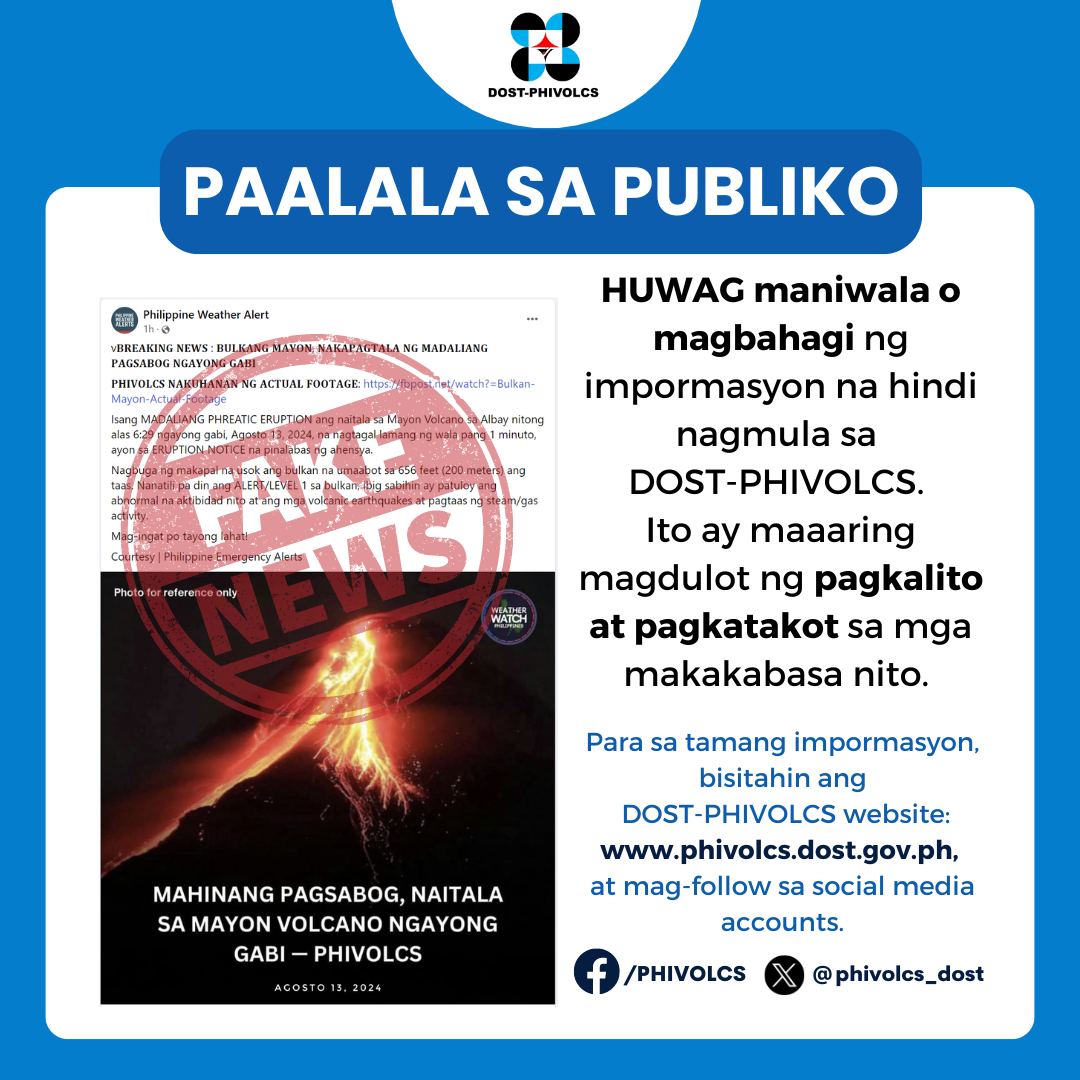
As the iconic volcano in Legazpi City continues to rumble and threaten nearby communities, artificial intelligence-generated videos and fabricated images depicting catastrophic eruptions have spread rapidly across social media platforms, reaching audiences far more effectively than official government updates.
Ramil Marianito, regional director of the Philippine Information Agency (PIA), warns that this digital phenomenon creates a dangerous dichotomy: unnecessary panic in some communities while fostering dangerous complacency in others.
“In a crisis, the right information is just as life-saving as an evacuation mask,” Marianito emphasized, highlighting the critical nature of accurate information during natural disasters.
The proliferation of misinformation has prompted government agencies to intensify their “#MagingMapanuri” (Be discerning) campaign, a joint effort by the Presidential Communications Office and the PIA to encourage critical media consumption. Officials stress that this discernment is particularly crucial when interpreting technical advisories from the Philippine Institute of Volcanology and Seismology (Phivolcs), the country’s primary authority on volcanic activity.
To combat the spread of false information, Marianito has outlined practical guidelines for the public. First, he urges citizens to verify information sources, ensuring updates come directly from official Phivolcs channels rather than anonymous forwards or unverified social media posts. Second, checking timestamps is essential, as footage from previous eruptions—particularly from 2018—often recirculates during periods of increased activity.
The PIA also cautions against clickbait and sensationalist headlines. Phrases like “Magugunaw ang mundo” (The world will end) or claims of “imminent huge explosions” should raise immediate red flags, especially when no Alert Level 5 has been officially declared by authorities.
Perhaps most important is what Marianito calls the “pause protocol”—encouraging the public to ask critical questions before sharing content: “Is this information helpful? Has it been verified? Will sharing this cause unnecessary panic?”
The fight against misinformation requires cooperation across multiple sectors. Media organizations, Marianito notes, serve as “information force multipliers” with a responsibility to avoid sensationalism that might heighten public anxiety. Instead, they should function as bridges between scientific authorities and local communities, translating complex volcanological data into accessible information.
Local government units also play a crucial role as trusted information sources in their jurisdictions. Marianito urges them to maintain consistent messaging aligned with Phivolcs bulletins, creating a unified voice that reduces confusion during crisis situations.
The digital age has transformed every internet user into a potential publisher, placing responsibility on individuals to evaluate content critically before sharing. “Your silence on a fake post is as powerful as sharing a real one,” Marianito observed, highlighting how inaction can contribute to misinformation’s spread.
As part of its preparedness strategy, the PIA has announced plans to activate a Joint Information Center should Mayon’s alert level rise to 4 or if an explosive eruption occurs. This center would coordinate communication efforts across agencies, ensuring consistent messaging during heightened volcanic activity.
The challenge of combating misinformation during natural disasters reflects a growing global concern about digital literacy in crisis situations. As technologies like AI make fake content increasingly sophisticated and difficult to distinguish from reality, the ability of citizens to critically evaluate information becomes not just a civic skill but a survival tool.
“Let us clear the air,” Marianito urged in his closing remarks. “Maging mapanuri!”—a call not just for clear skies above Mayon, but for clarity in the information landscape surrounding its activity.
Fact Checker
Verify the accuracy of this article using The Disinformation Commission analysis and real-time sources.

10 Comments
Spreading false information about a volcano eruption is reckless and can lead to unnecessary panic. I hope the authorities can effectively counter this ‘information ashfall’ and ensure the public receives accurate, timely updates.
Absolutely. Providing the right information is crucial during emergencies. Glad to see the government taking steps to combat misinformation and keep people safe.
Misinformation is a serious issue that can undermine disaster response efforts. Kudos to the PIA for recognizing this problem and launching a campaign to promote critical thinking and media literacy.
The spread of misinformation during natural disasters is a serious issue that can put lives at risk. I commend the Philippine authorities for taking it seriously and launching a campaign to promote critical media consumption.
Misinformation during natural disasters can be just as dangerous as the disaster itself. Kudos to the Philippine authorities for launching the ‘Be discerning’ campaign to promote critical media consumption.
Natural disasters are already stressful enough without the added burden of misinformation. The ‘Be discerning’ campaign is a good initiative to empower the public to consume media more critically during these events.
It’s concerning to see AI-generated videos and fabricated images spreading so rapidly about the Mayon Volcano situation. Vigilance and fact-checking are essential to prevent unnecessary panic and confusion.
The proliferation of misinformation during crises is a major challenge that can undermine emergency response efforts. I hope the Philippine authorities can effectively counter this ‘information ashfall’ and keep the public informed.
Kudos to the Philippine government for recognizing the threat of misinformation and taking proactive steps to combat it. Accurate, timely information is crucial during natural disasters like the Mayon Volcano unrest.
I agree. Providing the public with reliable, fact-based updates is essential for both safety and public trust. The ‘Be discerning’ campaign seems like a smart approach to empower citizens.