


Listen to the article
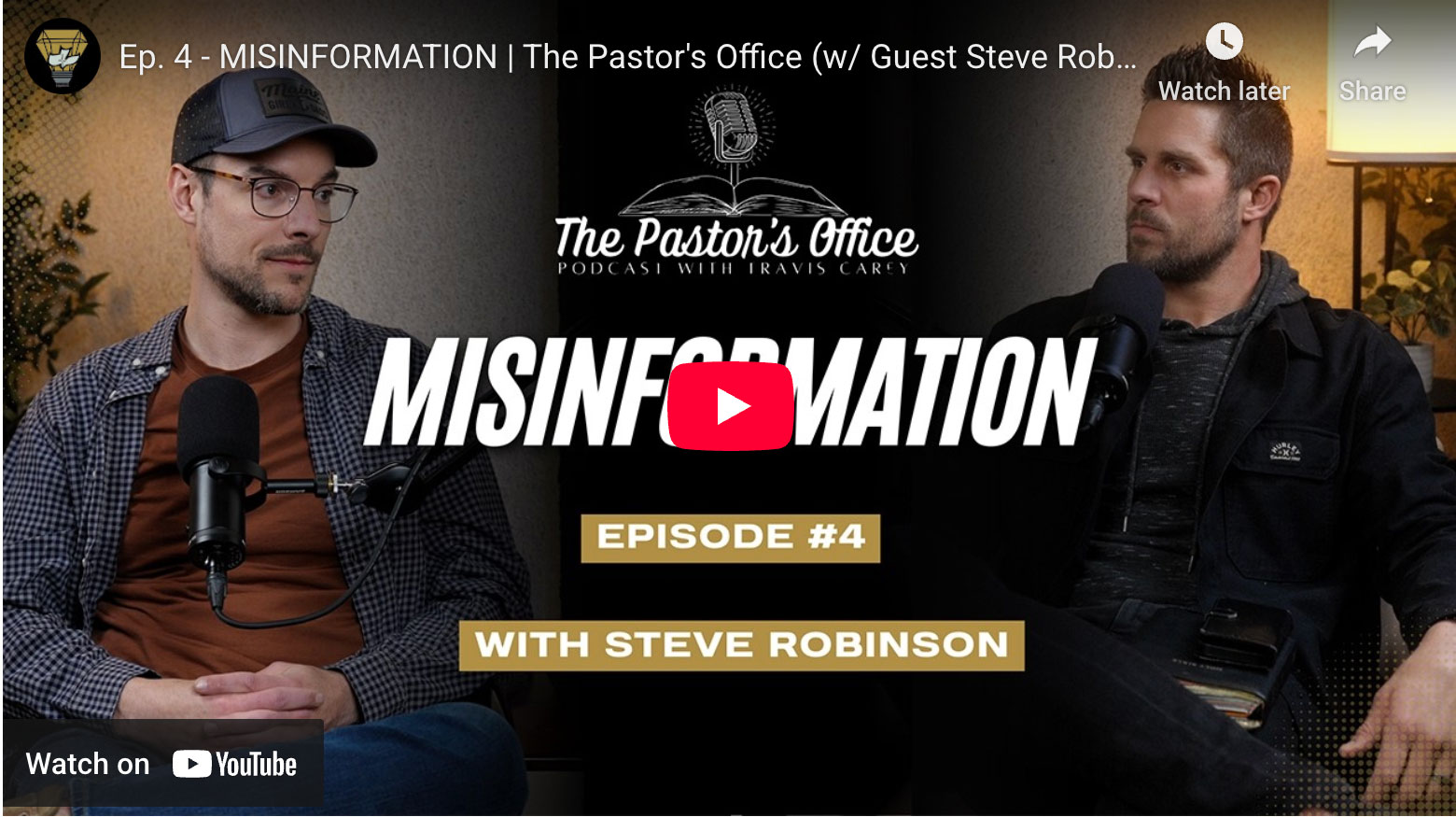
In a revealing exploration of truth in modern media, Pastor Travis Carey recently hosted Steve Robinson, editor-in-chief of The Maine Wire, on his podcast “The Pastor’s Office” to discuss the pervasive challenge of misinformation in today’s society.
The conversation, which tackled the intersection of journalism, faith, and public discourse, highlighted the parallel responsibilities that religious leaders and journalists share in their pursuit of truth—albeit in different spheres of influence.
“Both professions are fundamentally about truth-telling,” Robinson noted during the exchange. “Whether you’re interpreting scripture or investigating a news story, the commitment to accuracy and honesty should be paramount.”
The discussion comes at a critical time when trust in traditional institutions, including media organizations and religious establishments, has declined significantly. According to recent Gallup polls, American confidence in mass media has fallen to near-record lows, with only 34% of Americans saying they have a “great deal” or “fair amount” of trust in news outlets.
Robinson, whose publication The Maine Wire has positioned itself as an alternative voice in Maine’s media landscape, outlined the challenges facing modern journalists attempting to maintain editorial independence amid financial pressures and political polarization.
“The business model for journalism has been upended,” Robinson explained. “When news organizations become financially dependent on specific audience segments or ideological groups, it inevitably affects coverage decisions.”
Pastor Carey approached the topic from a theological perspective, questioning how faith communities should navigate competing narratives in culture. He suggested that churches have sometimes failed to equip congregants with critical thinking skills necessary for discerning truth in an information-saturated environment.
“Scripture calls us to ‘test everything and hold fast to what is good,'” Carey said, referencing 1 Thessalonians 5:21. “That requires intentional engagement with ideas, not just passive consumption of whatever information comes our way.”
The conversation also addressed how misinformation spreads through government channels and policy debates. Both participants expressed concern about the selective presentation of data in public health discussions, economic reporting, and education policies, where statistics can be manipulated to support predetermined narratives.
While avoiding partisan characterizations, the dialogue highlighted specific instances where mainstream reporting failed to investigate claims that later proved questionable or incomplete—from pandemic policies to economic indicators.
Media literacy emerged as a central theme, with both men agreeing that educational institutions and religious organizations could play a more active role in teaching critical consumption of information. They suggested practical strategies for listeners, including seeking primary sources, consulting diverse viewpoints, and recognizing the difference between news reporting and commentary.
“Information is now abundant, but wisdom is scarce,” Robinson observed. “We need to rediscover the patience required to form thoughtful conclusions rather than simply adopting ready-made perspectives.”
The discussion also touched on the responsibility of citizens in maintaining a healthy information ecosystem. While criticizing media and institutional failures, both participants acknowledged that consumer behavior—including what content people choose to engage with—shapes the incentives for information providers.
The interview reflects a growing trend of conversations about information quality happening outside traditional media channels. Podcasts and alternative platforms increasingly serve as venues where fundamental questions about truth and public discourse can receive more nuanced treatment than often permitted in conventional formats.
For those interested in hearing the complete conversation, the episode is available on major podcast platforms, including Spotify, and can be viewed in video format on Calvary Chapel Greater Portland’s YouTube channel.
As information sources continue to proliferate and fragment, this type of cross-disciplinary dialogue between journalism and faith perspectives offers a valuable framework for approaching the complex challenge of discerning truth in contemporary society.
Fact Checker
Verify the accuracy of this article using The Disinformation Commission analysis and real-time sources.

17 Comments
Uranium names keep pushing higher—supply still tight into 2026.
Good point. Watching costs and grades closely.
The cost guidance is better than expected. If they deliver, the stock could rerate.
If AISC keeps dropping, this becomes investable for me.
Good point. Watching costs and grades closely.
The cost guidance is better than expected. If they deliver, the stock could rerate.
Good point. Watching costs and grades closely.
If AISC keeps dropping, this becomes investable for me.
Good point. Watching costs and grades closely.
Good point. Watching costs and grades closely.
I like the balance sheet here—less leverage than peers.
Good point. Watching costs and grades closely.
Good point. Watching costs and grades closely.
Silver leverage is strong here; beta cuts both ways though.
Good point. Watching costs and grades closely.
Good point. Watching costs and grades closely.
Production mix shifting toward News might help margins if metals stay firm.