


Listen to the article
In the aftermath of the Bondi Beach massacre, Pakistani Australians have found themselves facing unwarranted scrutiny and discrimination due to a wave of misinformation that spread rapidly across social media platforms.
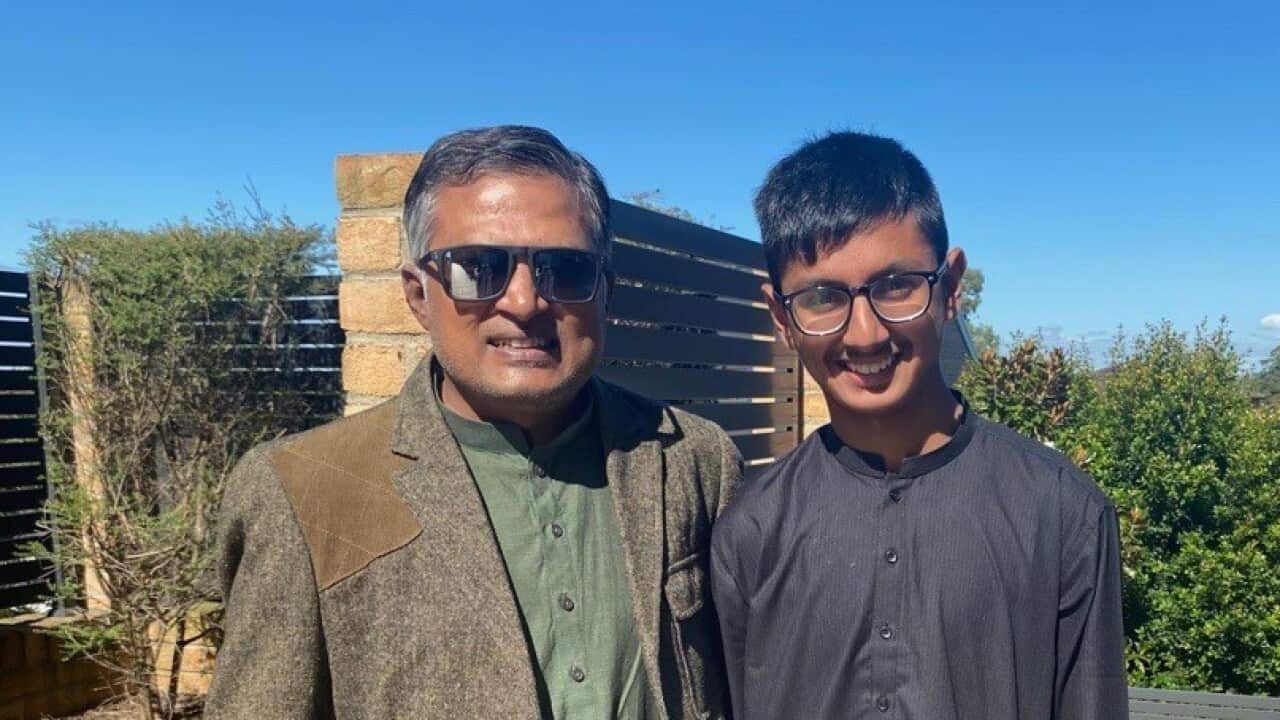
Sydney resident Zeeshan Iqbal reported that his son was confronted at school by classmates questioning Pakistani involvement in Sunday’s deadly attack that claimed 15 lives, despite there being no factual basis for such allegations.
“He was made uncomfortable and effectively singled out for something that was completely untrue,” Iqbal told SBS Urdu. “It shows how the harm brought by false information doesn’t just stay on social media—it shows up in people’s lives, in classrooms, in offices. It affects my children.”
The alleged attacker, Naveed Akram, was born in Australia, while his father Sajid Akram, who was fatally shot by police, was an Indian citizen. However, false claims about the younger Akram’s Pakistani background proliferated online within hours of the attack.
Much of this misinformation remains visible across major platforms despite efforts to correct the record. SBS News has identified numerous posts on X (formerly Twitter) falsely identifying one of the alleged attackers as Pakistani, with some posts garnering hundreds of thousands of views. Similarly, YouTube videos containing the same incorrect information have accumulated tens of thousands of views.
“These rumors fill the gap where verified information should be,” Iqbal explained. “And minority communities in Australia, especially, we become targets. By the time the truth is clarified, harm is already done.”
Talha Rehmani, another Australian of Pakistani heritage, described the personal impact of the misinformation. “Just because the names are similar, people were saying he’s from Pakistan. Within the first hour, people started blaming.”
The situation has created ripple effects throughout the community. “Even one of my friends whose last name is Akram, who drives for ride-sharing services sometimes, has passengers questioning him, and he has to explain he’s not that Akram,” Rehmani said.
In a particularly troubling case, a business owner named Naveed Akram who immigrated to Australia in 2018 discovered his images were being wrongly associated with the alleged gunman. “I’m very stressed and scared about this, and I cannot even go outside safely,” he said shortly after the attack.
When he sought assistance from police, he felt they provided little help. “It’s quite a trauma for me,” he said. “People should show more responsibility… It can ruin someone’s life.”
The federal government had previously proposed legislation that would fine social media companies up to 5 percent of their annual turnover for spreading misinformation and disinformation, with plans to introduce these laws by late 2024.
“This is a broader issue now,” Iqbal stressed. “Governments, media organizations, and big social media platforms like Twitter and Facebook should do something about it, otherwise, it’s just going to be a bombshell in the future.”
Pakistan’s information minister, Attaullah Tarar, has condemned the spread of false claims about the gunman’s nationality, stating that Pakistan had been targeted by a disinformation campaign.
The attack, which targeted a Jewish Hanukkah celebration, was allegedly motivated by Islamic State (IS) ideology. In its wake, Australian multicultural community leaders from both Muslim and Jewish groups have called for unity and cautioned against collective blame.
Despite concerns about social cohesion, the tragedy has also inspired an outpouring of support and kindness from people of diverse backgrounds across Australia.
Azam Mohammad, former Pakistani consul-general in Sydney, strongly condemned the “evil” attack and called for justice. “It is most distressing and horrifying news. May all the deceased rest in peace and our condolences to their friends and family,” he told SBS Urdu.
The experience of Pakistani Australians following the Bondi Beach attack illustrates the real-world consequences of online misinformation and highlights the vulnerability of minority communities during crises.
Fact Checker
Verify the accuracy of this article using The Disinformation Commission analysis and real-time sources.

12 Comments
This is a concerning example of how misinformation can lead to real-world harm and vilification of innocent people. We need to be vigilant about fact-checking and not spreading unsubstantiated claims, especially when it comes to sensitive topics like ethnicity and crime.
Agreed. The spread of false information on social media is a serious issue that can have very real and damaging consequences for individuals and communities.
It’s disappointing to see Pakistani Australians facing unfair scrutiny and discrimination due to baseless rumors. We should strive for a more inclusive society that doesn’t jump to conclusions or target minority groups based on misinformation.
Absolutely. Fact-checking and responsible reporting are crucial to prevent these kinds of harmful stereotypes and scapegoating from taking root.
This is a sobering reminder that the consequences of unchecked misinformation can be severe, especially for vulnerable communities. We must do more to promote media literacy and responsible online behavior to prevent these kinds of incidents.
Well said. Educating the public on how to identify and resist the spread of misinformation should be a key priority for policymakers and tech companies.
The impact of this misinformation on Pakistani Australian children is particularly concerning. No one should have to face discrimination or bullying at school due to false claims. We must do more to protect vulnerable groups from the real-world consequences of online falsehoods.
Exactly. The effects of misinformation can be deeply damaging, especially for young people. Addressing this issue should be a priority for schools, communities, and policymakers.
This incident highlights the urgent need for better digital literacy and media literacy education, to help people identify and resist the spread of misinformation, especially on sensitive topics. We all have a role to play in combating the harm caused by false narratives.
Well said. Improving critical thinking and verifying information sources should be a priority, to ensure people don’t fall victim to harmful rumors and conspiracy theories.
It’s disturbing to see how quickly misinformation can spread and lead to very real harm, even in the wake of a tragic event. We need to be vigilant about fact-checking and calling out false narratives whenever they arise.
Agreed. The proliferation of misinformation on social media platforms is a serious problem that requires a multifaceted approach to address.