


Listen to the article
Pakistan’s Polio Challenge: A Battle Against Disease and Misinformation
Pakistan remains one of only two countries worldwide where poliomyelitis continues to be endemic, alongside neighboring Afghanistan. This stark reality contrasts sharply with other South Asian nations, including Muslim-majority countries like Iran and Bangladesh, which were declared polio-free in 2006 and 2014 respectively. Nigeria, once on the list of polio-endemic countries, successfully eradicated the virus and received official certification from the World Health Organization (WHO) in 2020.
The persistence of polio in Pakistan stems from several interconnected challenges. Deeply entrenched misconceptions about anti-polio vaccines among certain religious groups have hampered eradication efforts. These vaccines are sometimes portrayed as part of a Western conspiracy aimed at sterilizing children – claims that data consistently disproves. Pakistan actually maintains one of South Asia’s highest population growth rates at approximately 2.55 percent, with substantial fertility rates and a large youth demographic.
Geographic and security concerns further complicate polio eradication. Cross-border migration between Pakistan and Afghanistan creates surveillance gaps, while conflict in parts of Khyber Pakhtunkhwa and Balochistan restricts vaccination campaign access. Even in urban centers like Karachi, authorities encounter significant parental resistance to vaccination efforts.
Pakistan’s Polio Eradication Programme has a notable history, launched in 1994 by then-Prime Minister Benazir Bhutto, who personally administered the first oral polio vaccine to her daughter, Aseefa Bhutto Zardari. This symbolic act initiated a national immunization effort that continues today, with Aseefa later becoming an ambassador for the anti-polio campaign.
The program has achieved remarkable progress over three decades, reducing polio cases from approximately 20,000 in 1994 to just 31 in 2025 – a 99.8 percent reduction. Yet challenges persist. The 2025 case distribution reveals geographic vulnerabilities: 19 cases in Khyber Pakhtunkhwa, nine in Sindh, and one each in Punjab and Gilgit-Baltistan.
International and national experts convened by WHO and the Aga Khan University in 2025 reached a consensus that ending polio in Pakistan remains achievable despite ongoing challenges. However, each new case threatens to undermine the tireless efforts of the Expanded Programme on Immunisation (EPI) and its 400,000 frontline workers who operate in extraordinarily difficult conditions – from flood zones to snow-covered mountains and remote deserts.
A January 2026 WHO press release emphasized that science indicates polio eradication is within reach if partnership and eradication efforts continue. However, the detection of wild poliovirus type 1 in Germany in late 2025 served as a sobering reminder that no country remains safe until complete global eradication is achieved.
Violence against vaccination teams presents another serious obstacle. In 2024 alone, 39 incidents targeted polio teams, resulting in 15 health workers killed and seven kidnapped across Pakistan. Consequently, over one million children missed crucial vaccination doses that year. Such violence has significantly hindered eradication efforts and demoralized the vaccination workforce.
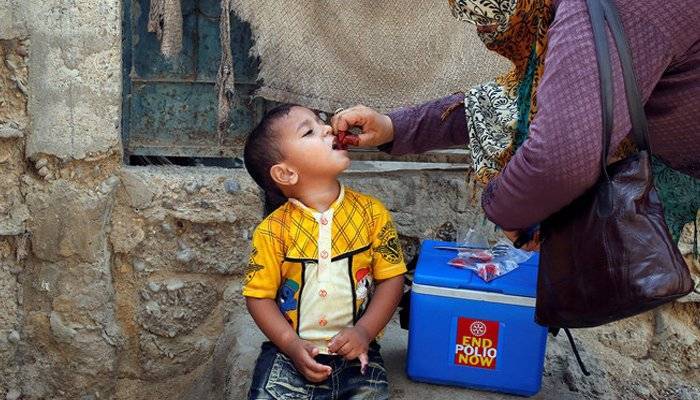
This year’s nationwide campaign aims to vaccinate more than 45 million children. To succeed, experts emphasize that federal, provincial, and district governments must reassess strategies and develop localized approaches to rebuild community trust, particularly among parents, while strengthening surveillance systems.
Community mobilization and engagement initiatives prior to vaccination campaigns are essential. Religious scholars with credibility in their communities must be involved to counter misinformation. Civil society, NGOs, media outlets, and the private sector also bear responsibility to intensify awareness efforts about the public health risks posed by poliovirus.
The protection of vaccination teams must be prioritized, as these frontline workers take considerable personal risks. With coordinated efforts between government, health authorities, community leaders, and international partners, Pakistan can still achieve its goal of becoming polio-free – a public health achievement that would benefit not only its citizens but contribute to global health security.
Fact Checker
Verify the accuracy of this article using The Disinformation Commission analysis and real-time sources.

12 Comments
Polio eradication in Pakistan is a long-standing challenge that requires a comprehensive, multi-stakeholder approach. Addressing misinformation, ensuring safe vaccine access, and coordinating with international partners are all critical components of the country’s final push to eliminate this disease.
Well said. Overcoming the complex array of obstacles in Pakistan’s polio eradication efforts will be no easy feat, but the potential benefits to public health make it a worthy endeavor. Consistent, collaborative efforts will be essential to achieving this important goal.
The persistence of polio in Pakistan is concerning, but the country’s efforts to confront this challenge are commendable. Overcoming misinformation and security barriers will be crucial to finally eliminating the disease and protecting vulnerable populations.
Agreed. Eliminating polio in Pakistan would be a significant public health victory, not just for the country but globally. The path forward is complex, but Pakistan’s determination to succeed is admirable and deserves support from the international community.
Tackling misinformation and security challenges to eradicate polio in Pakistan is a crucial public health imperative. Overcoming ingrained misconceptions and ensuring safe vaccination access across the country will be key to reaching the finish line on this long-standing health crisis.
Absolutely. With commitment and coordination, Pakistan can follow the lead of neighboring countries that have successfully eliminated polio. Persistent effort is required, but the benefits to public health will be immense.
The persistence of polio in Pakistan is concerning, but it’s good to see they are making a concerted final push to eradicate the disease. Addressing misinformation and security hurdles will be critical to achieving this important public health goal.
Agreed. It’s commendable that Pakistan is continuing to prioritize polio eradication despite the challenges. Sustainable progress will require an unwavering commitment from all stakeholders – government, healthcare workers, and the public.
While the fight against polio in Pakistan faces significant obstacles, the potential benefits of elimination are substantial. Overcoming misinformation and ensuring safe vaccination access could have far-reaching positive impacts on public health and community wellbeing.
You make a good point. Eradicating polio would be a major public health achievement for Pakistan, with widespread benefits. The challenges are daunting, but the country’s perseverance and coordination with international partners offer hope.
Polio eradication in Pakistan is a complex issue with entrenched cultural and security dimensions. The government’s determination to overcome these hurdles and reach the finish line is admirable, though the path forward remains unclear. Continued vigilance and adaptability will be essential.
That’s a fair assessment. Polio eradication requires a multifaceted approach that addresses misinformation, accessibility, and community engagement. With sustained commitment and innovative strategies, Pakistan can hopefully achieve this important public health milestone.