


Listen to the article
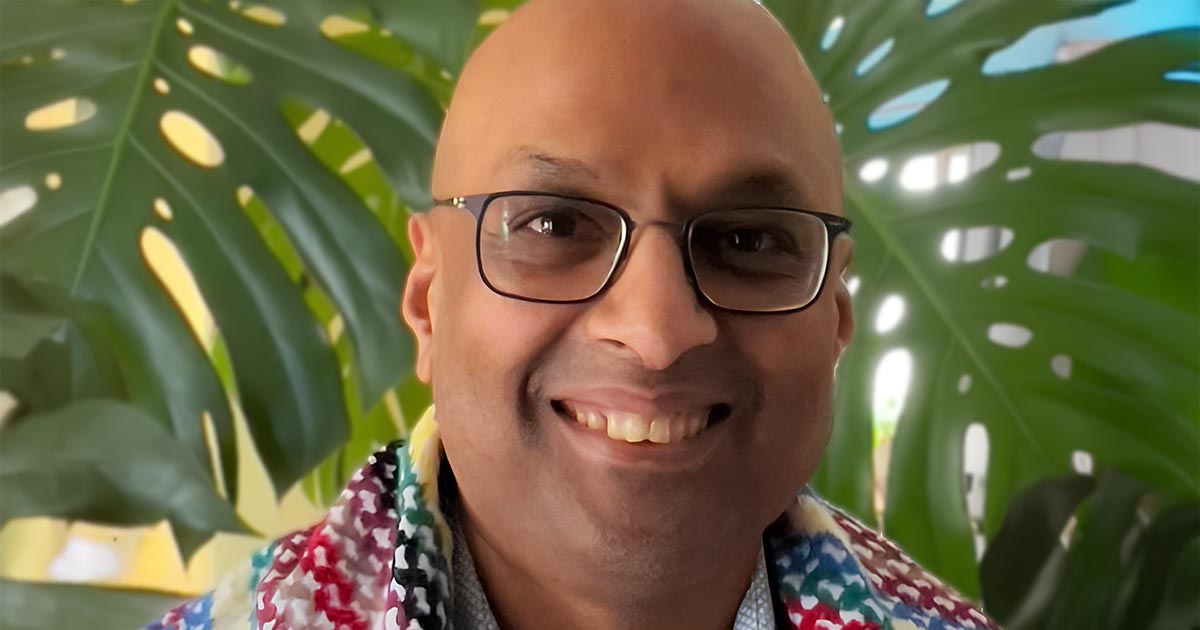
South African activist Sikhander Coopoo has issued a powerful challenge to the LGBTQIA+ community, calling for critical examination of misinformation and selective solidarity that he says is pervading queer spaces across the country.
“I’ve been queer long enough to recognise what it feels like when someone weaponises your identity against you,” writes Coopoo, addressing what he describes as troubling trends within South African queer communities. “When your existence is used not to protect you, but to justify something else entirely. A war, a border, a hierarchy.”
At the center of Coopoo’s critique is the spread of misinformation regarding LGBTQIA+ persecution in the Middle East. He specifically addresses the widely circulated claim that Hamas throws gay people off rooftops – a narrative that has gained traction in social media, messaging apps, and personal conversations within queer circles.
According to Coopoo, this claim represents a harmful conflation of different extremist groups and regions. He points out that documented cases of such executions occurred in ISIS-controlled areas of Syria and Iraq between 2014 and 2015, particularly in Mosul – not in Palestinian territories or under Hamas governance.
While acknowledging documented instances of violence against LGBTQIA+ individuals in Palestinian territories – including a widely reported 2016 case where Hamas killed a commander accused of homosexuality – Coopoo argues there is no evidence of systematic “roof-throwing” as an official Palestinian policy.
“Conflating ISIS with Palestinian governance is not an honest mistake. It is propaganda,” Coopoo states. “And when we repeat it, we become part of its distribution network.”
The activist highlights what scholars term “pinkwashing” – Israel’s strategic use of LGBTQIA+ rights to project a progressive image while diverting attention from its policies toward Palestinians. This approach, he argues, depends on depicting Palestinians as “sexually regressive” to undermine solidarity efforts.
Drawing parallels to South Africa’s apartheid history, Coopoo notes how Black South Africans were labeled “uncivilized” to justify their oppression. “So, when someone says Palestinians don’t deserve solidarity because of how their society treats queer people, they are drawing on the same colonial logic, just dressed in a rainbow flag,” he writes.
The article also addresses recent controversial actions, including a fundraising campaign by Freedom Front Plus politician Renaldo Gouws to send a queer activist to Gaza – what Coopoo characterizes as a “cynical premise” suggesting that “empathy is contingent on shared values, and that you can only oppose a genocide if you agree with every aspect of the culture being targeted.”
Beyond Middle Eastern politics, Coopoo identifies concerning ideological currents within South African queer spaces, including the influence of Christian nationalism and Hindutva (Hindu nationalist ideology). He warns that Islamophobia often serves as a gateway, leading some queer individuals to align with movements that have historically opposed LGBTQIA+ rights.
“The Family Policy Institute, Pastor Oscar Bougart, Pastor Angus Buchan, and similar groups have consistently opposed LGBTQ+ rights, abortion, and comprehensive sexuality education in this country,” he notes. “These are not our allies.”
Coopoo also addresses internal divisions within queer communities, citing activist Sibonelo Ncanana-Trower’s critique of “ignorant, racist, and classist thinking dressed up as political commentary.” He points to a 2022 study on South African social movements that identified problematic patterns of middle-class activists attempting to dictate actions to communities they’ve never experienced.
The article concludes with a tribute to Imam Muhsin Hendricks, South Africa’s first openly gay imam, who was assassinated in February 2025. Hendricks, who founded the Al-Ghurbaah Foundation to create safe spaces for queer Muslims, embodied a comprehensive approach to solidarity by challenging both Islamophobia and homophobia.
“His life answers the question of what solidarity really looks like,” Coopoo writes. “It is not a performance, and it is not conditional.”
Echoing Palestinian queer organization alQaws, Coopoo reminds readers that queer Palestinians navigate their identities as “whole, indivisible people” – a principle he believes should guide all solidarity work.
“We cannot build our freedom on the dehumanisation of others,” he concludes. “That’s not liberation. That’s just a new arrangement of the same old cruelty.”
Fact Checker
Verify the accuracy of this article using The Disinformation Commission analysis and real-time sources.

16 Comments
The article raises valid concerns about the need for nuanced understanding of LGBTQIA+ persecution across different regions. Avoiding conflation of extremist groups is crucial for principled solidarity.
Well said. Queer communities must remain vigilant against the misuse of identity politics and maintain a commitment to truth and empathy.
The article raises valid concerns about the spread of misinformation and its potential to undermine queer solidarity. It’s a complex issue that deserves thoughtful, evidence-based discussion.
Absolutely. Queer communities must remain vigilant against the misuse of identity politics. Maintaining principled solidarity requires scrutinizing claims, no matter the source.
The article raises valid concerns about the spread of misinformation and its potential to undermine queer unity. Careful consideration of regional contexts and extremist groups is crucial.
Well said. Queer communities must remain vigilant against the misuse of identity politics and commit to truth-seeking and empathetic solidarity.
Interesting perspective on the impact of misinformation within queer spaces. The need for critical examination of claims and avoidance of selective solidarity is an important point.
Agreed. Maintaining principled queer solidarity requires scrutinizing information and avoiding the weaponization of LGBTQIA+ identities for other agendas.
This is an important critique. Weaponizing LGBTQIA+ identities to justify other agendas is deeply problematic. Nuanced understanding of regional contexts is crucial to avoid perpetuating harmful narratives.
Well said. Queer solidarity must be built on a foundation of truth and empathy, not misinformation or selective outrage. Thoughtful analysis is the path forward.
Interesting perspective on the need to examine misinformation in LGBTQIA+ communities. Selective solidarity can indeed undermine queer unity. It’s important to verify claims and avoid conflating different extremist groups or regions.
Agreed, factual accuracy is crucial, especially when discussing sensitive human rights issues. Nuance and context are important to avoid perpetuating harmful narratives.
The article raises valid concerns about the need for critical examination of claims circulating within queer communities. Avoiding conflation of different extremist groups and regions is crucial.
Agreed. Maintaining principled solidarity requires scrutinizing information and avoiding the weaponization of LGBTQIA+ identities for other agendas.
This is an important discussion about the impact of misinformation on queer solidarity. The nuances of regional contexts and extremist groups must be carefully considered.
Absolutely. Queer communities should approach claims with a critical eye and resist the urge to perpetuate harmful narratives, no matter the source.