


Listen to the article
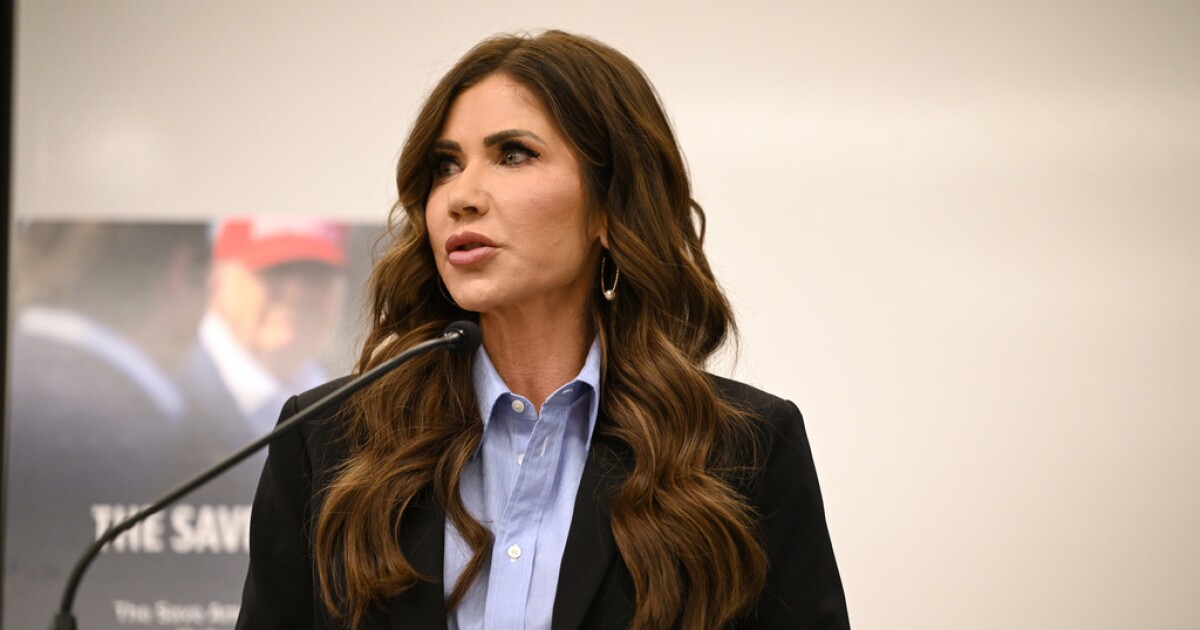
Homeland Security Secretary Kristi Noem sparked controversy in Arizona on Friday when she raised doubts about the state’s election integrity while pushing for federal voter ID legislation. During a press conference in Phoenix, Noem advocated for the SAVE Act, which would require Americans to provide proof of citizenship when registering to vote—a requirement already mandated by Arizona state law.
“Arizona has been an absolute disaster on elections,” Noem claimed, citing long voting lines as evidence of problems. She was referring to issues that occurred in 2020 in Maricopa County, when some ballot-scanning machines struggled to read printed ballots. While those technical difficulties caused delays, voters who remained in line ultimately had their ballots counted.
The press conference was attended by several Republican officials, including Congressman Paul Gosar and Maricopa County Recorder Justin Heap, though none of them addressed the media. Noem stated she had met with Arizona officials earlier that day and discussed “several” examples of fraud, but when pressed for specifics, she failed to provide any Arizona-specific instances.
“There’s no state that could use more improvement than Arizona,” Noem asserted. “You should be asking all of your leaders what they’re doing to fix the system. What are they doing to make sure that individuals in this state can trust that their vote is going to be taken, that it’s going to be counted, and that it’s going to matter?”
Republican Congressman Eli Crane arrived after the main press conference and advocated for faster election results while simultaneously calling for hand-counted ballots—a method that election experts note is significantly slower and less accurate than machine tabulation. Crane also pushed for paper ballots, seemingly unaware that Arizona already uses them.
“I think that there’s still fraud out there, in every election that we’ve had,” Crane claimed, though he did not offer evidence.
The congressman’s comments overlooked a significant fact in Arizona’s recent electoral history. In 2021, the Republican-controlled state Senate ordered a comprehensive hand audit of Maricopa County’s 2020 ballots. That audit, despite being led by a firm sympathetic to election fraud claims, ultimately confirmed that Joe Biden won the presidential election in the county and the state. When asked about the audit’s findings, Crane did not address whether he accepted its results.
Democratic officials across Arizona swiftly condemned Noem’s characterization of the state’s election systems. Secretary of State Adrian Fontes released a video statement accusing Noem of grandstanding and being unfamiliar with existing state election laws.
“Have you ever had somebody come to your job and tell you to do a job that you’re already doing? Well, that’s what Kristi Noem just did to the State of Arizona and to my office,” Fontes said.
Democratic Attorney General Kris Mayes was even more pointed in her criticism. “It was nothing more than another baseless attack from a federal government that lies to the American people on a daily basis,” Mayes stated. “If the Trump administration wants to restore trust in our elections, it can start by telling the truth about them.”
The clash highlights the ongoing tension between federal and state authorities on election administration. Arizona has been ground zero for election disputes since 2020, with multiple audits, lawsuits, and legislative changes implemented in response to unsubstantiated claims of widespread fraud. The state has become a key battleground for both parties heading into future elections.
Election security experts note that despite extensive investigations, no evidence of widespread fraud has been found in Arizona’s 2020 election. The state’s ballot verification procedures, including signature matching and citizenship requirements, are among the most stringent in the nation.
Fact Checker
Verify the accuracy of this article using The Disinformation Commission analysis and real-time sources.

18 Comments
Noem’s comments about Arizona’s elections raise valid questions, but her lack of specifics is concerning. Ensuring the integrity of the democratic process is essential, but unsubstantiated allegations of fraud can be damaging. I hope a thoughtful, evidence-based dialogue can address any legitimate issues.
I agree. Maintaining public trust in elections should be a top priority, but that requires a measured, fact-based approach. Inflammatory rhetoric and vague claims of fraud are unlikely to improve the system and may only serve to further divide the electorate.
Noem’s comments about Arizona’s elections being an ‘absolute disaster’ seem overstated based on the details provided. Technical issues causing delays are not the same as widespread fraud. I’d like to see more evidence to support such strong claims.
Exactly. Hyperbolic rhetoric around election integrity can undermine public trust, even if some legitimate concerns exist. A balanced, fact-based approach is needed from political leaders.
Noem’s push for the SAVE Act and her criticism of Arizona’s elections raise valid questions about voter ID requirements and election security. However, her lack of specific examples of fraud is problematic. I hope a balanced, fact-based dialogue can address these issues.
Absolutely. Striking the right balance between election integrity and accessibility is crucial. Any reforms should be carefully considered to ensure they strengthen democracy without creating unnecessary barriers for voters.
While I appreciate Noem’s efforts to address election security, her lack of specifics on alleged fraud in Arizona is concerning. Unsubstantiated claims can be damaging. I hope she provides clear evidence to back up her assertions.
I agree. Broad accusations of fraud without concrete evidence can sow division and distrust. If there are legitimate issues, they should be addressed transparently and objectively.
It’s concerning to hear Noem making broad claims about election fraud in Arizona without providing specifics. While improvements can always be made, unsubstantiated allegations can be damaging. I hope she clarifies her position with clear evidence.
I agree. Maintaining the integrity of elections is crucial, but accusations of widespread fraud require solid proof. Vague claims without details risk fueling further divisions and mistrust in the democratic process.
Interesting to hear Noem’s perspective on election integrity issues in Arizona. While there were some technical difficulties in 2020, it’s concerning if she is claiming widespread fraud without providing specifics. Voter confidence is crucial for a healthy democracy.
I agree, specifics are needed to back up claims of fraud. Robust election security and transparency should be the priority, not unsubstantiated allegations.
Noem’s comments about Arizona’s elections seem politically charged. While some technical problems occurred in 2020, describing the entire system as an ‘absolute disaster’ seems hyperbolic. I’d like to see a more measured, fact-based assessment.
Absolutely. Inflammatory rhetoric around elections can undermine public confidence, even if some legitimate concerns exist. A constructive, evidence-based dialogue is needed to address any issues and strengthen the electoral process.
The SAVE Act seems like it could place additional burdens on voters. While ensuring election integrity is important, measures that restrict access to voting are concerning. I hope any reforms are carefully balanced to protect democratic participation.
That’s a fair point. Voter ID requirements can disproportionately impact certain groups and create barriers to voting. Reforms should enhance security without compromising the fundamental right to vote.
While I understand Noem’s concerns about election integrity, her characterization of Arizona’s system as an ‘absolute disaster’ seems hyperbolic. Voter confidence is essential, but claims of widespread fraud require clear evidence. I hope a constructive, nuanced discussion can address any legitimate issues.
Well said. Maintaining the integrity of elections is crucial, but alarmist rhetoric can be counterproductive. A fact-based, bipartisan approach focused on improving the system, rather than making unsubstantiated claims, would be much more constructive.