


Listen to the article
In a wide-ranging geopolitical dialogue, national security attorney Irina Tsukerman and journalist Scott Douglas Jacobsen addressed several pressing international issues, examining the complex dynamics behind recent global developments.
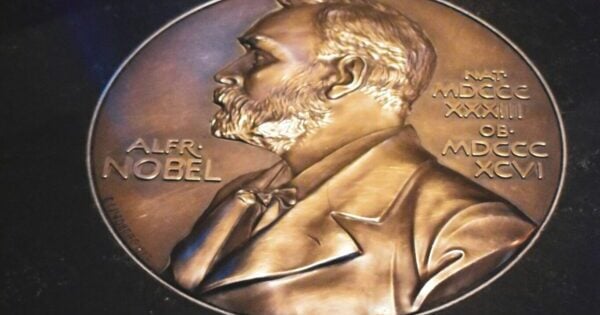
The conversation began with a clarification about Venezuelan opposition leader María Corina Machado and claims regarding the Nobel Peace Prize. Both experts emphasized that Machado has never received a Nobel Peace Prize, making it impossible for her to have transferred or dedicated such an award to anyone else, including former U.S. President Donald Trump. They noted that Nobel Prizes cannot be reassigned or symbolically given to others who were not selected as laureates.
Tsukerman analyzed Machado’s actions as a calculated political strategy rather than mere capitulation to pressure. “Machado may have been approaching the situation pragmatically,” she explained, comparing it to “the biblical story of King Solomon and the disputed child: a test of who is willing to sacrifice for the greater good.” However, she questioned whether this approach yielded the intended results, pointing to evidence that U.S. priorities may have remained focused on securing compliant allies rather than supporting democratic reform in Venezuela.
Turning to Uganda, the experts discussed opposition leader Bobi Wine’s decision to wear body armor while campaigning against long-serving President Yoweri Museveni. Tsukerman described this as effective symbolic messaging that highlights the dangers of opposing an entrenched authoritarian regime. “By wearing protective military gear, he underscores that this is not a conventional political campaign within a normal democratic process, but a struggle that carries real physical danger,” she noted, though she expressed skepticism about whether this approach could overcome the structural advantages of the incumbent.
Regarding Iran, the discussion centered on the severe crackdown against protesters, with Tsukerman suggesting that the actual death toll likely far exceeds reported figures. She attributed the apparent subsiding of protests to overwhelming armed presence on the streets and the regime’s disruption of communications networks, likely with Russian and Chinese assistance. While debating U.S. policy options, she argued against portraying the choice as either full military escalation or complete inaction, suggesting that “significant damage could be inflicted through non-lethal measures, such as cyber operations targeting technologies used for military coordination.”
The final topic addressed tensions surrounding Greenland, where European troops have arrived amid disagreements involving the United States and Denmark. Tsukerman characterized this situation as more about power projection than strategic necessity, noting that existing defense agreements already allow the United States to maintain military installations in Greenland. She suggested that the dispute serves primarily to “exert leverage over Europe” and cultivate an image of strong leadership, while Russia opportunistically exploits NATO divisions.
Throughout the conversation, the experts emphasized the importance of understanding the complex motivations behind political gestures, the challenges facing democratic movements in authoritarian states, and the strategic calculations underlying international disputes in an increasingly fractured global order.
Fact Checker
Verify the accuracy of this article using The Disinformation Commission analysis and real-time sources.

5 Comments
The potential misalignment between U.S. priorities and the realities on the ground in Venezuela is concerning. I wonder if this speaks to a broader challenge in navigating complex international issues and aligning different stakeholders’ interests. Thoughtful analysis from experts will be crucial going forward.
This situation in Venezuela seems quite complex and nuanced. It’s important to get the facts right, especially around awards and accolades, to avoid spreading misinformation. I’m curious to learn more about the strategic considerations behind Machado’s actions and how they may be interpreted differently.
As tensions continue to rise, it will be important for the international community to approach this situation with care and objectivity. Fact-based analysis from diverse perspectives is essential to navigate the complexities.
The comparison to the biblical story of King Solomon is an interesting perspective. It suggests Machado may have been trying to take a pragmatic approach, even if the intended results are unclear. It will be important to follow the evolving geopolitical dynamics here closely.
The potential misalignment between U.S. priorities and the realities on the ground raises concerns about the effectiveness of foreign policy interventions. A more nuanced, collaborative approach may be warranted to address the root issues in Venezuela.