


Listen to the article
President Tinubu’s recent visit to the United Kingdom has sparked widespread debate following the signing of a migration agreement between Nigeria and the UK. The diplomatic engagement, which took place between March 18-20, 2024, has been subject to significant mischaracterization in public discourse, with various misconceptions clouding the true nature of the agreement.
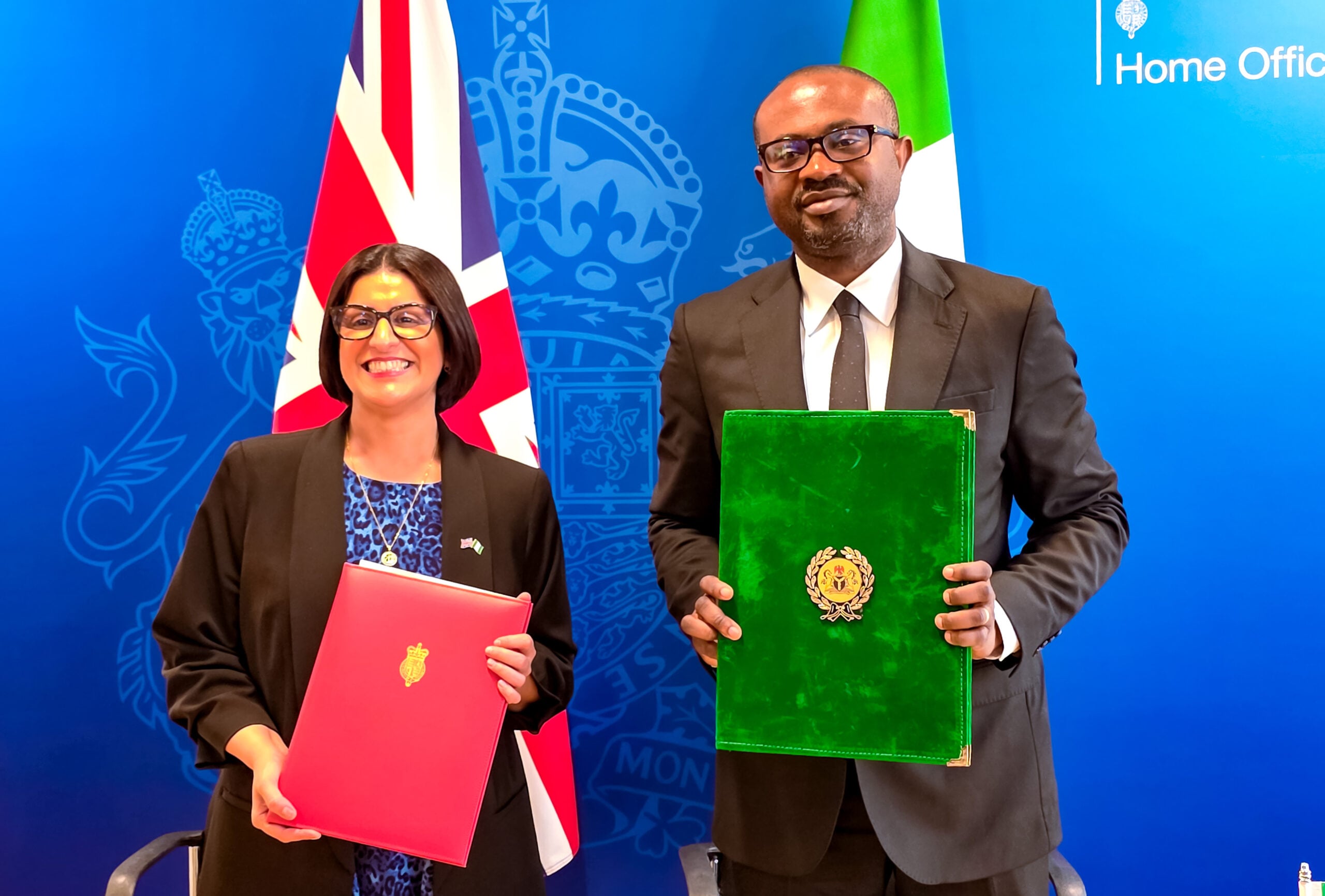
The bilateral talks, culminating in a Memorandum of Understanding (MoU) signed by Nigeria’s Minister of Interior Olubunmi Tunji-Ojo and UK Home Secretary Shabana Mahmood, focused primarily on establishing a framework for migration and mobility between the two nations. However, misinformation quickly spread across social media platforms and some news outlets, with claims that the Nigerian government had agreed to accept deportees from the UK in exchange for financial compensation.
These false narratives gained traction despite official clarifications from both governments. Minister Tunji-Ojo specifically addressed the misconceptions during press briefings, emphasizing that the agreement is designed to create legal pathways for Nigerian professionals to work in the UK while offering protection against human trafficking and irregular migration.
“This agreement is about creating opportunities for skilled Nigerians while ensuring proper documentation and protection,” Tunji-Ojo stated. “It has nothing to do with mass deportations or financial incentives as being wrongly portrayed.”
The MoU is part of a broader strategy to strengthen bilateral relations between Nigeria and the UK, nations with deep historical ties dating back to colonial times. The UK remains one of Nigeria’s largest trading partners and a significant source of foreign direct investment, with trade volume between the two countries exceeding $5 billion annually.
Diplomatic experts point out that the agreement reflects a global trend toward more structured migration frameworks. Dr. Adebayo Ogunlesi, an international relations analyst at Lagos University, notes that “similar agreements exist between many countries as part of modern diplomatic practice. The Nigeria-UK agreement follows standard protocols for managing migration flows in a mutually beneficial manner.”
The mischaracterization of the agreement highlights the growing challenge of misinformation in the age of social media. Within hours of the signing ceremony, hashtags like #NoToUKDeportationDeal began trending on Twitter, with users sharing unverified claims about the contents of the agreement.
“What we’re seeing is how quickly false narratives can take root before accurate information has a chance to circulate,” says Maryam Lawal, director of the Centre for Media Literacy in Abuja. “The public reaction demonstrates both the power of social media and the importance of media literacy in contemporary society.”
The UK government has also attempted to clarify misconceptions, with the British High Commission in Nigeria releasing a statement emphasizing the reciprocal nature of the agreement and its focus on creating legal pathways for migration rather than facilitating deportations.
For Nigeria, a country with a large diaspora population and significant brain drain challenges, structured migration agreements offer potential benefits. The MoU includes provisions for skills transfer and development programs that could help address capacity gaps in key sectors like healthcare and technology.
“When properly implemented, such agreements can create win-win scenarios,” explains economist Chukwuma Soludo, former Governor of the Central Bank of Nigeria. “They provide opportunities for Nigerians to gain international experience while ensuring their rights are protected, and they can potentially contribute to knowledge transfer back to Nigeria.”
As the dust settles on the controversy, both governments have committed to greater transparency in communicating the details and implementation of the agreement. Minister Tunji-Ojo has promised to make the full text of the MoU available for public scrutiny to dispel lingering misconceptions.
The episode serves as a reminder of the challenges facing governments in an era where information—and misinformation—travels at unprecedented speed, often outpacing official communications and traditional media reporting.
Fact Checker
Verify the accuracy of this article using The Disinformation Commission analysis and real-time sources.

7 Comments
This seems like an important agreement, though the misinformation is troubling. Establishing clear legal channels for migration and mobility could benefit both countries, if implemented thoughtfully. I’ll be curious to see how this develops.
Agreed, transparency and clear communication will be key to ensuring the public understands the true nature of this agreement.
The reported focus on protecting against human trafficking is encouraging. Enabling legal migration pathways is a complex issue, but can be an important tool for addressing exploitation if done right. Looking forward to seeing more details on the specifics.
It’s disappointing, but not surprising, to see misinformation spreading about this agreement. Establishing legal migration pathways is complex, but an important issue to get right. Looking forward to more updates as this progresses.
Interesting to see the details around this migration agreement between Nigeria and the UK. It’s concerning to hear about the misinformation spreading on social media. Glad the governments have clarified the real focus is on creating legal pathways for workers, not deportations.
Glad to see the governments addressing the misinformation head-on. Migration agreements can be sensitive, so maintaining trust through accurate information is crucial. Curious to learn more about the professional work opportunities this could create.
This migration agreement seems like it could have significant implications, both positive and negative depending on the details. I hope the governments can work to address the public’s concerns and misconceptions transparently.