


Listen to the article
Community Battery Project Derailed by Misinformation in Rural NSW Town
A promising community battery project in Narrabri, New South Wales has been shelved after a wave of misinformation sparked fears about safety, highlighting how easily renewable energy initiatives can be derailed in rural communities.
What began as a routine council meeting in March 2025 quickly spiraled when Fire and Rescue NSW Zone Commander Tom Cooper presented a PowerPoint showing videos of exploding e-scooters and electric drill batteries.
“That’s a drill battery. So if you compare that to one of those battery energy storage things that’s as big as a caravan, you can imagine what’s going to happen,” Cooper told the council members, despite significant differences between consumer electronics and utility-grade battery systems.
This presentation marked the beginning of the end for a federally funded 500kWh community battery that was just weeks away from installation. The project, led by local not-for-profit Geni Energy, had secured $500,000 in federal funding and was intended to store excess solar power during the day for use in peak evening hours.
“That’s when the rot started,” says Judith Pownall, one of the battery’s supporters. “They fuelled nothing but concern and worry to the community.”
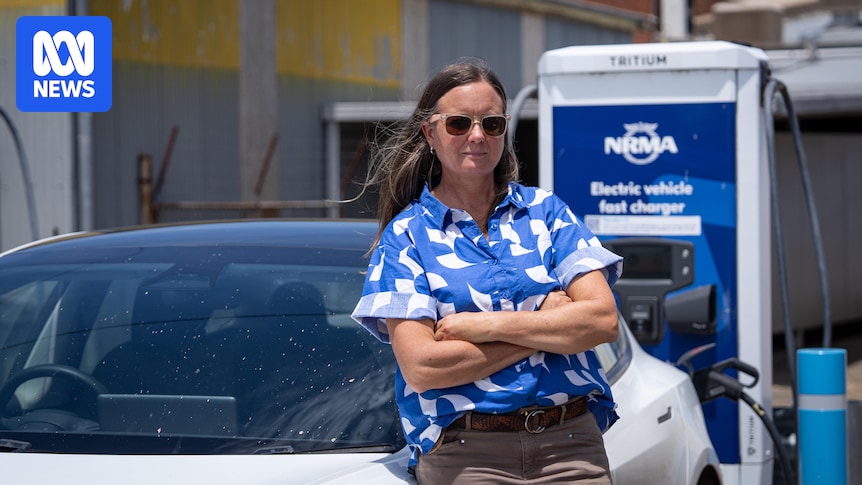
The battery was slated for installation in a car park near the town center, part of a renewable energy hub that would include existing electric vehicle chargers and planned solar covers. The council had already approved the development application and construction certificate. All that remained was a license agreement for the three parking spaces it would occupy.
But the project’s fate changed after a local council election in October 2024 brought in six new faces among the nine-member council. New councillor Amanda Brown, who recently resigned due to health reasons, raised concerns about the battery’s safety following the Fire and Rescue presentation.
“When I left the council chambers that night, I started having a lot of doubts about the location of the battery,” Brown explained. “There’s been safety concerns regarding batteries. You hear about them all the time on the news, with fires and the like.”
In April, Brown introduced a motion to delay signing the license agreement, ostensibly to review safety information and site suitability. Despite 67 emails and 16 phone calls in support of the project, compared to just four letters and one call against it, the council voted to halt the project.
Fire safety expert Ian Moore, who was invited to provide his professional opinion to the council, says the fears were misplaced. “The battery units that go into the community system are tested to international standards… the risk is significantly lower than other community fire risks,” he explained.
Moore noted that community batteries include multiple safety features that consumer electronics lack, including heat and smoke detectors, automatic shutdown systems, built-in fire suppression, and alerts to local fire brigades. They also use lithium iron phosphate chemistry, which is more stable than the cells found in e-scooters and EVs.
“The risk of a community battery fire is something like a hundred times less than a house fire,” Moore stated.
Despite this expert testimony, misinformation spread rapidly through the community. Opponents claimed the battery would burn for seven days and shut the town down, that it required a massive exclusion zone, and that it offered “zero community benefit.” None of these claims were accurate.
Narrabri Mayor Darrell Tiemens defended the decision to rescind support, shifting blame to what he called inadequate community engagement by Geni Energy. “This is not about misinformation. This is about lack of information and not taking the community along for a journey,” he said.
However, Sally Hunter, founder of Geni Energy, strongly disputes this characterization. “As part of the grant, we had to have a community engagement plan. It had to be approved by the federal government, which it was, and we enacted it,” she explained.
The plan included school activities, art projects, letter drops, blogs, social media campaigns, and public events. “We had an open shopfront for five years where anyone could walk in and ask questions. We ran events, we built a fake battery and wheeled it into the car park to show the scale.”
Ironically, in a May submission to a NSW state government inquiry, Narrabri Shire Council itself acknowledged that “a significant amount of misinformation and disinformation currently exists surrounding the management of emerging renewable technologies, particularly with respect of lithium batteries.”
The submission noted that inconsistent government guidance was “contributing to a climate of fear surrounding community safety risks associated with renewable technologies.”
Community engagement consultant Margaret Harvie says renewable energy projects operate in a “tough climate” that’s often polarized. “What’s happening, in terms of the anger and outrage, is that activists are tending to use the fact that you can fuel that fire of that outrage and make people feel more scared about what the risks are.”
The Narrabri community is no stranger to energy debates. Despite being coal country, with Whitehaven operating three mines in the area, the town has one of Australia’s highest uptakes of residential rooftop solar at nearly 62 percent. Santos is also attempting to develop a new coal seam gas field covering more than 95,000 hectares.
For now, the Narrabri community battery sits in storage, gathering dust. Hunter and Geni Energy are hoping to find a location on private land to revive the project, but this means starting the process from scratch.
“How do we feel? We feel very let down,” says Pownall, reflecting the frustration of the battery’s supporters who watched as misinformation overwhelmed expert advice and years of planning.
Fact Checker
Verify the accuracy of this article using The Disinformation Commission analysis and real-time sources.

14 Comments
This is a classic example of how unfounded fears about new technologies can undermine important clean energy progress. I hope the project team can work to educate the community and address any legitimate safety concerns in a transparent way.
Definitely. Renewable energy projects need to be grounded in facts, not sensationalism. With the right approach, this community battery could still be a positive development for Narrabri.
This is a shame. Community batteries could be a great way to boost local renewable energy use and resilience. Hopefully the project team can find a way to address the concerns and get it back on track.
Yes, with clear communication and addressing safety points transparently, perhaps they can revive this important initiative. Rural communities need these types of distributed energy solutions.
Misinformation is a real challenge for clean energy projects. While it’s important to address safety concerns, this seems like an overreaction fueled by unsubstantiated fears. I hope the project team can find a way to revive this initiative and bring the community along.
Agreed. Fact-based dialogue and technical expertise should win out over panic and rumor-mongering. With the right approach, this community battery could still be a valuable asset for Narrabri.
This seems like a missed opportunity for Narrabri to embrace clean energy and enhance its grid resilience. I’m curious to learn more about the specific safety concerns raised and whether they were legitimate issues or just unfounded panic.
Good point. Understanding the technical details and addressing any real concerns transparently will be key to getting this community battery project back on track, if possible.
It’s concerning to see this project derailed by sensational misinformation, especially around battery safety. Utility-scale batteries are very different from consumer electronics. I hope the community can move past the fear-mongering and work constructively on this.
Absolutely. Fact-based dialogue and technical expertise are crucial here to separate reality from exaggerated fears. Renewable energy projects need community buy-in to succeed.
It’s disappointing to see misinformation derail a promising renewable energy initiative like this. Community batteries can provide real benefits, but they require public trust and engagement. I hope the project team can find a way to relaunch this in a constructive manner.
Agreed. Clear communication and an emphasis on facts over fear-mongering will be essential if they want to revive this project and build local support.
Interesting to see this community battery project stalled by misinformation. It’s concerning how easily renewable energy initiatives can be derailed, especially in rural areas. I wonder what the real safety and technical considerations were here.
Agreed, misinformation seems to be a major challenge for clean energy projects. It’s important to have open and fact-based discussions to address legitimate concerns.