


Listen to the article
In a dramatic twist to the ongoing media acquisition saga, Netflix has agreed to a one-week negotiating window allowing Warner Bros. Discovery and Paramount to discuss a potential competing offer, though Netflix remains confident its deal will ultimately prevail.
The seven-day period, which began Tuesday, gives Paramount the opportunity to formalize what it has claimed would be a superior offer to Netflix’s existing agreement with Warner Bros. Discovery. Industry observers view this move as Netflix strategically calling Paramount’s bluff rather than showing weakness.
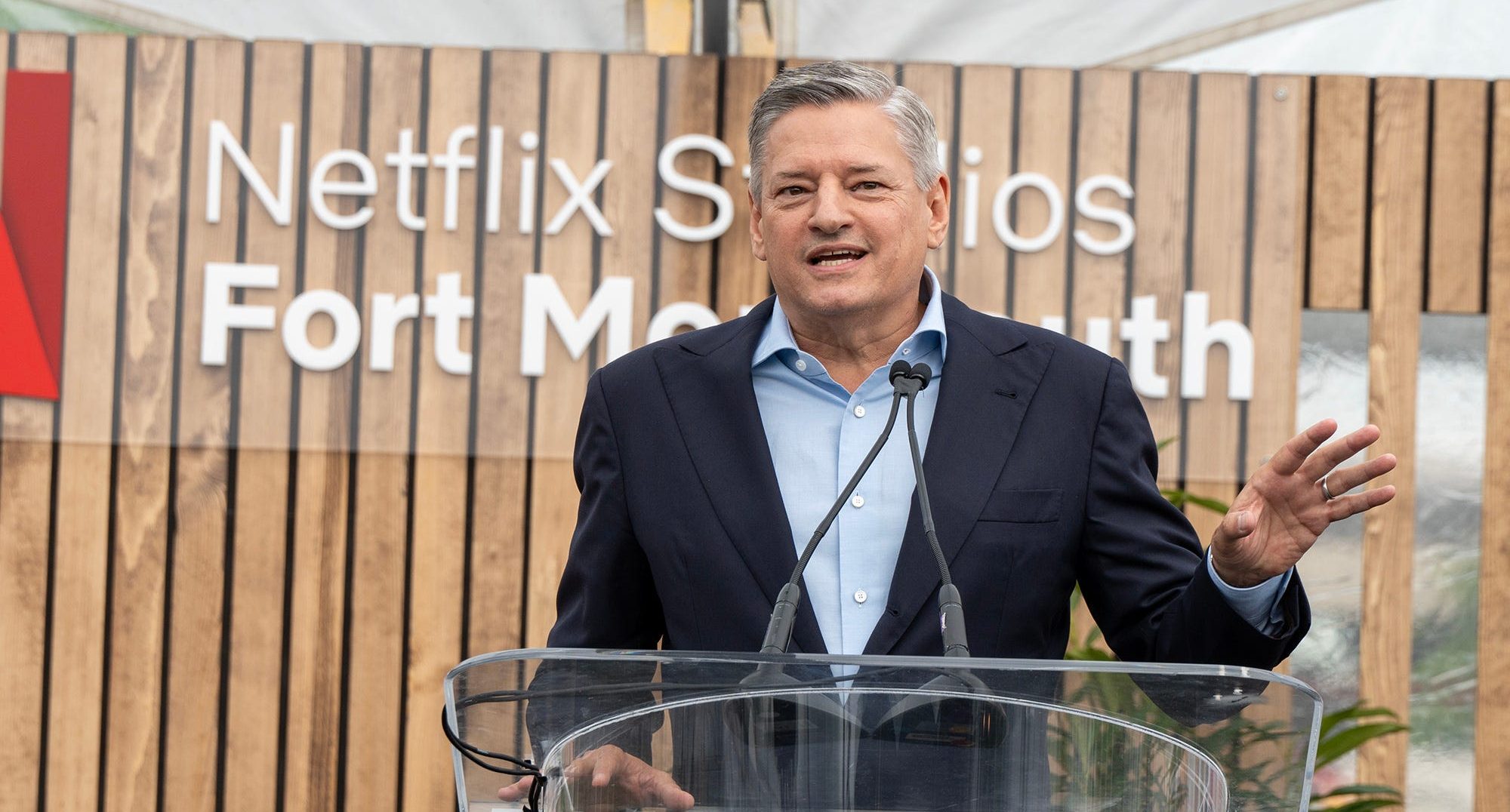
Netflix CEO Ted Sarandos took a direct approach in addressing the situation during a CNBC interview, accusing Paramount of “flooding the zone with misinformation” and creating scenarios he characterized as “very wild.” Sarandos challenged Paramount to “put their money where their mouth is” by substantively improving their offer rather than continuing what he perceives as diversionary tactics.
“The most likely outcome is, there’s no adjustment [to Paramount’s deal] at all,” Sarandos stated, reflecting Netflix’s confidence that their arrangement will remain superior even after the negotiation period concludes.
Reports indicate Paramount has offered to increase its bid from $30 to $31 per share simply for the opportunity to re-engage in talks. However, analysts question whether this modest increase would be sufficient to sway the WBD board away from Netflix’s proposal, which is viewed as providing greater financial stability compared to Paramount’s approach that would reportedly involve taking on substantial debt.
Sarandos directly countered Paramount’s assertions about regulatory hurdles, dismissing claims that a Paramount acquisition would face fewer obstacles. “[Paramount] does not have a faster regulatory path. I don’t know why [Paramount owner David Ellison] would insinuate they have some inside track in the Department of Justice, but I can assure you they don’t,” Sarandos stated firmly.
The Netflix executive further emphasized his company’s established international standing, noting that “we are known entities and trusted entities with all the players in Europe.” He highlighted that Netflix’s proposal avoids acquiring Discovery Global, meaning it “doesn’t disrupt the European broadcast system at all” – positioning this as a regulatory advantage over Paramount’s approach.
This high-stakes corporate chess match represents the latest chapter in the rapidly consolidating media landscape, where streaming services, traditional studios, and content libraries are increasingly viewed as essential components for survival in the entertainment industry. The outcome could significantly reshape Hollywood’s power structure.
Since the WBD board initially accepted Netflix’s offer late last year, Paramount’s David Ellison has been actively working to reshape the narrative in his company’s favor. Industry insiders note that despite rhetoric suggesting a superior offer, Paramount has thus far only implemented incremental measures to enhance its bid, without formalizing a proposal with a definitively higher share price.
The one-week window now forces Ellison and Paramount into a decisive moment. The company must either substantially improve its offer to a level that would compel serious consideration from the WBD board or risk being exposed for having overplayed its hand in the negotiation process.
This confrontation comes during a period of intense consolidation in media and entertainment, as companies seek scale and content libraries to compete effectively in the streaming era. The ultimate outcome of this three-way negotiation could have far-reaching implications for content production, distribution strategies, and consumer options in the global entertainment marketplace.
As the clock ticks on the seven-day window, Wall Street analysts and industry stakeholders are watching closely to see whether Paramount will deliver a genuinely competitive counteroffer or if Netflix’s confident stance will be vindicated.
Fact Checker
Verify the accuracy of this article using The Disinformation Commission analysis and real-time sources.

12 Comments
Sarandos appears confident that Netflix’s existing deal will ultimately prevail, but Paramount may still have some tricks up their sleeve. This could be an important turning point for the industry.
Accusations of ‘misinformation’ are serious, and Sarandos seems intent on calling Paramount’s bluff. I wonder what kinds of concessions or compromises may emerge from these high-stakes negotiations.
The streaming wars are intensifying, and this latest development underscores the fierce competition for market dominance.
The war of words between Netflix and Paramount is captivating. I’ll be closely following the updates to see how this all plays out and who emerges victorious.
The stakes are high, and both sides seem determined to come out on top. This could be a defining moment for the streaming industry.
Interesting developments in the media acquisition saga. Curious to see if Paramount can put together a compelling competing offer during this negotiation window, or if Netflix’s confidence in its existing deal will hold true.
The battle for content dominance continues in the streaming wars. It will be telling to see how this all plays out.
The media landscape is rapidly evolving, with major companies vying for control of valuable content. This negotiation period could have significant ramifications for the future of streaming.
Given the high stakes involved, I imagine both sides will be employing strategic posturing and rhetoric to gain the upper hand.
Sarandos seems to be taking a firm stance against what he perceives as Paramount’s ‘misinformation’. This could get heated as they jockey for position in the negotiations.
It’s always a delicate balance when major players in the industry make public accusations. Will be interesting to see how this impacts the ongoing talks.
It’s fascinating to see how these major media companies are navigating the shifting landscape. This negotiation period could have far-reaching implications for the future of content distribution.