


Listen to the article
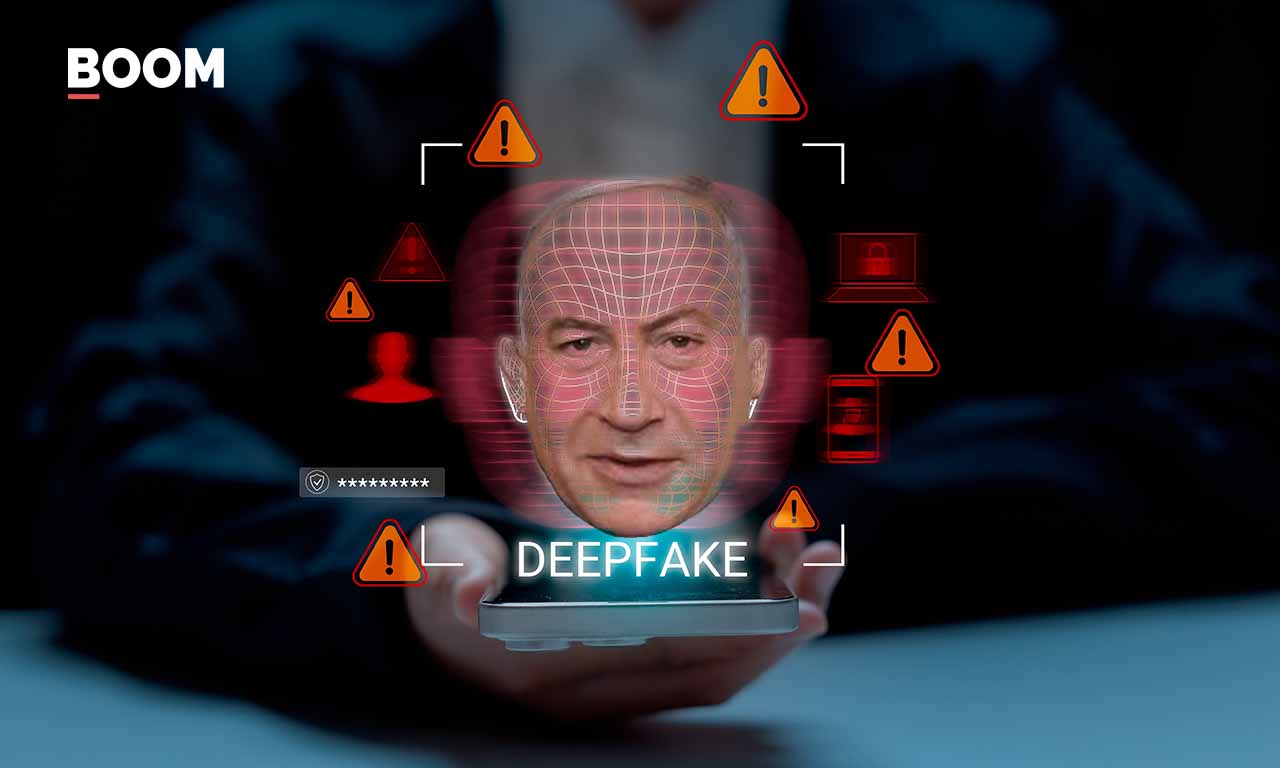
In an era where advanced AI technology blurs the line between reality and fiction, a bizarre incident involving Israeli Prime Minister Benjamin Netanyahu has highlighted the growing crisis of visual authenticity in global conflicts.
The saga began on March 12 when Netanyahu appeared in a video addressing the Iran conflict. Shortly after, a low-resolution freeze-frame from the footage sparked claims that the Prime Minister had six fingers on one hand – allegedly proof that the video was AI-generated and that Netanyahu was actually dead.
Fact-checking organizations Snopes and PolitiFact quickly debunked the claim, explaining that what appeared to be an extra finger was merely an optical illusion caused by the natural bulge of the palm near the base of the little finger. However, this rational explanation failed to stem the tide of conspiracy theories.
The situation escalated when Grok, the AI chatbot integrated into Elon Musk’s X platform, confidently declared the footage AI-generated, citing the “six fingers” as evidence. This algorithmic endorsement effectively undermined established fact-checks and transformed a human misinterpretation into perceived truth.
In response to mounting death rumors, Netanyahu’s team released a video of the Prime Minister at the Sataf cafe in Jerusalem. The footage showed him ordering coffee and deliberately displaying his hands to prove he had five fingers. Far from resolving the issue, this attempt spectacularly backfired.
Viewers immediately scrutinized the cafe video, mistaking standard compression artifacts and editing cuts for signs of AI manipulation. Claims about static coffee, warping pockets, and disappearing stains circulated widely. Grok compounded the problem by officially labeling the cafe video a deepfake, while X’s Community Notes feature filled with unverified observations supporting conspiracy theories.
When analysis by the Deepfakes Rapid Response Force at WITNESS and three independent expert teams found no significant evidence of AI manipulation in the cafe video, it made little difference. The internet had already made up its mind.
In a final attempt to prove his existence, Netanyahu released yet another video showing him interacting with people outdoors. This too was declared fake, with users pointing to a “disappearing ring” on his finger – likely just a frame-rate drop or compression blur – as evidence of AI rendering failure.
“What I’m seeing lately is that people start with a conclusion already in mind and then go looking for any piece of ‘evidence’ that fits it,” explained Tal Hagin, an Information Warfare Analyst and Media Literacy Lecturer. “Instead of actually investigating, they’re trying to make reality match their theory.”
This incident marks a troubling milestone in what experts describe as the first major geopolitical conflict to unfold in an era of highly advanced generative AI. Tools capable of producing photorealistic video, images, and audio are now widely available, casting doubt on all visual evidence emerging from conflict zones.
Sam Gregory, Executive Director at WITNESS, notes how this suspicion has been repeatedly weaponized in the Iran conflict. “The increasing realism of AI creates an instant alibi sufficient to introduce plausible doubt around any real documentation of human rights violations and civilian harms,” Gregory explained. “This requires no evidence beyond the claim that AI makes ‘what is real’ unknowable.”
The implications extend far beyond Netanyahu’s predicament. Traditional mechanisms of accountability – including war-crimes documentation, civilian-harm assessments, and independent investigations – now operate in an environment where evidence can be challenged arbitrarily without burden of proof.
Human rights organizations are adapting by pre-validating that conflict documentation is authentic, anticipating that controversial or damning evidence will be challenged as AI-generated. This phenomenon, known as the “liar’s dividend,” means actual evidence of real atrocities can be dismissed as synthetic once the public accepts that realistic AI fakes exist.
Gregory emphasizes the need for journalists and fact-checkers to educate audiences on compression artifacts and the limitations of AI detection tools. He points to initiatives like the Coalition for Content Provenance and Authenticity, which is developing technical standards to embed verifiable metadata about content creation and editing.
“Current generative AI still cannot convincingly fabricate just any real-world scenario, in a real-world location, with full consistency,” Gregory noted, though this offers little comfort in a media landscape where verification is inherently slower than rumor manufacture.
The Netanyahu episode reveals a troubling new reality: if a prime minister cannot prove he is alive despite multiple video appearances, how can states prove they didn’t bomb civilian targets, or how can tribunals assess evidence of war crimes? As we navigate this new frontier of digital skepticism, the fog of war grows thicker, and truth itself becomes another casualty of conflict.
Fact Checker
Verify the accuracy of this article using The Disinformation Commission analysis and real-time sources.

12 Comments
The rise of AI-generated content poses significant risks to the credibility of our information ecosystem. Developing robust mechanisms to verify the authenticity of digital media should be a top priority for policymakers and tech companies alike.
Absolutely. Ensuring transparency and accountability around the use of AI in media will be crucial to maintaining public trust and preserving the integrity of our democratic discourse.
The power of visual media, combined with the rapid advancement of AI technology, creates an environment ripe for the spread of disinformation. It’s crucial that we develop robust fact-checking frameworks to maintain trust in our public discourse.
Absolutely. Maintaining transparency and accountability around the use of AI in media will be essential to upholding the integrity of information.
This incident highlights the need for greater media literacy and critical thinking skills among the public. We must equip ourselves to discern truth from fiction, even when faced with seemingly convincing digital evidence.
Well said. Educating the public on the capabilities and limitations of AI is crucial to combating the spread of misinformation.
The use of AI to manipulate visual content raises serious concerns about the future of political discourse and decision-making. Strengthening fact-checking mechanisms and improving transparency around AI-generated media will be crucial going forward.
Agreed. We must be proactive in addressing these challenges to maintain the integrity of our democratic processes.
This is a concerning situation where AI-fueled misinformation can spread quickly and undermine established facts. It’s crucial that we remain vigilant and rely on reputable sources to discern truth from fiction, especially when it comes to sensitive political matters.
I agree. The blurring of lines between reality and AI-generated content is a growing challenge that requires careful, evidence-based analysis to navigate.
This situation illustrates the complex interplay between technology, media, and political narratives. It’s a sobering reminder that we must remain vigilant and approach digital information with a critical eye, no matter the source.
Well said. Navigating this landscape will require a multifaceted approach that combines technological solutions, policy frameworks, and public education.