


Listen to the article
In a striking development that highlights the intersection of sports, politics and accountability, Milwaukee Bucks head coach Doc Rivers has doubled down on controversial comments about U.S. Immigration and Customs Enforcement (ICE) while the NBA maintains a conspicuous silence on the matter.
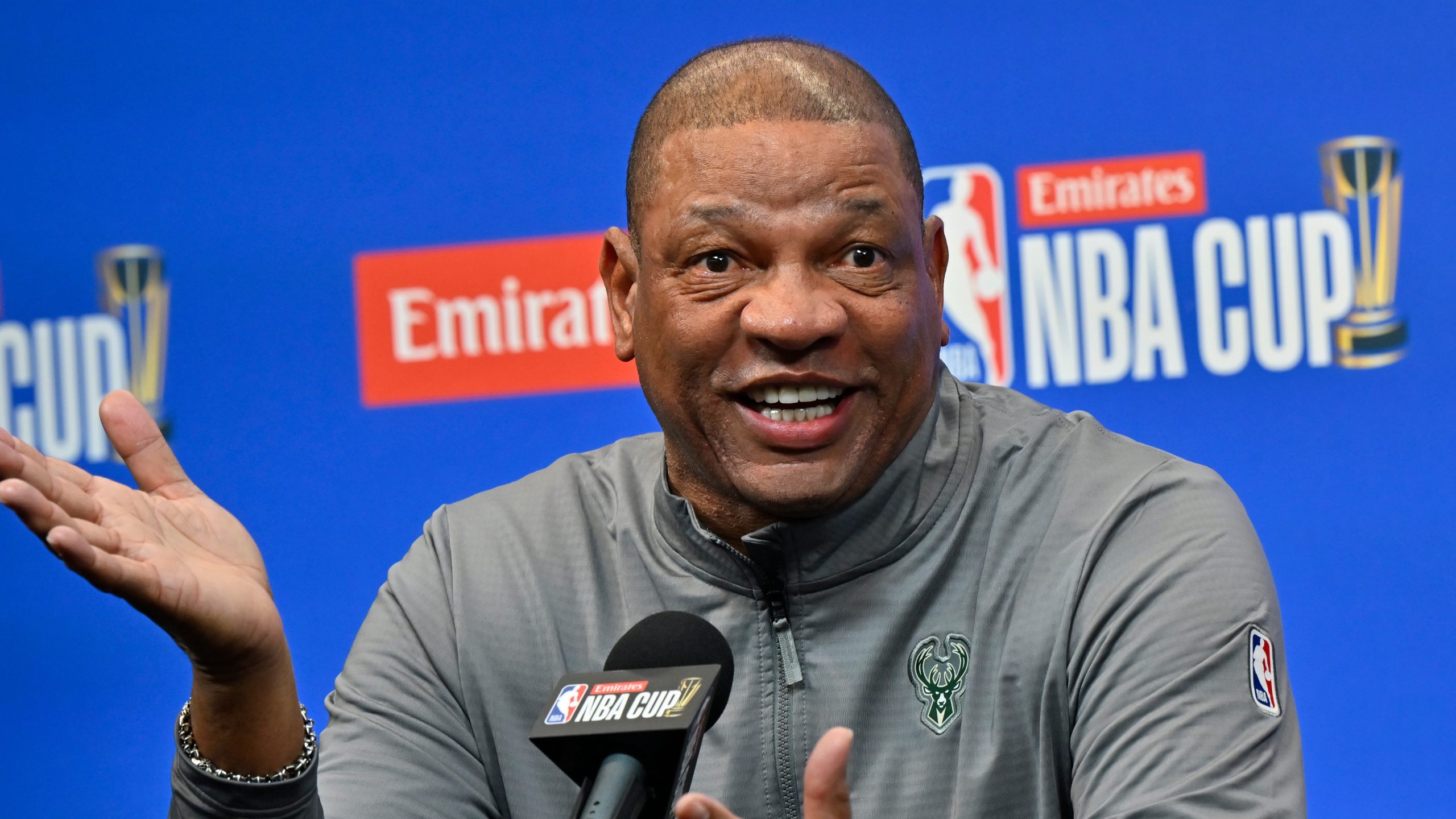
Speaking before Sunday’s Bucks-Celtics game in Boston, Rivers reaffirmed his previous characterization of the death of Renee Good in Minnesota as “a straight-up murder” by an ICE agent. When pressed, he clarified that he meant the term both in a legal sense and as a moral judgment.
“The training of ICE is horrible,” Rivers stated flatly. “You all know that.”
Rivers didn’t stop there. He expanded his critique to suggest that people of color in America should fear being targeted by federal immigration agents in their daily lives. Invoking the NBA’s Pioneers Day celebration, he made a startling claim about Hall of Famer Hakeem Olajuwon.
“I look at our league, look at the NBA, we’re celebrating Pioneers Day today, right? And I look at our league and I think… Olajuwon could have been taken off the streets,” Rivers said. “But we would, right now, the way brown people feel, only the brown people would be taken off the streets.”
When asked directly if he was suggesting that law-abiding “brown people” should worry about ICE, Rivers responded unequivocally: “We all should be.”
As of Tuesday evening, the NBA has offered no public comment or response to Rivers’ inflammatory remarks. OutKick reports reaching out to the league on Monday with a simple question about Rivers’ statements but received no reply.
The silence from the NBA leadership stands in sharp contrast to the league’s typically vocal stance on social justice issues. This institutional non-response effectively allows Rivers’ serious allegations—that a federal agent committed murder and that Americans should fear racial targeting by immigration officials—to stand unchallenged on an NBA platform.
This situation differs markedly from a recent incident involving Golden State Warriors coach Steve Kerr, who acknowledged he had misspoken about ICE and apologized for spreading misinformation. Rivers has taken the opposite approach, reinforcing his position without qualification.
The NBA’s silence leaves a vacuum that fans and observers can interpret in multiple ways. Those who disagree with Rivers might view the league’s non-response as institutional cowardice, while those who support his views could interpret it as tacit agreement.
The controversy raises important questions about institutional responsibility when coaches use league platforms to make serious accusations against federal agencies and officials. Rivers made these statements at an NBA-branded podium during an official press conference before an NBA game, using the league’s platform to advance contentious political claims.
What makes the situation more notable is the NBA media ecosystem’s initial reluctance to follow up on Rivers’ original comments. It took nearly a month before OutKick questioned him in Boston, suggesting a broader hesitancy within basketball media to probe controversial political statements.
When confronted with the question, Rivers initially responded by asking about the reporter’s affiliation and making sarcastic comments about OutKick’s presence at the Pioneers Day celebration—a rhetorical technique that attempted to shift focus to the questioner’s motives rather than addressing the substance of his own remarks.
As this situation continues to unfold, the NBA’s decision to remain silent speaks volumes about how the league navigates the complex intersection of sports, politics, and public discourse in today’s polarized environment.
Fact Checker
Verify the accuracy of this article using The Disinformation Commission analysis and real-time sources.

6 Comments
Coach Rivers seems to be taking a principled stand on a sensitive and controversial topic. His criticism of ICE’s training and tactics, and the broader racial implications, are thought-provoking. I wonder what impact, if any, his comments will have.
Rivers raises some valid points about the mistreatment and targeting of people of color by immigration enforcement. His reference to Olajuwon is a striking example. The NBA’s silence on this issue so far is noteworthy.
Rivers is certainly not holding back in his assessment of ICE and the racial dynamics involved. The league’s silence so far is puzzling, given their previous stances. This could be a pivotal moment for the NBA to demonstrate its values and principles.
While the NBA has made efforts around social justice issues, Rivers’ statements suggest there is still work to be done. His comparisons to the league’s Pioneers Day celebrations add an interesting historical context. I hope this spurs more open dialogue.
Coach Rivers is clearly passionate about this issue and willing to speak out forcefully. His comments about Olajuwon are a compelling example. I’m curious to see if this leads to any changes or initiatives from the NBA leadership.
Interesting to see a high-profile NBA figure like Doc Rivers speak out so forcefully against ICE and racism. His comments highlight the wider social issues that intersect with sports. Curious to see if the league will respond in any way.