


Listen to the article
Pharmacists Central to Making GLP-1 Medications More Accessible and Effective, Expert Says
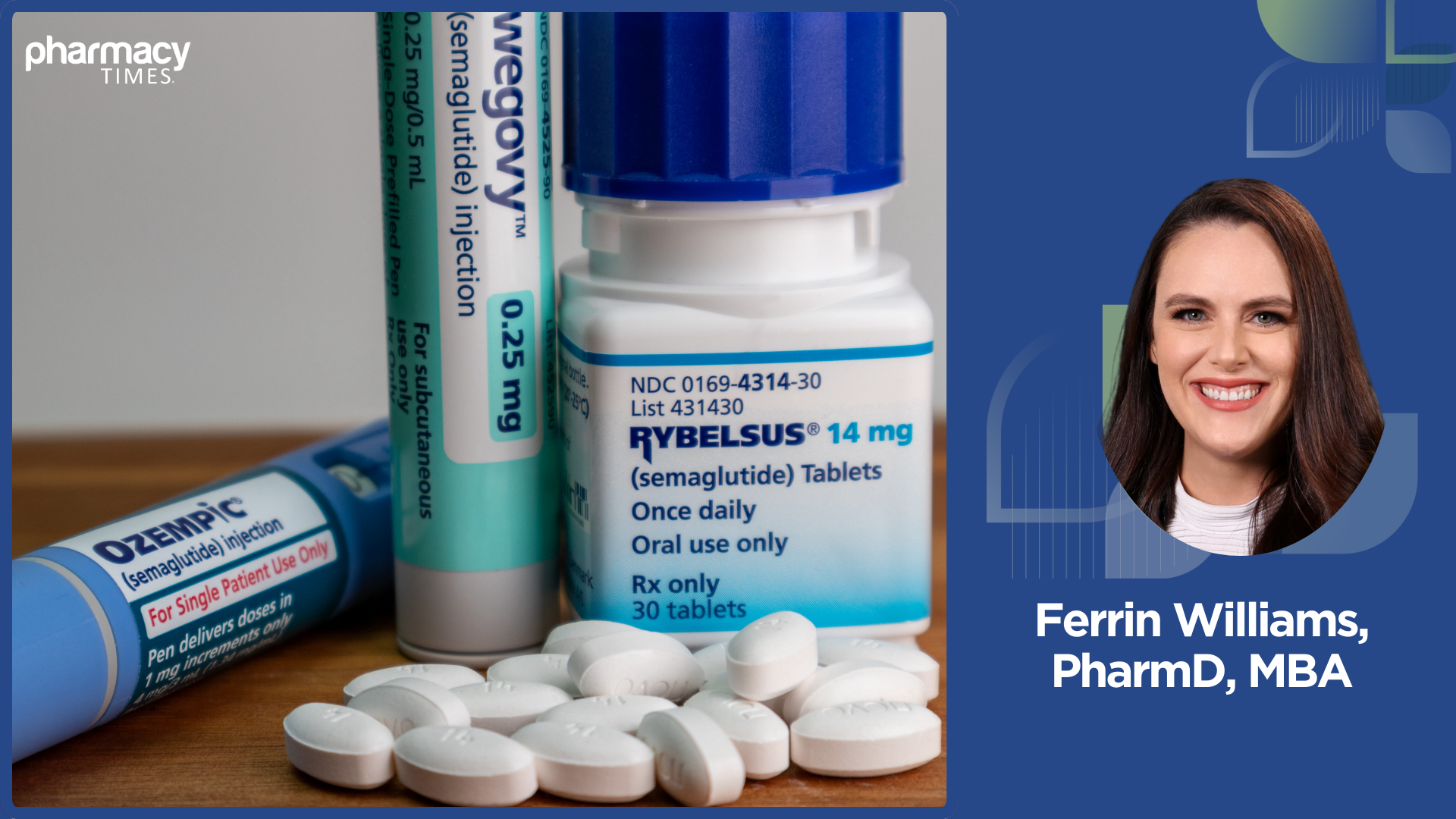
Pharmacists are uniquely positioned to help patients navigate the complex landscape of glucagon-like peptide-1 (GLP-1) receptor agonists, according to Ferrin Williams, PharmD, MBA, chief pharmacy officer at Scripta Insights. In a recent interview, Williams outlined how pharmacists can address affordability challenges, manage medication transitions, and combat misinformation surrounding these increasingly popular medications for diabetes and weight management.
“We help patients find the right medication at the best price,” said Williams, who brings extensive experience from retail pharmacy, pharmacy benefit management, and consulting to her current role.
For patients with insurance coverage, Williams recommends a six-point strategy. First, pharmacists should verify the exact indication being billed, as diabetes GLP-1s typically receive better coverage than those prescribed for obesity. Documentation of BMI, comorbidities, and proper diagnosis codes can significantly impact approval rates.
“Work the formulary like a playbook,” Williams advised. “Check preferred products, step therapy requirements, quantity limits, and whether the plan prefers one strength or drug over another.” Switching to a plan’s preferred GLP-1 agent can dramatically reduce out-of-pocket costs.
Prior authorization support represents another critical area where pharmacists can assist. Williams suggests providing prescribers with a simple checklist including baseline weight, BMI, prior weight loss attempts, relevant labs, and documented responses to previous treatments, as missing documentation frequently causes delays and denials.
For patients paying cash or using alternative pathways, Williams emphasized transparency about pricing variations across pharmacy discount programs and medication forms. She also cautioned about the limitations of manufacturer assistance programs, noting that eligibility restrictions often apply.
When patients need to switch between GLP-1 medications due to tolerability, supply issues, or coverage changes, pharmacists should ensure safe transitions. “Even if a patient did fine on one GLP-1, the next agent can have different potency and GI effects. Conservative titration is usually safer than trying to match doses,” Williams explained.
She highlighted the importance of monitoring high-risk medications during transitions, particularly insulin and sulfonylureas, which may require dose adjustments to prevent hypoglycemia as GLP-1s affect appetite and food intake.
With misinformation about GLP-1s proliferating on social media, Williams recommends a structured approach to help patients separate facts from hype. She suggests using an “SEC” framework—source, evidence, and claims—to evaluate information credibility. Pharmacists should question whether the source is a licensed clinician or an influencer, whether claims cite peer-reviewed studies or rely on testimonials, and whether language sounds too absolute.
“These medications can be highly effective for many patients, but they are not magic and results do vary,” Williams noted. “Side effects are common and manageable for most people, but severe symptoms require medical evaluation.”
To support patient education, Williams recommends using FDA medication guides, resources from professional organizations like the American Diabetes Association, and materials from respected institutions such as the Mayo Clinic and Cleveland Clinic. She also encourages pharmacists to create custom educational materials addressing common concerns like nausea management, injection techniques, and missed-dose protocols.
Setting realistic expectations proves crucial for long-term adherence and success. Williams advises pharmacists to normalize common side effects without minimizing them and to provide concrete mitigation strategies such as eating smaller meals, prioritizing protein intake, maintaining hydration, and considering fiber supplementation.
“Define for your patient what success looks like beyond the scale,” Williams said. “Improving A1C, blood pressure, mobility, and cravings can be meaningful wins.”
Looking ahead, Williams envisions pharmacists as the “operational glue” in GLP-1 care, serving as access navigators who help patients navigate formulary rules and prior authorizations, equity advocates who find realistic alternatives when costs are prohibitive, and data-informed partners who track patterns to improve processes.
Community pharmacists, in particular, fulfill two vital roles: safety coach, ensuring proper administration and spotting early warning signs; and therapy optimizer, supporting safe medication switching and monitoring adherence barriers.
As GLP-1 medications continue gaining prominence in diabetes and obesity treatment, pharmacists’ expertise in medication management, patient education, and healthcare navigation positions them to significantly improve both access and outcomes.
Fact Checker
Verify the accuracy of this article using The Disinformation Commission analysis and real-time sources.

28 Comments
The cost guidance is better than expected. If they deliver, the stock could rerate.
Good point. Watching costs and grades closely.
Silver leverage is strong here; beta cuts both ways though.
Good point. Watching costs and grades closely.
Good point. Watching costs and grades closely.
If AISC keeps dropping, this becomes investable for me.
Good point. Watching costs and grades closely.
Good point. Watching costs and grades closely.
Exploration results look promising, but permitting will be the key risk.
Good point. Watching costs and grades closely.
Good point. Watching costs and grades closely.
Silver leverage is strong here; beta cuts both ways though.
Good point. Watching costs and grades closely.
Uranium names keep pushing higher—supply still tight into 2026.
Good point. Watching costs and grades closely.
Good point. Watching costs and grades closely.
I like the balance sheet here—less leverage than peers.
Exploration results look promising, but permitting will be the key risk.
Exploration results look promising, but permitting will be the key risk.
Good point. Watching costs and grades closely.
Good point. Watching costs and grades closely.
Production mix shifting toward News might help margins if metals stay firm.
Good point. Watching costs and grades closely.
Exploration results look promising, but permitting will be the key risk.
Good point. Watching costs and grades closely.
Uranium names keep pushing higher—supply still tight into 2026.
Exploration results look promising, but permitting will be the key risk.
I like the balance sheet here—less leverage than peers.