


Listen to the article
Media Literacy in the Age of Misinformation: How MSU Teaches Students to Navigate Complex Information
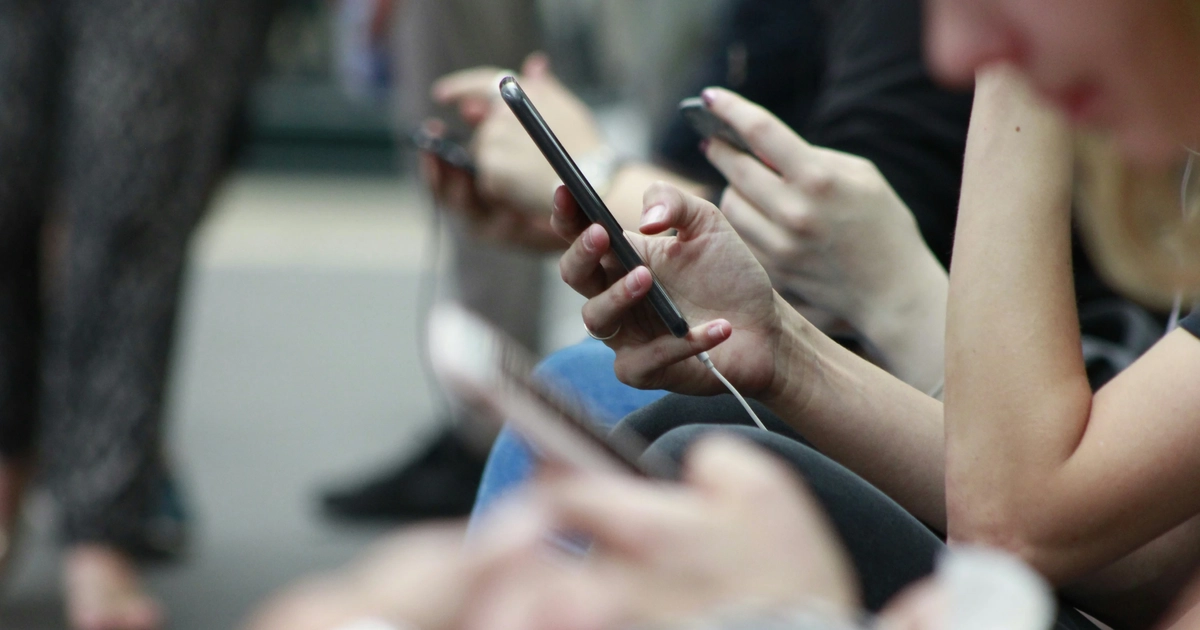
You’re scrolling through social media and see a photo of a public figure with a quote attributed to them. It elicits an emotional response — making you angry, happy or sad. Something, however, seems off. Would that public figure say such a polarizing thing?
You dig deeper and quickly discover there are no references to the quote in any news outlet. It turns out to be fake.
That moment of pausing, questioning and checking other sources is media literacy in action. And according to experts at Michigan State University, we all could be better at it.
In an era dominated by social media and artificial intelligence, MSU faculty and staff are actively helping students develop critical thinking skills to navigate an increasingly complex information landscape.
“Media literacy is fundamentally about the ability to recognize trustworthy information versus what requires closer examination,” explains Dustin Carnahan, associate professor in the Department of Communication at MSU’s College of Communication Arts and Sciences.
Carnahan’s research focuses on misinformation and deepfakes—AI-created media designed to deceive. He studies how people engage with political information and how their consumption habits influence beliefs and behaviors. His work represents just one facet of MSU’s broader research initiative on misinformation and media literacy.
This research doesn’t stay confined to academic journals. It directly benefits MSU undergraduates through information literacy workshops conducted by MSU Libraries, where students learn to analyze sources, think critically, and use information responsibly.
Benjamin Oberdick, head of information literacy at MSU Libraries, leads workshops integrated into first-year writing courses, integrative studies classes, and James Madison College curriculum. “The mission of our unit is to help students find, access, use, evaluate and determine where information is coming from,” Oberdick explains.
These workshops take a practical approach, guiding students through the university’s resources to locate scholarly articles and other reliable sources. “We try to take a holistic approach to sources of information,” says Oberdick. Students are taught to examine URLs (with .gov, .org, and .edu domains generally being more reliable), check for proper sourcing, and verify whether claims are supported by evidence.
The challenge has grown more complex in recent years, according to Maria D. Molina, assistant professor in MSU’s Department of Advertising and Public Relations. “We used to have clear markers of credibility and authority,” she notes. Traditional media outlets like newspapers, magazines, and broadcast networks once held recognized authority.
Social media disrupted this paradigm by democratizing content creation, making traditional credibility assessment more difficult. The rise of artificial intelligence has further complicated matters. “We’re not only trying to distinguish what’s fake, but also what’s AI-generated, because AI doesn’t necessarily mean it’s fake either,” Molina explains. “It’s a crisis of truth and a crisis of authorship.”
The experts agree on a fundamental approach: slow down, question what you see, and verify information through multiple sources. However, Carnahan warns against excessive skepticism that dismisses everything as “fake news.” This approach can be equally dangerous, potentially leading people to disengage from information entirely.
For practical guidance, Oberdick recommends ensuring a story appears in multiple reputable outlets and consulting fact-checking sources like Snopes.com. Molina cautions about AI-generated search summaries, which can sometimes “hallucinate” information and sources. She advises checking whether AI results provide links to original sources and following those links to validate information.
The digital information landscape requires a delicate balance of skepticism and verification. “It is important to employ a healthy level of skepticism and then verify,” Carnahan advises. “Not to the point of disbelieving everything but recognizing the ease with which we can manipulate things to look a certain way or to sound a certain way.”
Taking time to confirm information before sharing or forming conclusions is essential. “If that means that you must spend a little bit more time thinking through the stuff that you encounter? Then so be it,” Carnahan concludes.
In a world where misinformation spreads rapidly, that momentary pause before sharing content could be the difference between amplifying falsehoods and spotting them. MSU’s approach to media literacy emphasizes that this critical skill requires ongoing practice—and that the investment of time is well worth the reward of a more informed perspective.
Fact Checker
Verify the accuracy of this article using The Disinformation Commission analysis and real-time sources.

12 Comments
Interesting to see MSU’s efforts to help students identify misinformation. In an era of social media echo chambers, these skills are more essential than ever.
Yes, the ability to think critically about online content and check sources is a must-have for young people entering the workforce.
Combating misinformation is a critical challenge, and it’s heartening to see universities taking a proactive approach like MSU. This type of training is essential.
Agreed. In an age of information overload, these skills will serve students well long after they leave campus.
MSU’s media literacy program sounds like a great way to empower students to be more discerning consumers of information. Kudos to the university for this important initiative.
Absolutely. Equipping the next generation with the tools to navigate misinformation is a valuable investment in their future.
This is an important initiative. With the proliferation of fake news, having media literacy training in higher education is crucial for the next generation.
Couldn’t agree more. Fostering critical thinking skills around information sources and credibility is vital in today’s digital age.
Developing critical thinking skills to spot misinformation is so important in today’s complex digital landscape. MSU’s efforts to train students on media literacy are really valuable.
I agree, being able to discern trustworthy information from misleading content is a crucial life skill these days.
AI-generated deepfakes are a worrying development. I’m glad MSU is addressing this issue and equipping students with the tools to navigate misinformation.
Absolutely. Deepfakes have the potential to cause real harm, so it’s great to see universities taking the lead on combating this challenge.