


Listen to the article
In a striking rebuke of fact-based judicial decision-making, a federal appeals court has overturned a lower court ruling on immigration enforcement protests in Portland by accepting government representations at face value, despite contradicting evidence from the scene.
The original assessment by a Trump-appointed judge painted a markedly different picture than what many Americans might expect based on right-wing media coverage. According to the judge’s September 26 observation, the protests outside Immigration and Customs Enforcement (ICE) facilities consisted of merely “8 to 15 people at any given time… mostly sitting in lawn chairs and walking around” with “low energy” and “minimal activity.”
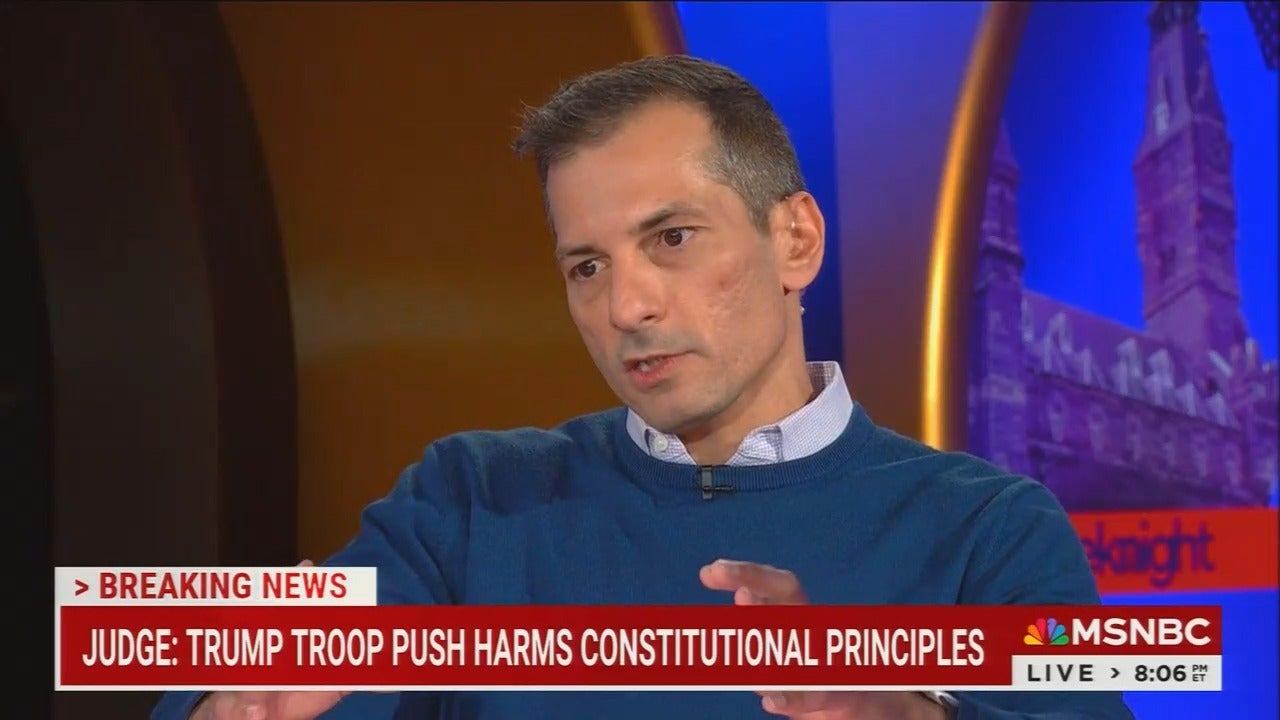
This stark contrast between judicial findings and media portrayal highlights a growing concern about misinformation’s role in shaping both public perception and legal decisions. Media watchdog Angelo Carusone emphasized this disconnect, noting the appeals court’s decision to bypass established facts in favor of government claims.
“What’s scary about that is that NYU just put out a study where they found that 35 courts have pointed out that the government has lied, the administration has lied to them,” Carusone said. “Thirty-five courts have called them out for giving them false information. So, you shouldn’t be taking it at face value at anything.”
The Portland protests represent just one battleground in a larger information war, according to Carusone. He points to a network of self-described right-wing journalists and media figures who have systematically amplified a narrative of chaos and danger that bears little resemblance to the reality on the ground.
These media personalities, some of whom participated in a White House meeting on antifa, have been “pumping poison into the ecosystem for weeks,” Carusone explained. Their tactics reportedly include creating misleading imagery and repurposing footage from 2020 protests to suggest current unrest.
The situation demonstrates a concerning pattern where misinformation follows a predictable path: originating with fringe commentators, amplified through established right-wing media outlets like Fox News, validated by official government attention, and ultimately legitimized through judicial decisions that rely on these representations.
This cycle raises serious questions about fact-finding in legal proceedings, particularly in politically charged cases involving immigration enforcement. When courts accept government representations without scrutiny, despite documented patterns of misrepresentation, the judicial system’s role as an independent arbiter becomes compromised.
The Portland case is particularly noteworthy given that the lower court judge who documented the peaceful nature of the protests was himself appointed by former President Trump, suggesting the factual assessment crossed typical political lines.
Media experts warn this pattern threatens the integrity of both information ecosystems and legal institutions. When courts incorporate media narratives rather than verified evidence, it creates a dangerous precedent that could undermine fact-based governance.
For communities affected by immigration enforcement actions, these distortions have real consequences. Peaceful protesters exercising constitutionally protected rights may face unwarranted escalation or enforcement actions based on mischaracterizations of their activities.
The NYU study referenced by Carusone adds quantifiable evidence to longstanding concerns about government misrepresentations in court. With 35 documented instances of courts identifying false information from administration officials, the pattern suggests systematic rather than isolated problems.
As this case potentially moves through further appeals, legal observers will be watching closely to see whether higher courts prioritize factual findings from the scene or continue to accept government characterizations that align with particular media narratives but diverge from documented reality.
Fact Checker
Verify the accuracy of this article using The Disinformation Commission analysis and real-time sources.
