


Listen to the article
Expert Challenges Claims That Tree Removal Contributed to Fatal Mount Maunganui Landslide
A leading landslide expert has dismissed claims that the removal of exotic trees from Mount Maunganui contributed significantly to last week’s deadly landslide that claimed multiple lives at a popular campground.
Dr. Tom Robinson, a senior lecturer in disaster risk and resilience at the University of Canterbury, told the New Zealand Herald that such arguments are “too simplistic,” noting that the area has a well-documented history of landslides, including previous slips in the exact location where the recent tragedy occurred.
“If you’ve had a landslide at a site, that’s normally a good sign that slope is prone to landslides and that you could get a landslide in the future,” Robinson explained. “The problem we have with landslides is the ‘when’. We can do the ‘where’ relatively well, but the ‘when’ is the hard part.”
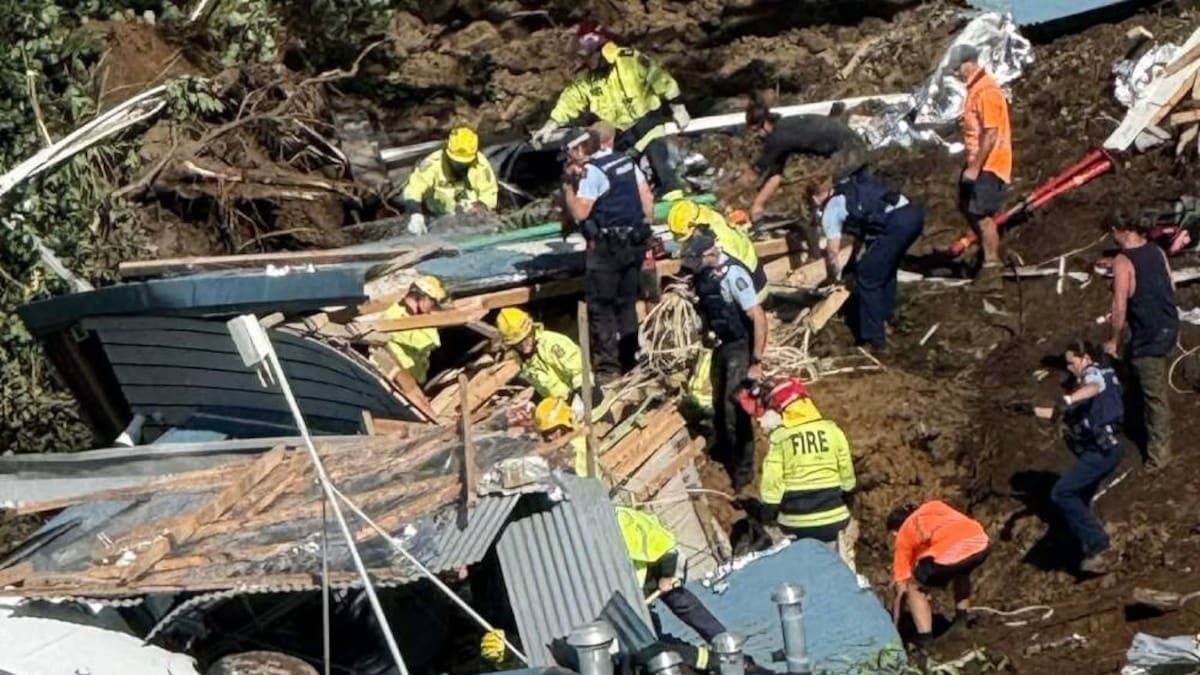
The catastrophic slip occurred last Thursday after an extraordinary 274mm of rain drenched the area within 24 hours, creating conditions that overwhelmed the mountain’s natural drainage capacity.
Critics have suggested that Tauranga City Council’s decision to remove several exotic trees from Mauao in 2023 may have contributed to the disaster. The council had removed three macrocarpa, two chestnut, one pine, one oak and one poplar tree as part of a management plan that emphasized restoring native vegetation to the culturally significant site.
However, Robinson, whose expertise includes geospatial modeling and risk analysis, challenged this view, explaining that the size and depth of the recent landslide suggest that even full tree coverage might not have prevented the slip.
“This looks like the kind of depth where even if you’d had full trees all over there, this wouldn’t have made a huge amount of difference,” he said. “We’ll need a full geotechnical report to confirm that, but the size of this tends to suggest that full tree coverage wouldn’t have made much difference.”
Robinson noted that while vegetation can help stabilize slopes, native trees typically provide better long-term protection against erosion than exotic species due to their more robust root systems. The council’s management plan had included the gradual planting of more than 12,000 native plants on Mauao.
Professor Martin Brook from the University of Auckland, who also spoke with the Herald, reinforced Robinson’s assessment and warned about misinformation circulating after the tragedy. Brook pointed out that trees can sometimes actually increase landslide risk.
“Trees can act like a sail on a yacht,” Brook explained. “Wind loading is a problem, and the tree vibrates backwards and forwards in the wind and eventually gets tilted or uprooted, then all the soil gets exposed and the tree, a mass of soil and tree can then move down the slope.”
He added that trees can also add significant weight to unstable slopes, potentially increasing the driving force behind a landslide.
Mount Maunganui’s geological composition further complicates the situation. The mountain is made up primarily of rhyolite, a type of rock known to weaken significantly under heavy rainfall. This intrinsic vulnerability, combined with the area’s steep slopes, makes it naturally prone to landslides regardless of vegetation coverage.
A scientific study conducted years earlier had already identified the area as susceptible to “mass movement” slips after heavy rainfall. In 2011, Cyclone Wilma delivered 108mm of rain in a 24-hour period, resulting in 80 slips across the mountain, with eight described as “debris avalanches” that flowed over 100 meters down the slopes.
Hours before Thursday’s devastating landslide, water was observed flowing out of saturated soil on the slope near the campground—what Brook described as “a prelude to the landslide” as the ground could no longer absorb or drain the excessive moisture.
Both experts emphasized that a comprehensive geotechnical investigation will be necessary to fully understand the factors that contributed to the tragedy. Tauranga’s mayor, Mahé Drysdale, has confirmed that a full inquiry will be conducted.
The disaster has prompted renewed discussion about landslide risk assessment and management throughout New Zealand, particularly as climate change continues to increase the frequency and intensity of extreme weather events across the country.
Fact Checker
Verify the accuracy of this article using The Disinformation Commission analysis and real-time sources.

8 Comments
Appreciate the expert providing a more balanced view. While tree removal can impact slope stability, the mountain’s history of landslides suggests deeper issues at play. Extreme rainfall appears to have been the primary driver in this tragic event.
Good to see the expert pushing back on simplistic claims about the tree removal’s role. Landslides are multifaceted phenomena, and this location’s history suggests deeper geological vulnerabilities. Rainfall appears to have been the critical factor here.
It’s good to see the expert providing a more nuanced analysis. Oversimplifying the role of tree removal seems unwise when there are complex geological factors at play. Focusing on the ‘when’ of landslides is a crucial challenge.
Sounds like the expert is providing a thoughtful, nuanced perspective on this issue. Focusing too narrowly on the tree removal may distract from the underlying slope instability problems in this area. Rainfall extremes seem to have been the trigger.
The expert makes a fair point – the location’s landslide history indicates inherent geological risks, beyond just the tree removal. Pinpointing the ‘when’ is the real challenge in managing these natural hazards.
Interesting take from the expert. Removing trees can sometimes destabilize slopes, but it sounds like this area has a history of landslides regardless. Heavy rainfall appears to be the primary culprit in this tragic event.
Glad the expert is pushing back on overly simplistic claims about the tree removal. Landslides are notoriously difficult to predict, and this area’s history suggests deeper issues with the slope stability. Heavy rainfall seems to have been the trigger.
The expert’s analysis seems reasonable. Oversimplifying the role of tree removal ignores the complex geological factors involved. Identifying high-risk areas is important, but predicting the timing of landslides remains an elusive challenge.