


Listen to the article
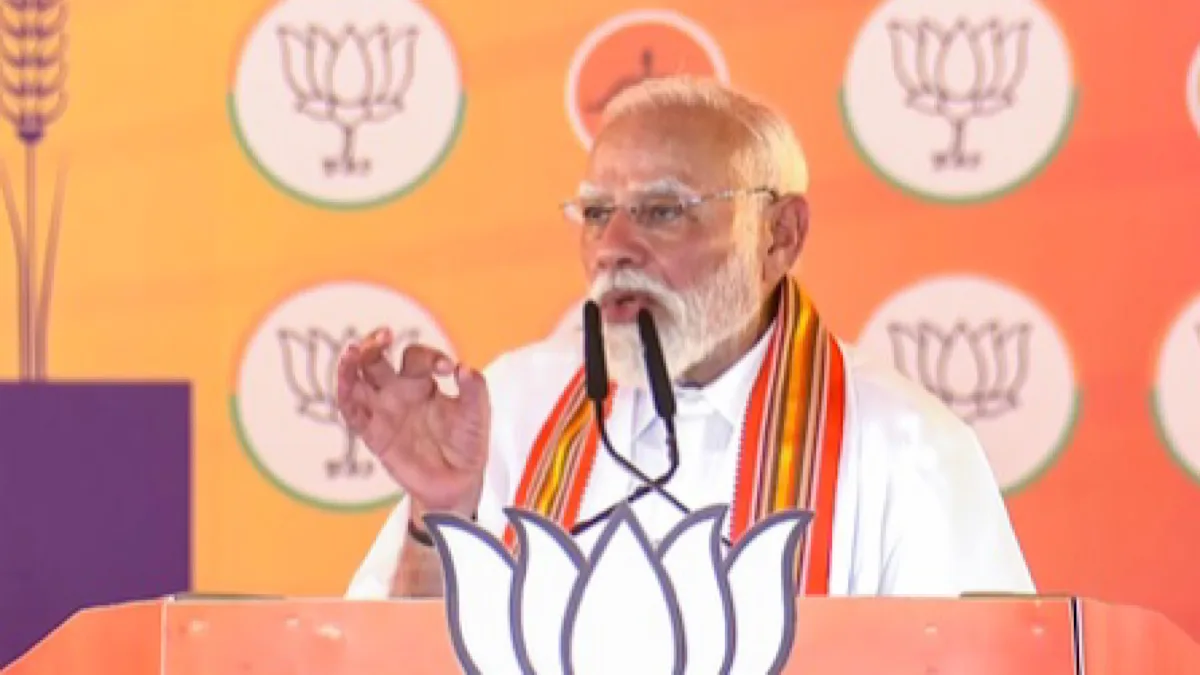
In a powerful address to the nation, Prime Minister Narendra Modi called for unity among Indians as tensions in West Asia continue to escalate, warning that misinformation and political opportunism could undermine the country’s ability to respond effectively to global challenges.
During his latest “Mann Ki Baat” broadcast on Sunday, Modi addressed the ongoing conflict in India’s extended neighborhood, which has now persisted for over a month. The Prime Minister emphasized the serious economic and geopolitical implications of the crisis, particularly given the region’s critical role in global energy supply chains.
“A fierce war has been going on in our neighbourhood for over a month,” Modi stated, highlighting how the conflict has created worldwide pressure on petroleum supplies. The impact on India is particularly significant as more than 10 million Indians reside and work in Gulf nations.
“Millions of our family members and relatives live in these countries,” Modi noted, expressing gratitude to Gulf nations for supporting Indian expatriates during this turbulent period. He credited India’s strengthened international relationships and diplomatic outreach over the past decade for helping the nation navigate such crises with greater confidence.
The Prime Minister issued a stern warning against rumor-mongering, urging citizens to rely exclusively on verified information from official sources. “Those who spread rumours are causing great harm to the nation,” he cautioned. “I appeal to all citizens to remain vigilant and not fall prey to such misinformation. Trust the information being continuously provided by the government.”
Modi also delivered a message to politicians, stressing that national security and interests must transcend partisan politics. “This is a matter concerning the interests of 1.4 billion citizens. There is no place for selfish politics,” he emphasized, underscoring the importance of national unity during uncertain times.
Reflecting on broader global challenges, Modi referenced the lingering effects of the COVID-19 pandemic and noted that just as the world anticipated recovery and growth, recurring conflicts have impeded progress. “March has been a very turbulent month globally,” he observed. “We had expected that after COVID, the world would move forward on a new path of progress, but war-like situations have persisted.”
Beyond international concerns, the Prime Minister highlighted several domestic initiatives focused on cultural preservation and public participation. He spoke about the Gyan Bharatam Survey, an ambitious project aimed at documenting India’s extensive manuscript heritage, and encouraged citizens to contribute through a dedicated digital platform. The initiative has already received contributions from diverse states including Arunachal Pradesh, Punjab, Rajasthan, and Ladakh.
Modi emphasized the pivotal role of youth in nation-building, praising the ‘Mera Yuva Bharat’ initiative for engaging young citizens in constructive activities. “When the strength of our youth is harnessed for nation-building, it becomes incredibly powerful,” he remarked.
The Prime Minister celebrated recent sporting achievements, including India’s victory in the ICC Men’s T20 World Cup and Jammu and Kashmir’s first-ever Ranji Trophy triumph. He characterized these successes as indicators of India’s growing sports culture and potential to inspire wider participation among young people.
With summer approaching, Modi stressed the importance of water conservation through community action, including rainwater harvesting and revitalizing water bodies. He also promoted environmental initiatives such as large-scale tree planting and the increasing adoption of solar energy under government programs.
Modi concluded his address with a message of confidence in India’s collective strength and resilience. “Just as we have overcome challenges in the past with the power of 1.4 billion citizens, I am confident we will emerge stronger from this situation as well,” he assured the nation.
The Prime Minister’s address comes at a critical juncture as India navigates complex geopolitical dynamics while working to maintain domestic stability and economic growth amid global uncertainty.
Fact Checker
Verify the accuracy of this article using The Disinformation Commission analysis and real-time sources.

16 Comments
The energy supply implications are a major concern. With India’s heavy reliance on Gulf oil and gas, this conflict could have significant economic repercussions if not handled carefully.
Absolutely, maintaining stable energy supplies will be crucial for India’s economy. Modi is right to emphasize the gravity of the situation.
I’ll be closely following how India’s government responds to the evolving situation in the Middle East. Its ability to protect its citizens and safeguard its energy and trade interests will be a true test of its diplomatic prowess.
The economic and security implications of this Middle East conflict for India are substantial. Modi’s call for a measured, diplomatic response is prudent, but the road ahead will not be easy.
Absolutely. India will need to carefully balance its various interests and leverage its regional partnerships to navigate this complex geopolitical landscape effectively.
The Prime Minister’s caution about misinformation is well-founded. In today’s hyperconnected world, the spread of false narratives can severely undermine a country’s crisis response.
Agreed. Proactive communication and fact-checking will be crucial to counter the proliferation of misinformation during this tense geopolitical climate.
The geopolitical implications of this Middle East conflict extend far beyond the region. India’s strategic position and economic ties make it highly vulnerable to the fallout.
Absolutely. India will need to carefully balance its diplomatic and economic interests as this crisis unfolds.
A thoughtful address from PM Modi, urging national unity during this complex geopolitical crisis. His focus on misinformation and the need for a measured, diplomatic response is important.
Agreed. India’s strong ties with Gulf nations will be critical in navigating this situation effectively and supporting its citizens abroad.
Kudos to PM Modi for addressing this sensitive issue directly and urging national unity. Maintaining social cohesion will be critical as India navigates the challenges ahead.
I’m curious to learn more about the specific steps India is taking to support its citizens in the Gulf region during this turbulent time. Diplomatic engagement will be key.
Good point. India’s ability to protect and repatriate its citizens abroad will be a key test of its crisis response capabilities.
Misinformation is a persistent challenge during global conflicts. Modi’s warning about political opportunism exploiting the crisis is a valid concern that all countries must guard against.
Maintaining national unity during times of crisis is always a challenge, but Modi’s emphasis on this is commendable. India’s diversity and democratic values will be put to the test.