


Listen to the article
The specter of misinformation threatens to derail a potential breakthrough in cancer treatment across Kenya, as medical professionals confront deeply entrenched skepticism toward mRNA technology that could revolutionize oncology care.
In the corridors of Kenyatta National Hospital, oncologists find themselves waging a complex battle against cancer, which claims approximately 80 Kenyan lives daily, while simultaneously combating widespread misconceptions that the very technology offering new hope is harmful.
The irony is stark: as global clinical trials advance to Phase III studies, mRNA technology—the same platform behind COVID-19 vaccines—shows remarkable promise in training the immune system to identify and eliminate cancer cells with unprecedented precision. Yet in Kenya, where annual cancer diagnoses have climbed to roughly 47,000 new cases, the medical community fears that persistent “turbo cancer” conspiracy theories may prevent patients from accessing these potentially life-saving treatments.
Unlike traditional preventative vaccines, therapeutic cancer mRNA vaccines are customized to each patient. Physicians identify specific mutations in a patient’s tumor and encode them into an mRNA sequence. When administered, the vaccine instructs the body to produce proteins that essentially create a “wanted poster” for the immune system, training T-cells to target and destroy malignant cells while leaving healthy tissue unharmed.
However, this scientific advancement faces a significant obstacle in public perception. Following widespread online claims—subsequently debunked by large-scale studies—that COVID-19 vaccines caused aggressive “turbo cancers,” many Kenyans remain deeply suspicious of mRNA technology. This mistrust represents more than a simple misunderstanding; it constitutes a potentially fatal barrier to treatment adoption.
The Kenyan cancer crisis is already severe. The National Cancer Institute reports 122 new diagnoses daily alongside the 80 deaths. Most patients are diagnosed at advanced stages (Stage 3 or 4), when treatment options are limited and outcomes poor. The mRNA therapeutics offer particular promise for “immunologically cold” tumors that typically resist standard treatments, potentially transforming them into targets the immune system can recognize and attack.
The financial implications for Kenyan patients make this situation even more urgent. Cancer care frequently pushes families into economic hardship through overwhelming out-of-pocket expenses. While the government has pledged to increase coverage per patient, resources remain limited. The potential shift from harsh broad-spectrum chemotherapy to targeted, personalized immunotherapies could dramatically improve both outcomes and quality of life—but only if patients are willing to accept these treatments.
“Our primary crisis remains one of timing,” explains Dr. Emily Dasito, an epidemiologist working in Nairobi. “If revolutionary therapy becomes available but patients refuse it due to misplaced fears about the ‘vaccine’ label, the innovation might as well not exist for those who need it most.”
The digital information environment compounds these challenges. A single viral social media post can undermine years of careful public health messaging about biotechnology benefits, particularly in an era where smartphone penetration in Kenya continues to rise rapidly.
Medical professionals now recognize that addressing this mistrust requires more than scientific explanations. Instead of focusing solely on explaining complex molecular mechanisms, doctors are learning to validate patients’ underlying anxieties about medical interventions. The goal has shifted toward reframing these treatments as “personalized medicine” rather than using terminology associated with the politically charged vaccine debates of recent years.
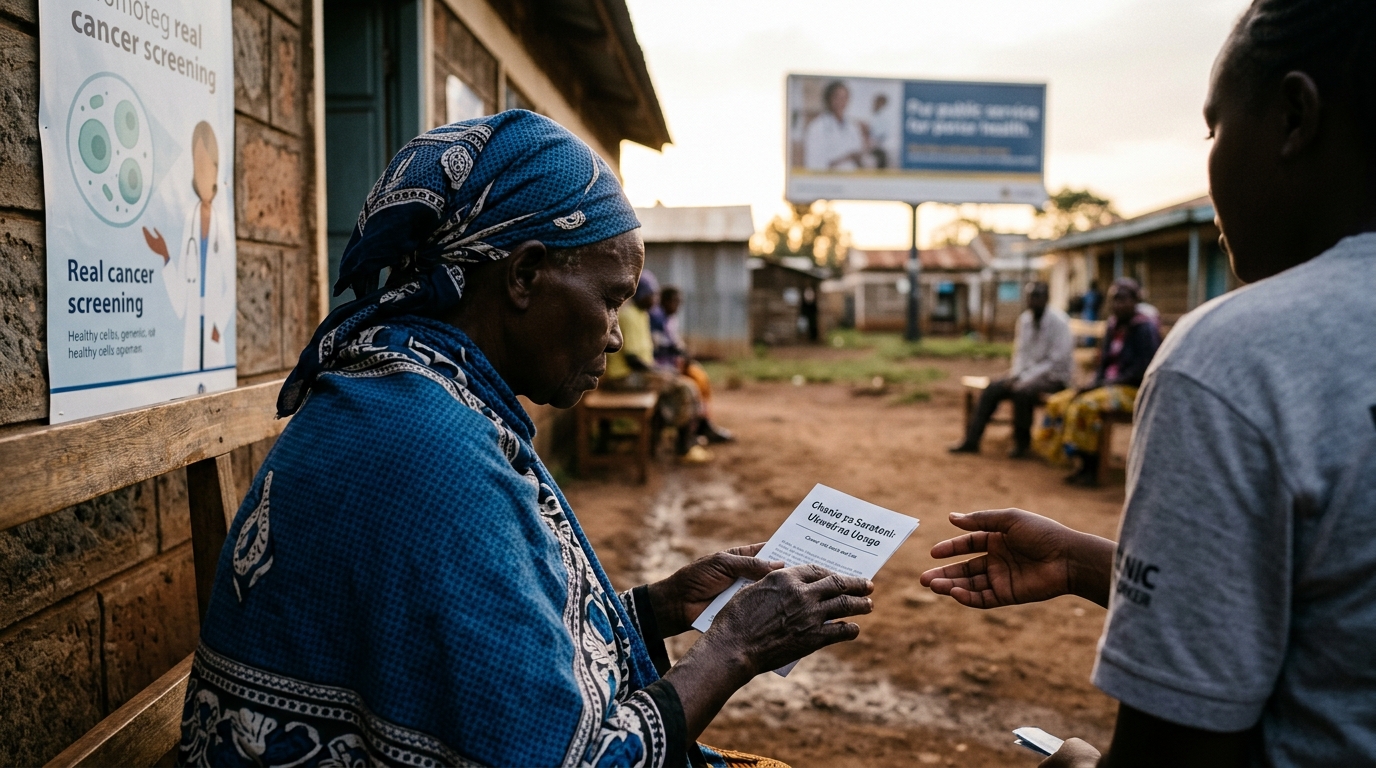
As research institutions in Nairobi prepare to integrate these advanced protocols, their implementation strategy must prioritize transparency and community engagement. This includes working with trusted community leaders, acknowledging the psychological impact of the pandemic, and clearly distinguishing between preventative viral vaccines and therapeutic cancer-targeting treatments.
The stakes couldn’t be higher. For thousands of Kenyans facing advanced cancer diagnoses, the efficacy of the medicine may matter less than whether social factors allow them to trust it enough to accept treatment. The future of oncology in Kenya will ultimately be determined not just by scientific advancement but by rebuilding the bridges of public trust that connect laboratory innovations to the patients who need them most.
If medical professionals fail to separate the technological platform from the political controversies surrounding it, the most significant advancement in generations of cancer therapy may remain tragically inaccessible to the very population it was designed to save.
Fact Checker
Verify the accuracy of this article using The Disinformation Commission analysis and real-time sources.

18 Comments
The potential of mRNA technology for cancer treatment is exciting, but it’s alarming to hear about the spread of misinformation. Oncologists in Kenya face a real challenge in building public trust and overcoming entrenched skepticism.
Absolutely. Effective communication and transparent, science-based outreach will be crucial. With the right approach, they may be able to turn the tide on these harmful conspiracy theories.
It’s promising to hear that mRNA technology is showing remarkable potential for cancer treatment. Customized immunotherapies could be a real breakthrough, but public education will be vital to overcome deep-seated skepticism.
Agreed. Transparent communication from the medical community about the science and rigorous clinical trials will be essential to dispelling misinformation and ensuring Kenyan patients can access these innovative therapies.
This is a complex issue, with lives at stake. While mRNA therapies offer hope, the prevalence of misinformation is deeply concerning. Kenyan medical professionals will need to employ multi-faceted strategies to educate the public and ensure access to these innovative treatments.
Well said. Collaboration between the medical community, government, and trusted local leaders could help counter misinformation and empower Kenyan patients to make informed decisions about their care.
It’s troubling to hear that cancer research breakthroughs in Kenya are being threatened by the spread of misinformation. Overcoming deeply entrenched skepticism towards mRNA technology will require a concerted, evidence-based public education campaign.
Absolutely. Kenyan oncologists face a daunting challenge, but with the right strategies and resources, they may be able to turn the tide and ensure patients can access these potentially life-saving treatments.
The potential of mRNA technology for cancer treatment is exciting, but the prevalence of misinformation is deeply troubling. Kenyan oncologists face a daunting challenge in dispelling harmful conspiracy theories and ensuring patients can access these innovative therapies.
That’s a great point. With the right strategies and resources, the medical community may be able to turn the tide and empower Kenyan patients to make informed decisions about their care.
This is a concerning development. Misinformation can have devastating consequences, especially when it comes to critical medical advancements. I hope the Kenyan medical community is able to effectively counter these harmful conspiracy theories and ensure equitable access to mRNA cancer therapies.
Agreed. Transparent communication, community outreach, and collaboration with trusted local leaders will be essential in building public trust and promoting evidence-based cancer care.
This is a complex issue with significant implications. While mRNA cancer therapies offer hope, the spread of misinformation poses a serious threat to progress. Kenyan oncologists will need to employ a multi-faceted approach to educate the public and build trust in these innovative treatments.
Absolutely. Collaboration between medical professionals, government, and community leaders will be crucial in countering harmful conspiracy theories and ensuring equitable access to these potentially life-saving therapies.
Cancer is a devastating disease, and any advances in treatment should be welcomed. However, the impact of misinformation is concerning. I hope the Kenyan government and medical experts can work together to promote evidence-based cancer care.
That’s a great point. Government support and public health education campaigns could go a long way in combating misconceptions and ensuring equitable access to promising new cancer therapies.
This is a concerning issue. Misinformation can seriously undermine critical cancer research and treatments. I hope the medical community in Kenya is able to effectively address these misconceptions and ensure patients have access to promising mRNA therapies.
Absolutely, access to accurate, science-based information is crucial. Oncologists will need to work closely with the public to build trust and counter harmful conspiracy theories.