


Listen to the article
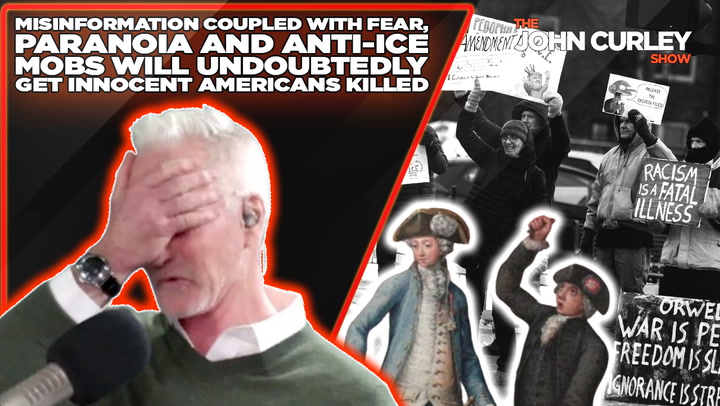
In a stark warning about the dangers of misinformation, radio personality John Curley has raised concerns about how the spread of false information combined with heightened public emotions could have deadly consequences for innocent Americans.
During a recent broadcast of his afternoon program, Curley addressed the volatile combination of misinformation, fear, and paranoia, particularly as it relates to anti-Immigration and Customs Enforcement (ICE) sentiments. The radio host suggested that this combustible mixture creates a dangerous environment where facts become secondary to emotional reactions.
Curley’s comments come at a time when immigration enforcement has become one of the most divisive issues in American politics. ICE operations, particularly those involving deportations and detention facilities, have sparked protests across the country, with some demonstrations escalating into confrontations between protesters and authorities.
Media experts note that in today’s fragmented information landscape, misinformation can spread rapidly through social media channels and partisan news outlets. The emotional nature of immigration issues often means that false narratives gain traction quickly, regardless of their accuracy.
“What we’re seeing is a perfect storm where emotional responses to complex issues are amplified by selective information sharing,” explained Dr. Maria Sanchez, a media studies professor at Columbia University. “When people operate on incorrect information during highly charged situations, the potential for dangerous outcomes increases significantly.”
Law enforcement officials have expressed similar concerns, pointing to incidents where false rumors about ICE operations have led to public panic in immigrant communities and confrontational standoffs between protesters and agents. In several cities, ICE personnel have reported receiving threats following the spread of unverified information about their activities.
The issue extends beyond immigration enforcement. Political scientists have documented how misinformation about various government agencies has contributed to increased polarization and, in some cases, led to violence against public officials or facilities.
Curley’s warning reflects a growing concern among public commentators about the real-world consequences of America’s information crisis. While the radio host approached the topic from his particular perspective, the underlying concern about misinformation leading to potentially deadly consequences has been echoed by experts across the political spectrum.
“When people act on false information, especially in highly charged situations, the results can be unpredictable and dangerous,” said Robert Hoffman, a researcher at the Center for Media Literacy. “This isn’t just about political disagreement anymore—it’s about the basic ability of citizens to discern fact from fiction on matters that affect public safety.”
The timing of Curley’s comments is particularly relevant as the nation approaches another election cycle, when immigration policies will likely feature prominently in political debates. Media analysts predict that the volume of information—and misinformation—about immigration enforcement will increase dramatically in the coming months.
Curley’s daily program, which airs weekdays at 3 p.m. on KIRO Newsradio 97.3 FM in Seattle, regularly addresses controversial social and political issues affecting the Pacific Northwest and the broader national landscape. The station has positioned itself as a forum for discussion about complex issues facing the region.
As public discourse continues to fragment into increasingly partisan channels, media critics emphasize the importance of verifying information before sharing it or acting upon it—especially regarding sensitive issues like immigration enforcement that directly affect vulnerable communities.
Whether Curley’s warning will resonate beyond his audience remains to be seen, but his comments highlight the growing recognition that the consequences of misinformation extend far beyond political disagreements and into potential threats to public safety.
Fact Checker
Verify the accuracy of this article using The Disinformation Commission analysis and real-time sources.

9 Comments
This is a concerning trend. Misinformation can indeed have serious consequences, especially when it comes to sensitive issues like immigration. It’s crucial that we all strive to be well-informed and rely on credible sources.
I agree. We must be vigilant about fact-checking and not spreading unverified claims, no matter how emotionally charged the topic may be.
The radio host makes a valid point. When misinformation and fear converge, it can create a volatile situation where rational discourse gets drowned out. Maintaining objectivity and focusing on facts is paramount.
Absolutely. In the age of social media, the spread of misinformation can happen rapidly. We all have a responsibility to be discerning consumers of information.
It’s troubling to see how misinformation can gain traction and create real-world consequences. The host raises valid concerns about the need for balanced, fact-based discourse, especially on divisive issues.
I agree. In the current climate, it’s more important than ever to be discerning consumers of information and to strive for nuanced, evidence-based discussions.
This is a complex issue without easy solutions. I appreciate the radio host’s attempt to highlight the dangers of misinformation, especially on sensitive topics like immigration. Fact-checking and critical thinking are essential.
Well said. Emotions can often cloud our judgment, which is why it’s crucial to rely on credible sources and avoid knee-jerk reactions to unverified claims.
The radio host’s comments highlight the importance of media literacy and critical thinking. With so much information (and misinformation) available, we must be vigilant about verifying claims before accepting them as fact.