


Listen to the article
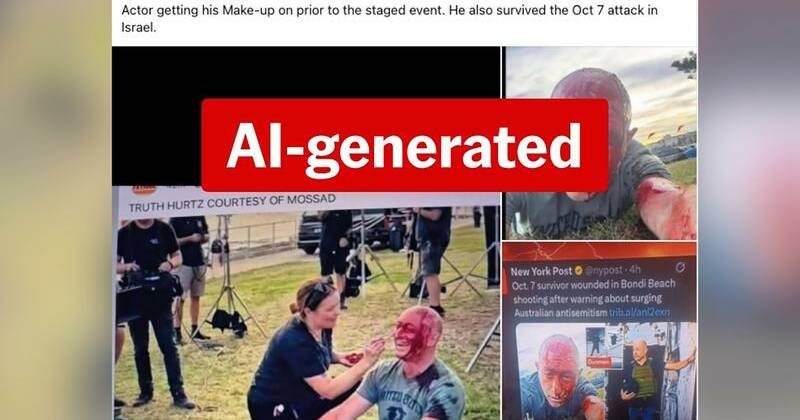
In the aftermath of the deadly knife attack at Bondi Junction Westfield shopping center, a disturbing pattern of online misinformation has emerged, with false claims and conspiracy theories rapidly spreading across social media platforms.
The April 13 attack, which claimed six lives and left several others injured, has become a focal point for misinformation campaigns despite authorities clearly identifying the perpetrator as 40-year-old Joel Cauchi, who had a history of mental illness and was killed by a police officer at the scene.
Within hours of the tragedy, social media was flooded with unfounded claims that the attacker was a Muslim terrorist or asylum seeker, with some posts falsely claiming he had shouted religious phrases during the attack. These narratives gained significant traction despite having no basis in fact, according to multiple fact-checking organizations.
Digital media experts point to a troubling trend where tragic events become fodder for those seeking to advance political agendas. “These patterns of misinformation are becoming increasingly predictable,” explained Dr. Samantha Collins, a researcher specializing in online extremism at the University of Sydney. “There’s an almost immediate attempt to assign blame to minority groups before any facts are established.”
The speed at which false information spread was particularly concerning to authorities. Several posts containing incorrect information about the attacker’s identity and motivation received thousands of shares and comments before being flagged as misleading content.
Far-right commentators and accounts known for promoting anti-immigration sentiment were particularly active in the hours following the attack, with some using the tragedy to call for stricter border controls and criticize current immigration policies. This occurred despite the perpetrator being Australian-born.
Social media platforms have faced renewed criticism for their handling of the misinformation surge. While companies like Meta and X (formerly Twitter) have policies against content that promotes hatred or violence, their enforcement mechanisms appeared slow to respond to the wave of false claims.
“The platforms’ algorithms actually reward engagement, and unfortunately, inflammatory and false content often generates the most interaction,” said Professor Michael Leach, a digital communication expert from RMIT University. “By the time fact-checks arrive, the damage has already been done.”
The situation has prompted calls from public safety advocates for more robust content moderation during crisis events, when the potential for harmful misinformation is at its highest. Some experts suggest implementing temporary stricter content filters when major incidents occur.
Australian Prime Minister Anthony Albanese addressed the issue during a press conference, urging the public to rely on official sources of information. “In times of crisis, misinformation can cause real harm to communities. We must be vigilant against those who would exploit tragedy for their own agenda,” he stated.
The attack has also highlighted the complex issues surrounding mental health services in Australia. While authorities have not speculated on Cauchi’s motives, they confirmed he had struggled with mental illness for much of his life. Mental health advocates caution against narratives that stigmatize all people with mental health conditions.
For the families of victims and the broader Bondi community, the spread of misinformation has added another layer of distress to an already traumatic situation. Community leaders have called for respect and sensitivity as the healing process begins.
Media literacy experts emphasize that consumers have a critical role to play in combating misinformation. “Before sharing content about tragic events, verify the information through multiple reputable sources,” advised Dr. Collins. “Question posts that seem designed to provoke emotional reactions or that make claims without providing evidence.”
As investigations into the attack continue, authorities have committed to providing transparent updates to the public, hoping to counter the spread of conspiracy theories with factual information.
Fact Checker
Verify the accuracy of this article using The Disinformation Commission analysis and real-time sources.

8 Comments
As a concerned citizen, I’m disappointed to see how quickly misinformation can spread on social media following an attack like this. We owe it to the victims and their families to rely on facts, not unsubstantiated claims.
It’s concerning to see how quickly false narratives can take hold in the aftermath of a tragedy like this. We should be cautious about jumping to conclusions and instead let the investigation unfold before drawing any premature judgments.
Absolutely. Spreading misinformation, even with good intentions, can do more harm than good. Better to wait for the facts to emerge before forming opinions.
This is a disturbing pattern we’ve seen play out time and time again. Tragic events become fodder for those with political agendas to push their own narratives, often at the expense of the victims. We must be vigilant in seeking out credible information.
The authorities have provided clear details on the perpetrator’s identity and motivations. I hope the public can resist the temptation to spread unverified claims and instead focus on supporting the community in the aftermath of this tragedy.
Agreed. Spreading misinformation, even with good intentions, can do more harm than good. It’s important to let the investigation unfold and rely on official sources rather than jumping to conclusions.
This is a concerning trend that we’ve seen play out all too often. Tragic events should bring us together, not divide us further through the spread of false narratives. We must remain vigilant in seeking out credible information and not contribute to the problem.
Tragic event, but spreading misinformation is never the answer. We need to rely on facts from credible sources, not unsubstantiated claims. The authorities have provided clear details on the perpetrator’s identity and motivations.