


Listen to the article
Misinformation Spreads Across Sports, Politics, and Entertainment: Weekly Fact-Check Roundup
False information continues to proliferate across social media platforms, with recent viral claims spanning from sports rivalries to geopolitical tensions. This week’s fact-checking efforts revealed several prominent examples of manipulated content that gained significant traction online.
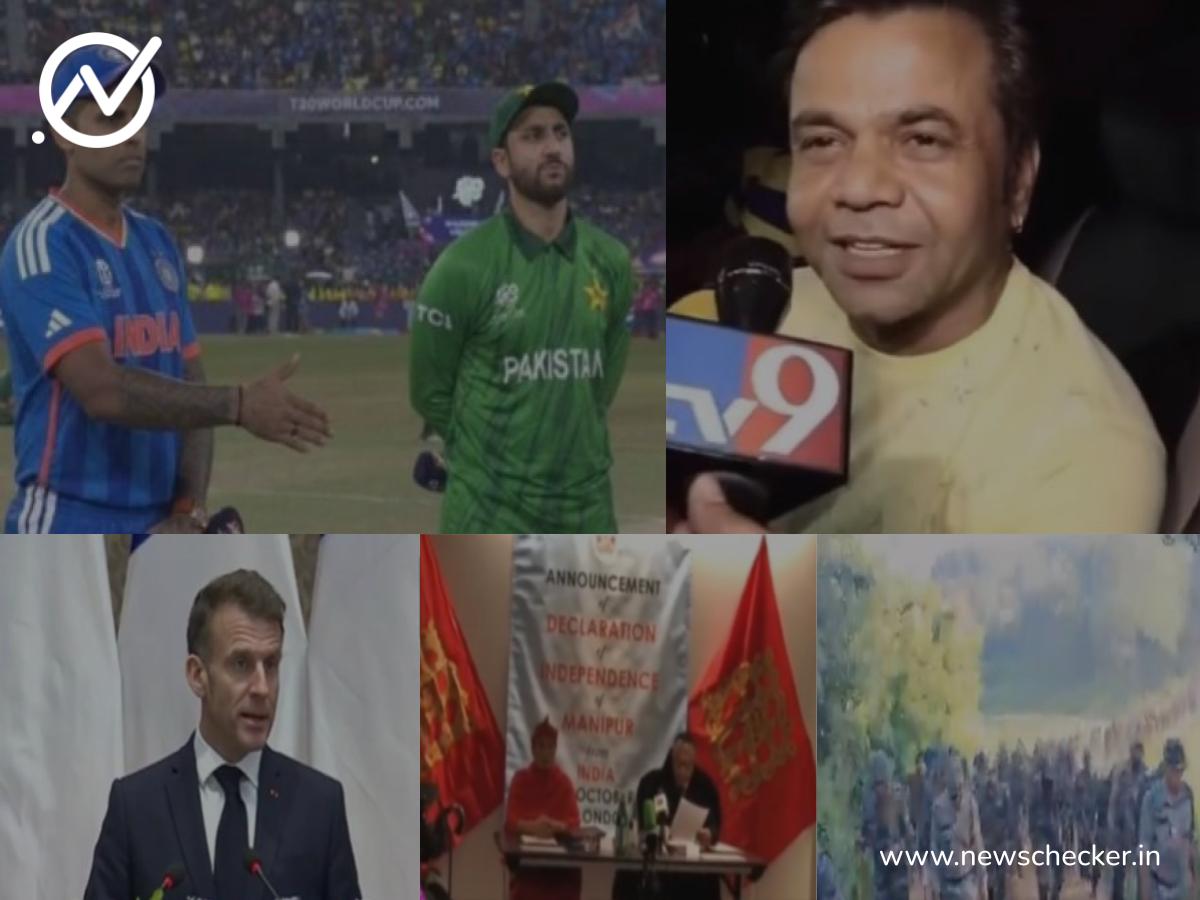
The high-stakes T20 World Cup match between cricket rivals India and Pakistan became a breeding ground for misinformation when a doctored photograph began circulating widely across social platforms. The manipulated image allegedly showed Pakistani captain Salman Ali Agha snubbing Indian skipper Suryakumar Yadav’s handshake during the pre-match toss. Investigation by fact-checkers determined the photo was fabricated, apparently designed to inflame tensions between supporters of the two cricketing nations.
The ongoing conflict in Manipur has similarly become a target for misinformation campaigns. One viral video falsely claimed that Indian security forces had “surrendered” in the northeastern state, with accompanying text suggesting troops had laid down their arms and were retreating from several areas. Fact-checkers traced the footage to an entirely different context—an anti-drug operation in neighboring Tripura—with no connection to the Manipur situation.
In a related fabrication, another widely-shared clip alleged that Manipur leaders had declared “freedom from Indian occupation” and announced separation from the country, citing supposed human rights violations by the Indian Army. This claim was also determined to be wholly false after verification efforts.
International relations became another target when a doctored video appeared to show French President Emmanuel Macron criticizing the Indian Air Force for causing a “billion-dollar market loss” to Dassault Aviation, manufacturer of the Rafale fighter jets. The video claimed Macron stated that France had refused India’s request for a full defense partnership due to “inefficiency within the Indian Air Force.” Fact-checkers determined the video had been digitally manipulated, with no such statement ever made by the French president.
The entertainment world wasn’t spared from misinformation either. A video of Bollywood actor Rajpal Yadav speaking to media was circulated with claims that he was thanking superstar Salman Khan after being granted bail in a ₹9 crore cheque bounce case. Investigation revealed the footage was from an unrelated, earlier incident and had no connection to Yadav’s recent legal troubles.
These incidents highlight the evolving sophistication of misinformation, particularly around emotionally charged topics like international sports competitions, regional conflicts, and celebrity news. Digital manipulation techniques are becoming increasingly difficult to detect at first glance, with doctored photos, out-of-context videos, and fabricated statements capable of reaching millions before being debunked.
Media literacy experts point to the pattern of misinformation often targeting existing tensions—whether between sporting rivals like India and Pakistan, in conflict zones like Manipur, or within complex international relationships like the India-France defense partnership. This targeting exploits emotional responses and existing biases, making critical evaluation less likely among audiences.
The prevalence of such fabrications underscores the critical importance of fact-checking organizations and digital literacy in the current information ecosystem. As manipulation technologies continue advancing, the gap between creation and verification of false content remains a significant challenge for journalists, platforms, and audiences alike.
With the T20 World Cup continuing and various geopolitical situations developing, fact-checkers anticipate further waves of misinformation around these high-interest topics in the coming weeks.
Fact Checker
Verify the accuracy of this article using The Disinformation Commission analysis and real-time sources.

14 Comments
Misinformation can be incredibly damaging, whether it’s related to sports rivalries or regional conflicts. We need to be vigilant about checking the facts and not falling for manipulated content.
Well said. Fact-checking is essential to counter the spread of false narratives and maintain public trust. Responsible reporting and media literacy are crucial.
Misinformation can be incredibly damaging, whether it’s related to sports rivalries or regional conflicts. Fact-checking and relying on credible sources are essential to counter the spread of false narratives.
Well said. Responsible reporting and media literacy are key to maintaining public trust and having an informed, constructive dialogue.
It’s disheartening to see misinformation spreading so rapidly, even around major sporting events. Fact-checking is crucial to maintain integrity and prevent the spread of false narratives.
Absolutely. Verifying information is key, especially when emotions are high. Relying on credible sources is the only way to have an informed and constructive dialogue.
The ongoing conflict in Manipur is a complex and sensitive issue. I hope fact-checkers can help separate truth from fiction and provide accurate, balanced reporting on the situation.
Agreed. We need to be extremely careful about how information is shared, especially around volatile regional conflicts, to avoid further inflaming tensions.
The prevalence of misinformation around high-profile events is troubling. We must rely on credible sources and fact-checkers to provide accurate, balanced information and prevent the spread of false claims.
Absolutely. Fact-checking is crucial, especially when emotions are running high. We need to be vigilant about verifying information to avoid further inflaming tensions.
Disappointing to see misinformation spreading around high-profile sports and political events. Fact-checking is crucial to counter these false narratives and maintain trust in the media.
Agree, we need to be vigilant about verifying information, especially when emotions are running high around rivalries and conflicts.
The doctored photo and false claims about the India-Pakistan cricket match are concerning. It’s important for fans and media to rely on credible sources and avoid fueling tensions through unverified content.
Absolutely. Sports rivalries can bring out the worst in people, but we have to be responsible and not let misinformation hijack the narrative.