


Listen to the article
In a concerning trend for digital information integrity, fact-checkers documented a 30 percent increase in false or misleading content in 2025 compared to the previous year, revealing both greater volume and sophistication in disinformation tactics.
According to a comprehensive analysis by Dismislab, a fact-checking organization, the landscape of misinformation has undergone significant transformation. Political narratives now dominate the sphere, accounting for two-thirds of all fact-checks. Video has become the preferred medium for spreading falsehoods, representing half of all cases, while artificial intelligence-generated content has emerged as a growing threat, making up one in ten instances of disinformation.
The annual review, which examined headlines from more than 4,000 distinct fact-check reports published in 2025, identified key political figures repeatedly targeted by or featured in false information campaigns.
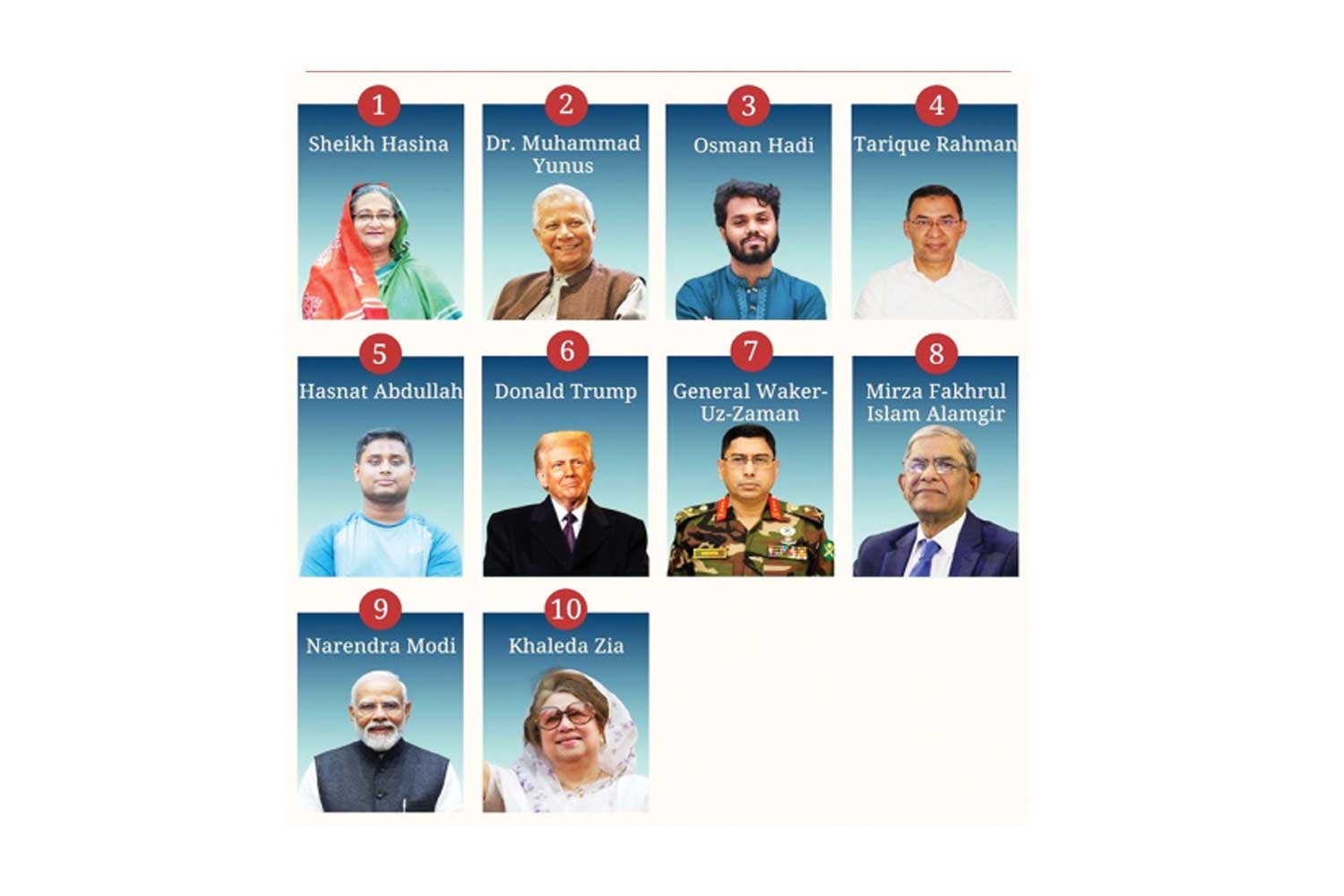
Former Prime Minister Sheikh Hasina topped the list, appearing in 274 fact-check headlines. Much of this misinformation involved recycling her old videos, photographs, and statements, presenting them as recent content. Another significant narrative centered around fabricated claims of Hasina’s imminent return to power following her ouster.
The interim government’s Chief Adviser, Dr. Muhammad Yunus, ranked second with 150 appearances in fact-check headlines. Disinformation campaigns frequently portrayed his administration as unstable and illegitimate, with recurring false claims about his resignation or supposed ultimatums from military leadership.
Other prominent political figures targeted included the late Inqilab Moncho leader Sharif Osman Bin Hadi, BNP Chairman Tarique Rahman, National Citizen Party leader Hasnat Abdullah, U.S. President Donald Trump, Bangladesh Army Chief General Waker-Uz-Zaman, BNP Secretary General Mirza Fakhrul Islam Alamgir, Indian Prime Minister Narendra Modi, and former Prime Minister Khaleda Zia.
The integration of artificial intelligence in creating false information represents a particularly troubling development. Of the disinformation fact-checked in 2025, 10 percent—417 cases—utilized AI-generated content. These sophisticated fabrications spanned nearly all topics, including politics, natural disasters, and international conflicts.
Political disinformation involving AI was especially prevalent. On December 25, multiple AI-generated images circulated falsely showing Tarique Rahman returning to Bangladesh, depicting him at airports or disembarking from planes. Similarly, AI-generated videos purported to show Sheikh Hasina delivering speeches in the Indian parliament, while fabricated images portrayed students holding “We want Hasina” placards.
Throughout 2025, political misinformation remained the most persistent category, consistently outpacing all other topics in volume of fact-checks. While monthly fact-checks averaged around 200 for political misinformation, this figure more than doubled to 408 in December as elections approached.
The September-December period saw a significant surge, partly driven by student union elections at public universities. As the general election neared, false information regarding election timing, methodologies, and party nominations proliferated across social media platforms.
December proved particularly problematic, with the killing of Osman Hadi and Khaleda Zia’s illness and subsequent death triggering waves of misinformation. Following the announcement of parliamentary election and referendum dates, at least 55 instances of election-related misinformation emerged within just one month, primarily focusing on political alliances and fabricated polling results.
A troubling pattern emerged in the content of misinformation, with a persistent tendency to spread fear and anxiety about Bangladesh’s law and order situation. Analysis revealed at least 90 fact-check reports with headlines related to rape allegations, more than 100 focused on murders or killings, and 45 involving cases of abuse or torture.
Religious tensions were also exploited, with false claims about attacks on or persecution of Hindu and other minority communities circulating throughout the year.
The medium of choice for misinformation has evolved significantly, with videos now accounting for nearly 52 percent of all false information, including manipulated footage, out-of-context clips, and AI-generated content. Graphic cards represented 21 percent of fact-checked misinformation.
Perhaps most concerning was the trend of fabricated quotations attributed to political leaders, government advisers, and law enforcement officials, with 74 percent disseminated through impersonation of established media outlets, further blurring the lines between legitimate news and disinformation.
Fact Checker
Verify the accuracy of this article using The Disinformation Commission analysis and real-time sources.

10 Comments
The political focus of much of this misinformation is concerning. Seeing former Prime Minister Hasina repeatedly targeted by false information campaigns raises worrying questions about the motives and methods behind these efforts.
Indeed, the weaponization of old content to mislead the public is a troubling tactic. Fact-checkers and journalists will need to stay vigilant in debunking these types of recycled narratives.
The shift towards video as the preferred medium for spreading falsehoods is an alarming trend. Fact-checkers and media outlets will need to develop new tools and techniques to rapidly identify and debunk manipulated visual content.
Agreed. The rise of deepfakes and other video manipulation technologies is a significant challenge that will require innovative approaches to digital forensics and media authentication.
The prominence of political narratives in this misinformation landscape is worrying. It suggests a concerted effort to sway public opinion through the strategic use of false or misleading information. Maintaining the integrity of the political discourse is vital for a healthy democracy.
This report highlights the urgent need for robust digital literacy programs to empower the public in Bangladesh to critically evaluate online content and spot manipulated media. Investing in these initiatives can help build resilience against misinformation.
Absolutely. Strengthening public awareness and digital verification skills is key to combating the spread of misinformation. Collaborative efforts between government, civil society, and tech companies will be crucial.
The rise of AI-generated content as a disinformation threat is a concerning development. Regulators and tech companies will need to work closely to stay ahead of these evolving tactics and protect the integrity of online information.
Disturbing to see the rise in misinformation in Bangladesh. Fact-checking is critical to counter the growing threat of AI-generated and recycled content being used to spread false narratives. Maintaining digital information integrity is key for a healthy democracy.
Agreed, the scale and sophistication of these disinformation tactics are quite alarming. Strengthening media literacy and digital verification skills will be crucial to address this challenge.