


Listen to the article
Misinformation and Distrust Driving Youth Voter Apathy, INEC Chairman Warns
Professor Joash O. Amupitan (SAN), Chairman of the Independent National Electoral Commission (INEC), has identified misinformation, institutional distrust, and inadequate civic awareness as the primary factors behind declining youth participation in Nigeria’s electoral process.
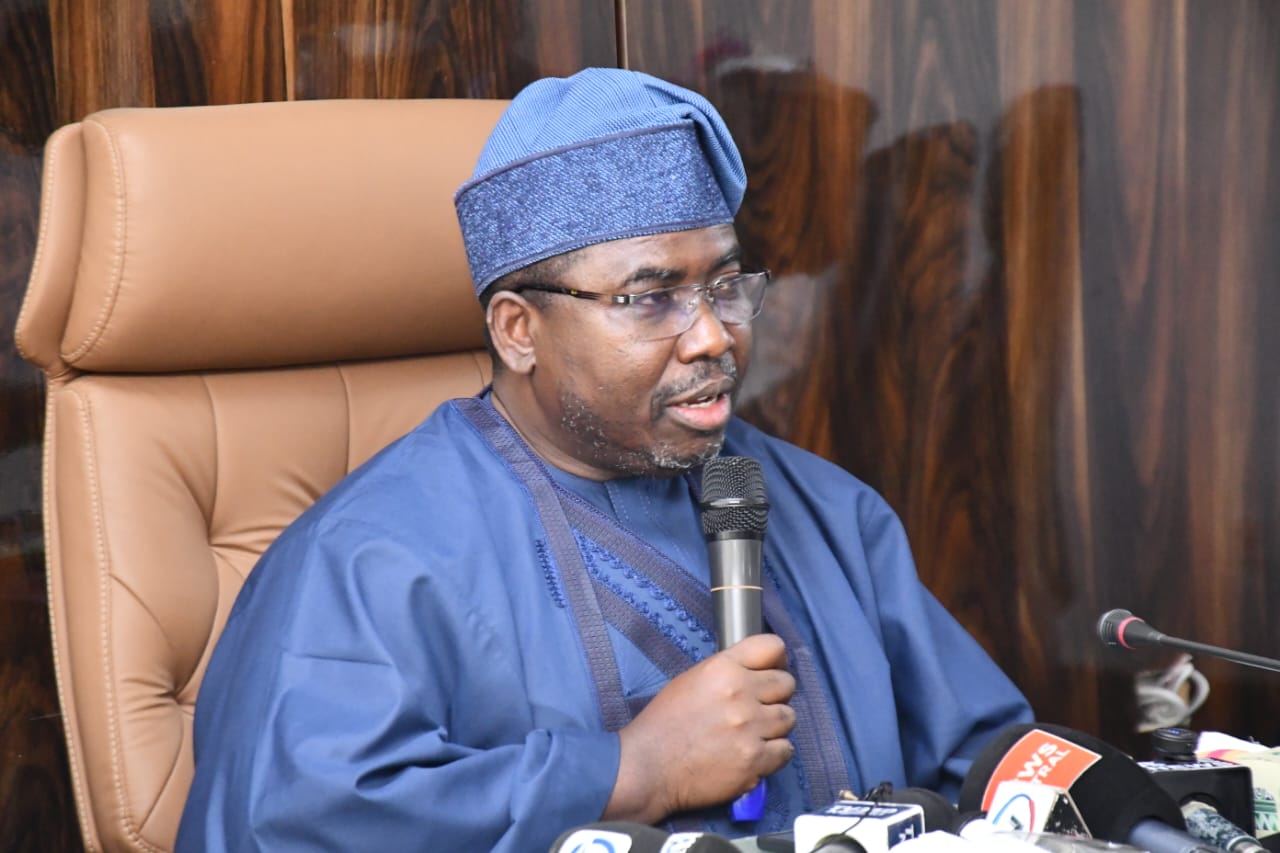
Speaking at the launch of a revised National Voter Education Manual in Abuja on Wednesday, Amupitan emphasized that these factors have created a dangerous democratic imbalance where a minority of citizens determine the future for the entire population.
“For too long, we have accepted a democracy where the 70 percent who stay at home allow the remaining 30 percent to decide the future for everyone,” said Amupitan, whose remarks were delivered by Alhaji Mohammed Haruna, chairman of INEC’s information and voter education committee.
The INEC chairman highlighted that many Nigerian voters, particularly young people who constitute the country’s largest voting demographic, have become disengaged due to the widespread belief that their votes are inconsequential. This perception, he noted, has been reinforced by historical electoral controversies and the proliferation of false information across various platforms.
The new voter education initiative comes at a critical time for Nigeria’s democracy. Recent elections have shown a troubling downward trend in voter turnout despite the country having one of Africa’s largest youth populations. Electoral analysts have pointed to this paradox as a significant challenge to Nigeria’s democratic consolidation.
Bukola Idowu, Executive Director of Kimpact Development Initiative, the organization behind the revised manual, explained that the document has been specifically designed to address the unique needs of Nigeria’s youthful electorate. According to Idowu, the manual employs accessible language and practical approaches to bridge the awareness gap that has contributed to low participation rates.
“Recent elections have revealed a worrying drop in participation, driven by gaps in voter awareness, trust, and engagement,” Idowu stated. The new youth-focused version of the manual aims to position young people not merely as voters but as educators and advocates within their communities, potentially creating a multiplier effect for civic participation.
Electoral reform experts have welcomed the initiative but caution that tackling youth voter apathy requires a multi-faceted approach. Professor Amupitan acknowledged this reality in his address, noting that legislative reforms alone cannot solve the problem without addressing the fundamental issues of trust and engagement.
The timing of this voter education effort is significant as it comes well ahead of Nigeria’s next electoral cycle, giving INEC and civil society organizations adequate time to implement new strategies for youth mobilization.
Political analysts observe that Nigeria’s democratic future largely depends on how effectively the country can engage its youth population in the political process. With over 60 percent of the country’s population under 30 years old, addressing youth voter apathy has become not just an electoral concern but a fundamental question of democratic legitimacy.
The revised manual represents one component of what stakeholders describe as a necessary nationwide effort to rebuild trust in Nigeria’s electoral system. As one electoral observer noted, “When young people disengage from the democratic process, the resulting governance lacks both legitimacy and responsiveness to their concerns.”
INEC’s focus on youth-centered voter education signals recognition at the highest levels that Nigeria’s democratic sustainability depends on meaningful participation across all demographic groups, particularly those who will inherit the country’s future.
Fact Checker
Verify the accuracy of this article using The Disinformation Commission analysis and real-time sources.

8 Comments
This is a concerning issue that extends beyond just Nigeria. Combating misinformation and rebuilding trust in institutions is a global challenge, especially when it comes to engaging youth in the political process. Innovative approaches to civic education could be part of the solution.
Interesting to see the INEC chairman highlighting the growing issue of youth disengagement from the political process due to misinformation and lack of trust. Strengthening civic education and restoring faith in democratic institutions will be crucial to reversing this trend.
The INEC chairman makes a compelling case that the lack of youth participation is creating an unbalanced democracy where the minority determines the future for the majority. Tackling the root causes of disengagement should be a top priority for Nigerian policymakers.
It’s alarming to hear that 70% of Nigerian voters are staying home and allowing the remaining 30% to decide the country’s future. This is a serious democratic deficit that needs to be addressed through sustained efforts to combat misinformation and rebuild trust in the electoral system.
It’s concerning to hear about the low youth voter turnout in Nigeria. Tackling misinformation and rebuilding trust in the electoral system will be key to empowering young people to have their voices heard. Sustained civic engagement initiatives could make a real difference.
As a young Nigerian, I’m worried by the trends of declining youth voter turnout. The INEC chairman raises valid points about the corrosive impact of misinformation and distrust. We need to find ways to empower young people and strengthen their faith in the democratic process.
The INEC chairman is right to call out the democratic imbalance caused by low youth voter participation. Addressing the root causes of misinformation and distrust is essential to creating a more representative political process. Investing in voter education programs could be a good first step.
Agreed, it’s important that young people feel their vote truly matters and can make a difference. Improving transparency and accountability in the electoral system could go a long way in restoring that sense of civic duty and engagement.