


Listen to the article
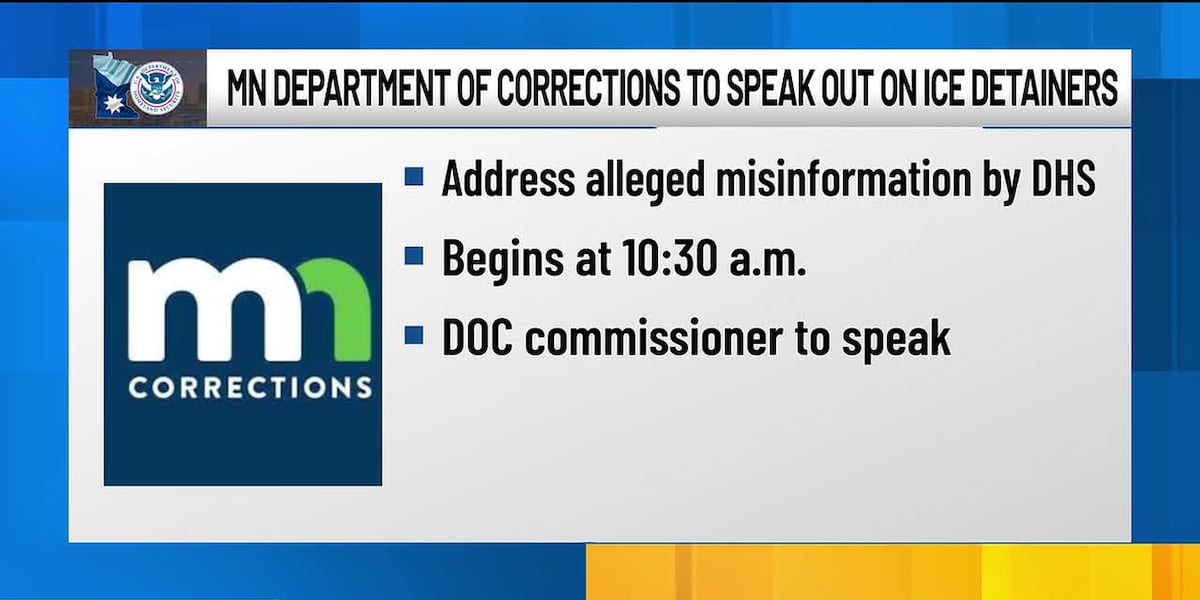
Minnesota corrections officials are set to address what they describe as misinformation spread by the state’s Department of Human Services (DHS) regarding the controversial transfer of civilly committed sex offenders to a correctional facility.
The Minnesota Department of Corrections (DOC) announced it will hold a press conference on Monday at 3 p.m. to correct the record about circumstances surrounding the transfer of clients from the Minnesota Sex Offender Program (MSOP) to the Minnesota Correctional Facility in Lino Lakes.
This public disagreement between two major state agencies highlights growing tensions over Minnesota’s management of civilly committed sex offenders. The MSOP program, operated by DHS, has long been controversial, with legal challenges questioning both the constitutionality of indefinite civil commitment after criminal sentences are completed and the program’s effectiveness at rehabilitation and reintegration.
The transfer of MSOP clients to a correctional facility represents a significant policy shift. Traditionally, these individuals have been housed in treatment-focused facilities in Moose Lake and St. Peter after completing their criminal sentences. The move to a prison setting raises questions about the nature of civil commitment, which legally is not supposed to be punitive.
Sources familiar with the situation indicate the transfers were prompted by ongoing staffing shortages at MSOP facilities and security concerns. The program has struggled with staff retention in recent years, a challenge exacerbated by the COVID-19 pandemic and competitive labor market for corrections and mental health workers.
Community advocacy groups have expressed concern about the transfers, arguing that moving civilly committed individuals to prison settings could undermine treatment goals and potentially violate their civil rights. Several legal experts have suggested the transfers might trigger new constitutional challenges to Minnesota’s civil commitment system.
The public dispute between the DOC and DHS represents an unusual breakdown in interagency cooperation. Typically, state agencies work to present unified policies on sensitive matters involving public safety and treatment of offenders. The decision by DOC officials to publicly contradict another state agency suggests significant disagreements about both facts and policy approaches.
Minnesota has one of the highest per-capita rates of civil commitment for sex offenders in the nation, with more than 700 individuals currently in the program. The state’s approach has been criticized for the extremely low rate of release from the program, with fewer than 15 individuals fully discharged since its inception in 1994.
The MSOP has faced legal scrutiny before. In 2015, U.S. District Court Judge Donovan Frank ruled the program unconstitutional, though that decision was later overturned on appeal. Critics have pointed to the high cost of the program – approximately $120,000 per client annually – compared to traditional incarceration costs of about $40,000 per year.
State legislators are watching the developing situation closely. Senator Ron Latz, chair of the Senate Judiciary Committee, has indicated he may call for hearings on the matter, stating that “transparent communication between agencies is essential when dealing with such sensitive public safety matters.”
Governor Tim Walz’s office has not yet commented on the dispute between the agencies, both of which fall under executive branch authority.
The Monday press conference is expected to address specific claims made by DHS officials regarding the conditions, rationale, and implementation of the transfers. DOC officials have indicated they will provide documentation contradicting statements previously made by DHS leadership about the coordination and planning of the transfers.
The outcome of this interagency dispute could have significant implications for Minnesota’s approach to managing civilly committed sex offenders and may prompt legislative review of the state’s civil commitment laws and practices.
Fact Checker
Verify the accuracy of this article using The Disinformation Commission analysis and real-time sources.

12 Comments
The transfer of MSOP clients to a correctional facility raises some concerns about the potential impact on their treatment and rehabilitation. I hope the DOC can provide a clear and balanced explanation for this policy shift.
This is a complex issue with valid concerns on both sides. I’m interested to see how the DOC addresses the alleged misinformation and outlines their rationale for the transfer.
Civilly committed sex offenders are a challenging population to manage. I’m glad the DOC is addressing the alleged misinformation from DHS, as transparency and accurate information are essential in these cases.
Ultimately, the goal should be to protect public safety while also providing opportunities for rehabilitation and reintegration. I look forward to hearing the DOC’s perspective on this.
The transfer of these clients from treatment-focused facilities to a correctional facility is a significant policy shift. I wonder what the rationale is behind this change and how it may impact the rehabilitation and reintegration efforts.
Rehabilitating and reintegrating sex offenders back into society is a delicate balance. I hope the state can find an approach that prioritizes public safety while also providing meaningful treatment.
Interesting to see the tensions between the DOC and DHS over the handling of civilly committed sex offenders in Minnesota. I’m curious to hear the DOC’s perspective on the alleged misinformation from DHS.
This seems like a complex issue with valid concerns on both sides. Transparency and accountability from the state agencies involved will be crucial.
The disagreement between the DOC and DHS highlights the complexities involved in managing civilly committed sex offenders. I’m curious to learn more about the DOC’s perspective and their proposed solutions.
Transparency and open communication between state agencies are crucial in these sensitive cases. I hope the press conference will provide a clearer picture of the situation and the rationale behind the policy shift.
Misinformation can be a major challenge in sensitive cases like this. I’m glad the DOC is taking steps to correct the record and provide transparency around the transfer of MSOP clients.
The rehabilitation and reintegration of civilly committed sex offenders is a delicate balance. I hope the state agencies involved can find an approach that prioritizes public safety while also addressing treatment needs.