


Listen to the article
Minnesota Corrections Chief Refutes Homeland Security Claims on Immigrant Detainers
Minnesota’s top prison official has escalated his criticism of federal immigration authorities, accusing them of deliberately spreading misinformation about the state’s handling of immigrant detainees.
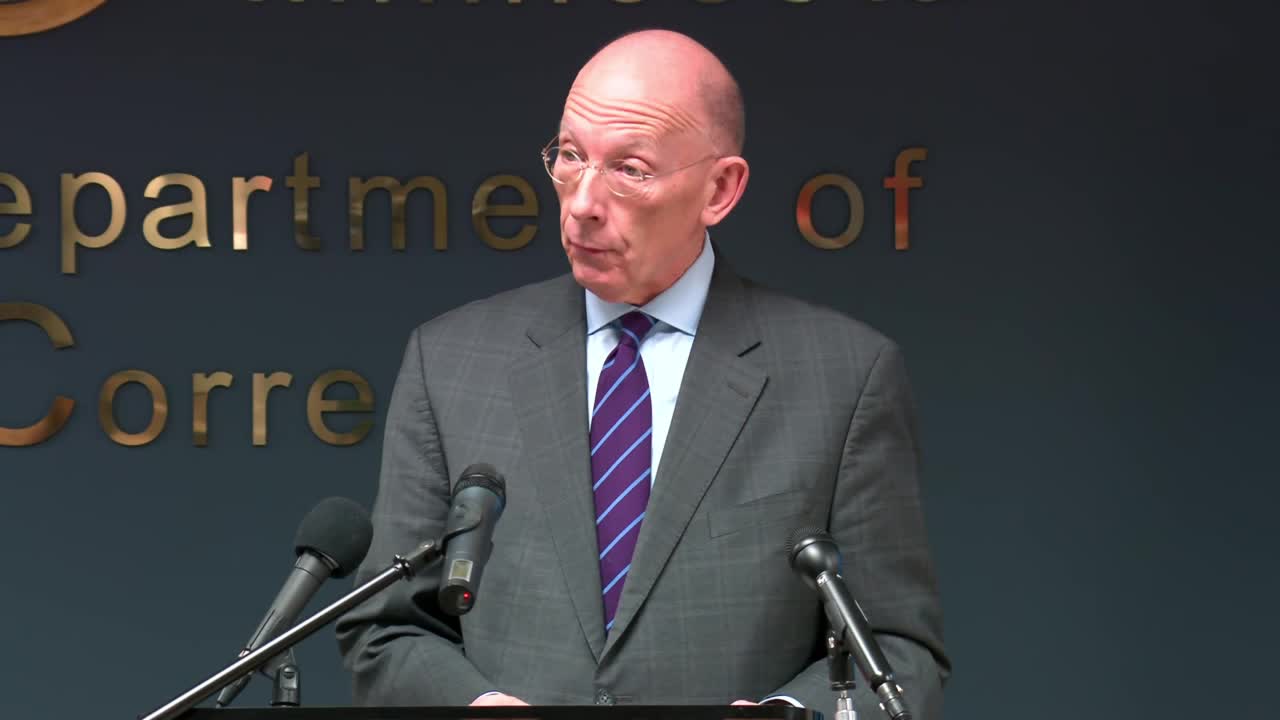
Paul Schnell, commissioner of the Minnesota Department of Corrections (DOC), spoke forcefully at a Thursday press conference about what he characterized as a pattern of false statements from U.S. Immigration and Customs Enforcement (ICE) and the Department of Homeland Security (DHS).
“Despite our best efforts to correct the record and engage directly with the U.S. Department of Homeland Security, they continue to publicly repeat information that is inaccurate and misleading,” Schnell said. “At worst, it is pure propaganda. Numbers released without evidence to stoke fear rather than inform the public.”
The dispute centers around claims about how many immigrants with ICE detainers are in Minnesota custody and whether state authorities are properly cooperating with federal immigration officials.
According to Schnell, DHS has repeatedly claimed there are 1,360 people with ICE detainers in Minnesota custody. However, the DOC’s recent statewide count shows only 301 people with such detainers—207 in state custody and 94 in county jails.
“Despite requests, DHS has provided no data, no data source, no tracking methodology, no jurisdictional breakdown, and no timeframe explaining how their numbers were produced,” Schnell explained. “We have asked to come together around the data. We have received no answer.”
The commissioner also presented evidence contradicting ICE’s public claims about recent arrests. He showed video footage of federal agents picking up two individuals from state custody—Meng Khong Yang and Joshua Fornoh—whom DHS later featured in a “Worst of the Worst” press release, describing them as “criminal illegal aliens arrested yesterday during Operation Metro Surge.”
This directly contradicts statements made earlier Thursday by ICE Executive Assistant Director Marcos Charles, who had claimed the agency doesn’t highlight arrests of individuals turned over by Minnesota prisons.
“We’ve reviewed every single person that DHS has publicly named and here’s what we found: Many individuals were never in Minnesota DOC custody at all, several have no Minnesota court or prison records whatsoever,” Schnell said. Other cases highlighted by DHS involved people released to ICE decades ago, some dating back to the 1990s.
The timing of Schnell’s press conference is significant, coming just hours after Border Patrol Commander Greg Bovino and ICE’s Marcos Charles held their own media event touting immigration enforcement operations in Minnesota.
Charles acknowledged during that event that “The Department of Corrections for Minnesota does honor our detainers; we pick individuals up from the state.” However, he claimed county jails were not cooperating and called on Governor Tim Walz to intervene.
Schnell countered that this demonstrates a fundamental misunderstanding of Minnesota’s legal system. He explained that state law already permits counties to cooperate with ICE detainers, and the governor has no authority to direct county-level detention operations.
Furthermore, Minnesota law requires the state to notify ICE when non-U.S. citizens arrive in custody. Schnell insists the DOC fully complies with this requirement and honors all ICE detainers.
The commissioner pointed out that even in cases where individuals are released and later picked up by ICE, many could have been directly transferred if ICE had placed timely detainers or scheduled pickups. Local jails cannot legally hold people beyond their release dates without proper authorization.
Despite multiple attempts by the DOC to establish better communication with federal immigration authorities to resolve these discrepancies, Schnell said DHS has not responded to their outreach.
“The information that’s being put out certainly does not reflect reality,” Schnell concluded, urging DHS to improve coordination rather than making unsupported claims about lack of cooperation.
The public dispute highlights growing tensions between state and federal authorities over immigration enforcement policies and practices, with potential implications for public safety and immigration policy debates in Minnesota.
Fact Checker
Verify the accuracy of this article using The Disinformation Commission analysis and real-time sources.

16 Comments
Interesting situation with the Minnesota Corrections Commissioner refuting ICE claims. It’s important to have accurate information from officials on sensitive immigration issues.
I agree, transparency and accountability are crucial when it comes to immigration enforcement and detention policies.
The Minnesota Corrections Commissioner’s comments raise valid concerns about the accuracy and transparency of ICE’s claims. Fact-based dialogue is essential to address these complex issues responsibly.
Well said. Constructive cooperation, not confrontation, is what’s needed here to resolve the discrepancies and protect the rights of all involved.
The Minnesota Corrections Commissioner’s pushback against ICE’s claims is an important check on potential misinformation. Maintaining public trust requires transparency from all government entities.
Absolutely. Accurate data and open dialogue between state and federal agencies are critical to ensure fair and effective immigration policies.
The Minnesota Corrections Commissioner’s strong criticism of ICE’s claims raises valid concerns about transparency and accountability in immigration enforcement. Fact-based dialogue is essential.
I agree. Reliable data and open communication between state and federal agencies are crucial to ensure fair and lawful treatment of immigrants.
This situation demonstrates the need for greater coordination and communication between state and federal authorities on immigration matters. Accurate information and collaborative problem-solving should be the priority.
Absolutely. Inflammatory rhetoric and political posturing don’t help resolve the real challenges. A focus on facts and fair policies is what’s needed here.
It’s troubling to hear allegations of ‘pure propaganda’ from the state official. Reliable data and open communication between agencies should be the foundation for any immigration enforcement efforts.
I agree, this situation underscores the need for objective, fact-based policymaking around immigration. Inflammatory rhetoric doesn’t help solve the real challenges.
This dispute highlights the complexity of immigration enforcement and the importance of having clear, consistent data to inform policy decisions. Both sides should focus on finding common ground.
Well said. Constructive cooperation, not confrontation, is the best way to address these sensitive issues and protect the rights of all involved.
This dispute highlights the need for closer coordination and clear communication between state and federal authorities on immigration matters. Both sides should work to provide the public with reliable data.
Absolutely. Misleading information and political posturing don’t help anyone – the priority should be ensuring fair and lawful treatment of immigrants.