


Listen to the article
Nigerian Information Ministry Neglects Funding for Fake News Prevention Despite ₦98.2 Billion Budget
The Federal Ministry of Information and National Orientation has allocated no funds to combat fake news in its 2026 budget, despite receiving a total allocation of ₦98.2 billion. This conspicuous omission comes as Nigeria faces increasing challenges from misinformation, particularly with another election cycle on the horizon.
The ministry has not only failed to increase funding to address misinformation but has completely removed the budget line that existed in 2024, when it had earmarked ₦24.5 million for tackling fake news—an amount experts had already criticized as grossly inadequate. The only remotely related item in the current budget is a ₦14 million allocation for training ministry officers in fact-checking techniques.
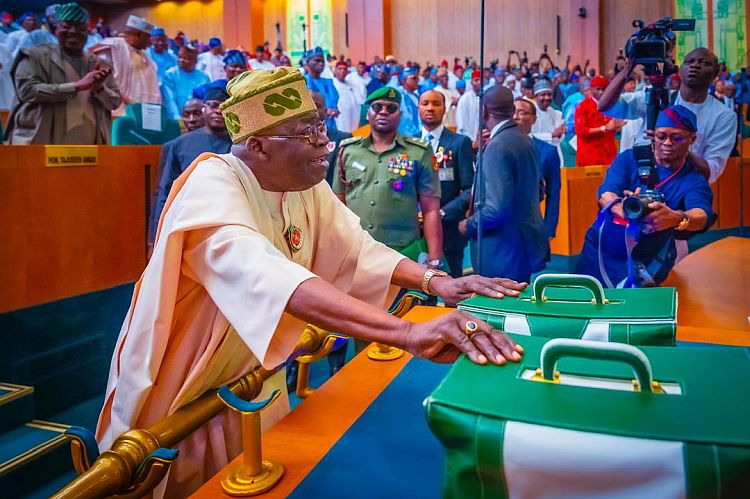
This budgetary decision stands in stark contrast to President Bola Tinubu’s promises when presenting the ₦58.47 trillion 2026 Appropriation Bill to the National Assembly. The budget, titled “Budget of Consolidation, Renewed Resilience and Shared Prosperity,” was framed as a tool to consolidate economic reforms and improve living standards for Nigerians. However, it appears to overlook one of the country’s most pressing challenges.
The World Economic Forum’s Global Risks Report 2026 identifies misinformation and disinformation as the second most severe short-term global risk, outranked only by geoeconomic confrontation and surpassing numerous economic, environmental, and security threats.
Nigeria has experienced firsthand the destructive impact of misinformation. During the 2023 general elections, social media platforms were flooded with doctored photos, videos, and misleading text messages. Similar patterns emerged in the recent Anambra election, where the Nigerian Fact-Checkers’ Coalition later debunked numerous false claims about election violence, vote-buying, and widespread malpractice.
The nation’s international image has also suffered due to misinformation. Following comments by a former U.S. president designating Nigeria as a “Country of Particular Concern” over alleged persecution of Christians, misleading narratives intensified, creating diplomatic tensions. Separatist groups like the Indigenous People of Biafra have leveraged social media platforms to spread false claims about the country, at times contributing to international diplomatic strain.
More recently, Nigeria’s new tax reforms have been subject to widespread misinterpretation online, with little official response to clarify the legislation.
Caleb Ijioma, Executive Director of Round Check, warns that information disorder poses a serious threat to the upcoming 2027 general elections. “With political activities already picking up ahead of the 2027 elections, one would expect the Ministry of Information and National Orientation Agency to be more proactive in curbing the spread of misinformation,” he said.
Ijioma emphasized how misinformation has evolved into a strategic tool for manipulating voter perception. “We have seen its impact in previous elections. It is getting more serious and has now become a global problem. Bad actors continue to deploy sophisticated techniques to undermine electoral processes and incite violence,” he noted.
He pointed to Oxford’s 2025 Word of the Year—”rage bait”—as evidence of how emotionally charged, misleading content is deliberately deployed to drive online engagement. The lack of adequate funding to combat these threats leaves Nigeria’s information space vulnerable to manipulation.
“It sends a signal that Nigeria is not prepared to confront misinformation as a global threat—one that has continued to negatively affect the country,” Ijioma warned, adding that failure to address misinformation could weaken national institutions across health, political, and economic sectors.
Proper funding would enable the development of targeted interventions against misinformation, including dedicated projects to promote media and information literacy. It would also facilitate partnerships with specialized organizations at a time when misinformation represents a growing threat to democracy and economic stability.
As Nigeria approaches another election cycle—typically a period when false narratives intensify—the ministry’s failure to allocate resources to combat misinformation raises serious questions about the government’s commitment to protecting the integrity of its information ecosystem.
Fact Checker
Verify the accuracy of this article using The Disinformation Commission analysis and real-time sources.

13 Comments
This is a worrying development. Nigeria has struggled with misinformation in the past, and the upcoming elections make it an especially critical time to have robust anti-fake news initiatives in place. The ministry’s decision is hard to justify.
I agree. Cutting funding for tackling misinformation is a risky move that could undermine the integrity of Nigeria’s electoral process. The ministry should reconsider this decision and make combating fake news a top priority.
The ministry’s decision to omit funding for anti-misinformation efforts is puzzling and concerning. Combating the spread of false narratives should be a key focus, especially ahead of elections. I hope they revisit this budget allocation.
The ministry’s budget decision is puzzling, given the president’s rhetoric about consolidating reforms and improving living standards. Tackling misinformation should be a key part of that agenda. I wonder what led to this surprising omission.
Good point. The disconnect between the president’s promises and the ministry’s actions is quite striking. One has to wonder if there are political motivations behind this budgetary choice that are not being openly acknowledged.
This is concerning news. Tackling misinformation should be a priority, especially ahead of elections. Allocating no funds for anti-fake news initiatives seems short-sighted. I hope the ministry reconsiders this decision.
I agree. Misinformation can have serious consequences for democracy. The ministry needs to take this issue more seriously and provide adequate resources to combat the spread of false narratives.
It’s concerning to see the ministry take this approach, especially given the importance of accurate information during elections. I hope there is still time for them to revisit this budget and allocate proper resources to fighting misinformation.
Absolutely. Voters deserve to have access to reliable, fact-based information to make informed decisions. The ministry should recognize the gravity of this issue and make it a key focus in the lead-up to the elections.
It’s disappointing to see the ministry completely remove funding for fighting fake news. With Nigeria’s history of election-related misinformation, this seems like a glaring oversight. Fact-checking training alone is not enough.
Exactly. Effective misinformation prevention requires a multi-pronged approach, including public awareness campaigns, partnerships with social media platforms, and dedicated fact-checking teams. This budget allocation falls short on all fronts.
This is a worrying development. Misinformation can have serious consequences for democracy, and the ministry’s decision to remove funding for anti-fake news initiatives is very concerning. I hope they reconsider this stance.
I agree. Tackling misinformation should be a top priority, especially in the context of elections. The ministry’s budget allocation seems shortsighted and could undermine the integrity of the democratic process.