


Listen to the article
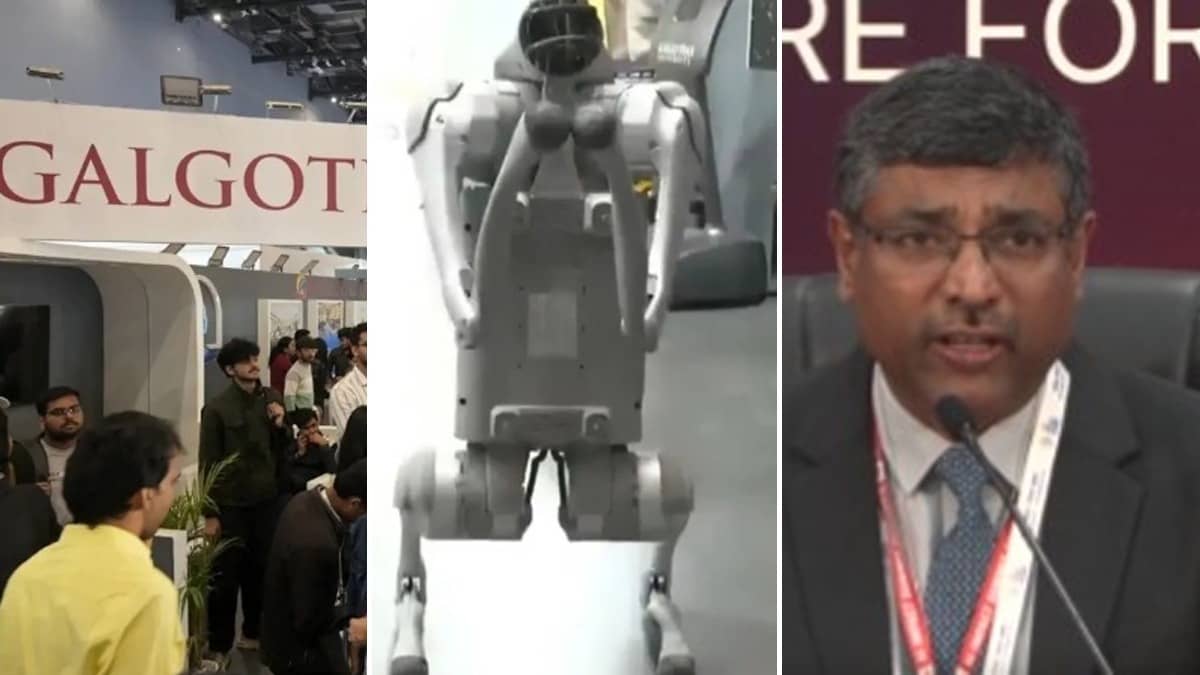
The controversy surrounding Galgotias University’s display at the India AI Impact Summit intensified Wednesday as the institution vacated its exhibition stall following accusations of misrepresenting a commercially available robot as its own creation.
The incident unfolded at New Delhi’s Bharat Mandapam, where the university faced backlash after a faculty member allegedly presented a Chinese-manufactured robot dog as “Orion,” implying it was developed by the institution. The robot’s appearance in the prestigious national exhibition sparked immediate criticism on social media and raised concerns about academic integrity at technology showcases.
Ministry of Electronics and Information Technology (MeitY) Secretary S. Krishnan addressed the situation while speaking to reporters at the summit, emphasizing the importance of authenticity at national exhibitions. Without directly commenting on the university’s specific claims, Krishnan made the government’s position clear.
“We want genuine and actual work to be reflected in the way that people exhibit in expos. The idea is not to sort of use this as an opportunity in any other fashion,” said Krishnan. “Misinformation cannot be encouraged. So we don’t want the controversy around this.”
Krishnan stressed that exhibitors must adhere to a code of conduct, which includes not displaying items that are not their own. The incident comes at a sensitive time as India positions itself as an emerging global AI hub, with the summit intended to showcase authentic domestic innovation.
Galgotias University, a private institution based in Greater Noida, issued a formal apology, attributing the incident to an “ill-informed” representative who created “confusion” about the robot’s origins. The university identified Professor Neha Singh, who appeared in the viral video introducing the robot, as a communications faculty member from the School of Management who was not authorized to speak to the press.
“She was not aware of the technical origins of the product and in her enthusiasm of being on camera, gave factually incorrect information,” the university stated. “Galgotias University remains firmly committed to academic integrity, transparency, and responsible representation of our work.”
The university’s registrar, Nitin Kumar Gaur, attempted to clarify the situation, suggesting the controversy stemmed from linguistic confusion between the terms “develop” and “development.” Gaur maintained that the university had purchased the robot for research purposes and never intended to claim it as an original invention.
“This is a jumble of two words: develop and development. We didn’t develop it. We worked on its development,” Gaur explained, adding that the robot was meant to serve as an educational tool for student laboratories.
Professor Singh also defended herself, insisting she never meant to present the robot as a Galgotias creation. “We have never claimed that it is ours, Indian, or Galgotian. Its main branding is still on it,” she told reporters, attributing the controversy to a single “misinterpretation.”
The episode highlights growing concerns about intellectual property representation at technology exhibitions in India, where the government has been actively promoting indigenous innovation through various initiatives. The incident occurs against the backdrop of India’s AI push, with significant investments being made in research and development to establish the country as a leader in artificial intelligence.
While reports conflict on whether Galgotias was officially asked to leave or departed voluntarily to respect “organizers’ sentiment,” sources confirmed the stall was vacated on Wednesday. The robot in question has reportedly been returned to campus facilities.
The controversy underscores the challenges of maintaining integrity in rapidly evolving technological fields where the pressure to demonstrate innovation can sometimes lead to misrepresentation. It also raises questions about preparation and communication protocols for academic institutions participating in high-profile government exhibitions where accuracy and transparency are paramount.
Fact Checker
Verify the accuracy of this article using The Disinformation Commission analysis and real-time sources.

12 Comments
While mistakes can happen, the swift response from the MeitY Secretary is commendable. Upholding truthfulness and authenticity should be a top priority for all participants.
Agreed. The government’s stance sends a strong message that misrepresentation will not be tolerated, which is crucial for the long-term success of these summits.
I’m glad the MeitY Secretary addressed this issue directly. Misinformation has no place at national technology showcases – the focus should be on genuine innovations.
Exactly. Academic institutions must uphold high standards and not engage in any misleading practices, even inadvertently.
This controversy is a good reminder that academic institutions must be held to high standards when showcasing their work. Transparency and integrity should be non-negotiable.
Exactly. The public deserves to see genuine innovations, not misleading claims, at these prestigious national events.
It’s disappointing to see a reputable institution like Galgotias University involved in this kind of incident. They should learn from this experience and implement stricter controls going forward.
Agreed. Maintaining public trust is crucial for academic institutions, and they must take steps to ensure this does not happen again.
This raises valid concerns about academic integrity and authenticity at technology exhibitions. Exhibitors should showcase their genuine innovations, not misrepresent products.
Agreed. Transparency and honesty are crucial for these events to maintain credibility and public trust.
This incident highlights the need for rigorous vetting and validation of exhibits at such summits. Organizers should ensure authenticity to protect the integrity of these platforms.
Absolutely. Clear guidelines and enforcement mechanisms are essential to maintain the credibility of these important national events.