


Listen to the article
India’s Youth Face Critical Misinformation Challenge, Study Finds
India’s massive youth population—often celebrated as the country’s demographic dividend—is coming of age in an information environment plagued by widespread misinformation. This troubling reality was highlighted in a recent study published in the American Political Science Review, where researchers found alarming rates of belief in false information among rural Bihar students.
The study revealed that over half of the teenage participants believed exorcism could cure snakebites, while more than 60 percent accepted that cow urine could treat COVID-19. These weren’t fringe beliefs but rather reflected the pervasive nature of health misinformation in these communities.
“While advances in technology have made information access quicker and easier than ever, the spread of false information through trusted family WhatsApp groups, social media platforms, and word-of-mouth networks has been linked to several undesirable societal outcomes,” explained Priyadarshi Amar, one of the study’s researchers.
Health misinformation has particular significance in regions like Bihar, where cultural attachments to non-scientific medical approaches remain strong. With only 19 percent of study participants reporting internet usage, students become especially vulnerable to misinformation when they do encounter online content, often lacking the skills to evaluate its credibility.
In response to growing concerns about misinformation globally, some governments including Finland and New Jersey have begun mandating media literacy education in schools. However, adoption of such programs remains limited. According to UNESCO, fewer than 50 percent of member states have formally integrated media literacy initiatives into their education systems, with significantly lower rates among Asian and African countries.
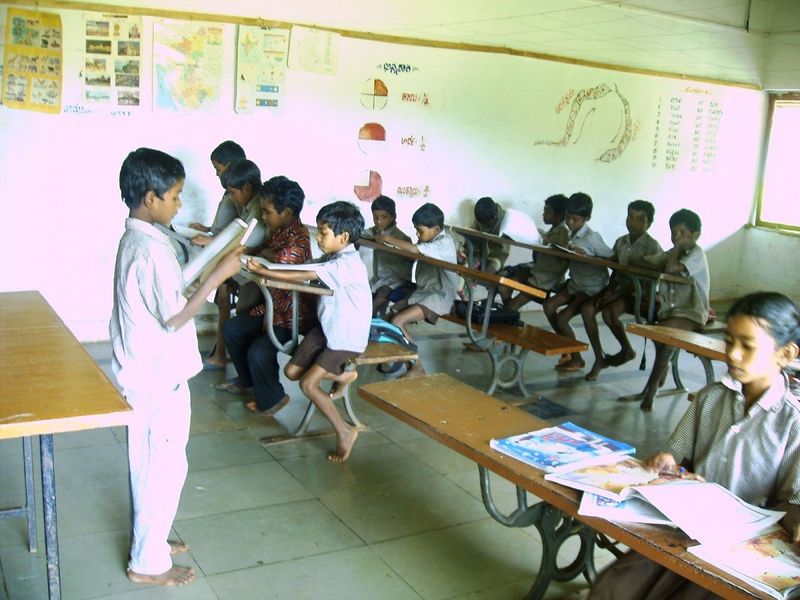
The Bihar Information and Media Literacy Initiative (BIMLI), led by researchers including Amar, Sumitra Badrinathan, Simon Chauchard, and Florian Sichart, sought to test whether classroom interventions could effectively combat misinformation in challenging settings. The randomized controlled trial involved over 13,500 students in grades 8 through 12 across 583 villages in Bihar.
The researchers designed and implemented four 90-minute literacy sessions delivered over approximately 14 weeks in 100 government-run community libraries across 32 districts. The program was delivered as an official government course through partnership with the Bihar Rural Livelihoods Promotion Society (Jeevika), which significantly enhanced its legitimacy and student participation rates.
The curriculum focused on developing critical evaluation skills for health information sources, teaching students to identify misleading content, providing practical verification tools, and building responsible information-sharing habits. Students learned to assess the reliability of different types of health advice and understand the difference between anecdotal and scientific evidence.
Results showed remarkable improvements. Students who received the media literacy course demonstrated a 35 percent improvement in discerning true from false health headlines. Their ability to evaluate source credibility improved by 42 percent, and they were 27 percent less likely to forward questionable health claims. Perhaps most significantly, the intervention achieved a 15 percent reduction in preference for non-scientific treatments for serious health conditions.
“This finding is significant because research indicates that beliefs related to group identity are highly resistant, and alternative medicines, which have existed for generations, are closely tied to these identities,” Amar noted.
The study also found evidence of lasting impact, with effects remaining significant in the four-month follow-up across most primary outcome measures. Additionally, the researchers observed significant spillover effects to parents and family members who did not directly participate in the program, suggesting a “trickle-up” educational effect from children to adults.
Interestingly, the skills appeared to transfer beyond health misinformation—the curriculum’s focus—to political rumors. Students who received the media literacy sessions were better at identifying true versus false political news, indicating that inoculation against one form of misinformation can build resilience against others.
The study’s success in Bihar—characterized by low literacy, limited digital access, and deeply rooted identity-based misinformation—underscores the potential of repeated, interactive, offline instruction delivered by trusted local institutions.
These findings offer an alternative to more restrictive approaches to misinformation, such as Australia’s recent legislation banning children under 16 from social media platforms. While such measures stem from legitimate concerns, education-based interventions may prove more sustainable and respectful of individual agency by building critical evaluation skills early rather than attempting to restrict access entirely.
“In Bihar and elsewhere, misinformation has fuelled health risks, polarisation, and even mob violence,” Amar explained. “India’s demographic dividend could become a misinformation liability – or, with the right media literacy efforts and investments in education, its greatest asset in building a more discerning citizenry.”
Fact Checker
Verify the accuracy of this article using The Disinformation Commission analysis and real-time sources.

12 Comments
This study sheds light on the complex challenge of combating misinformation in diverse cultural contexts. Tailored interventions that address local beliefs and communication channels will be crucial for making progress.
You make a good point. A one-size-fits-all approach is unlikely to be effective. Engaging with local communities to understand their information ecosystems and develop contextualized solutions is key.
This study highlights the need for a comprehensive, multifaceted approach to addressing misinformation. Improving access to quality education, strengthening media literacy, and fostering critical thinking skills will all be crucial.
Well said. Tackling misinformation requires a holistic effort that addresses the root causes and empowers people to navigate the information landscape with discernment.
Media literacy is crucial to combating misinformation, especially in regions where non-scientific beliefs are deeply rooted. Tackling this challenge requires a multifaceted approach involving education, technology, and community engagement.
Absolutely. Empowering people with the ability to critically evaluate information sources and detect falsehoods is key to building societal resilience against the spread of misinformation.
The findings about the widespread acceptance of unproven cures like cow urine and exorcism are deeply concerning. Misinformation can have serious consequences, especially in areas with limited access to healthcare.
Absolutely. Promoting evidence-based health information and debunking false cures should be a priority to protect vulnerable communities from the dangers of misinformation.
This study highlights the worrying prevalence of health misinformation in rural Indian communities. Addressing such beliefs will require a concerted effort to improve access to reliable information and promote scientific literacy.
You’re right. Investing in educational programs that teach critical thinking and media analysis skills could go a long way in equipping young people to navigate the information landscape more effectively.
The rapid spread of misinformation through trusted social networks like WhatsApp groups is particularly concerning. Developing effective digital literacy programs is vital to empower people to verify information and identify falsehoods online.
Absolutely. Leveraging the power of social media to disseminate accurate, trustworthy information could be a valuable strategy in reaching these communities.