


Listen to the article
In a strong rebuke of federal health leadership, Hawaii Governor Josh Green has criticized the current administration for what he describes as a significant failure in public health policy, particularly regarding the resurgence of measles across the United States.
During a Tuesday news conference organized by the healthcare advocacy group Protect Our Care, Green specifically targeted U.S. Health Secretary Robert F. Kennedy Jr., accusing him of actively undermining scientific consensus and disseminating misleading information about vaccines.
“What’s happening today with measles is absolutely public health malpractice,” Green declared, expressing frustration over what many health officials consider a preventable crisis.
The governor’s comments come amid alarming increases in measles cases nationwide, a disease that had been declared eliminated in the United States in 2000 but has since made a concerning comeback. Public health experts attribute this resurgence primarily to declining vaccination rates, fueled in part by growing vaccine hesitancy and misinformation.
Kennedy, who was appointed to lead the Department of Health and Human Services despite widespread concerns from the medical community, has long been a controversial figure in public health circles. Before his appointment, he was known for questioning the safety and efficacy of vaccines, positions that stand in stark contrast to the overwhelming scientific consensus supporting immunization programs.
Hawaii has historically maintained high vaccination rates compared to many mainland states, but health officials across the islands have expressed concern about potential vulnerabilities, particularly in communities with pockets of lower immunization coverage.
The measles virus is highly contagious, capable of spreading through airborne transmission when an infected person coughs or sneezes. The disease can lead to serious complications, including pneumonia, encephalitis, and even death, especially among young children and those with compromised immune systems.
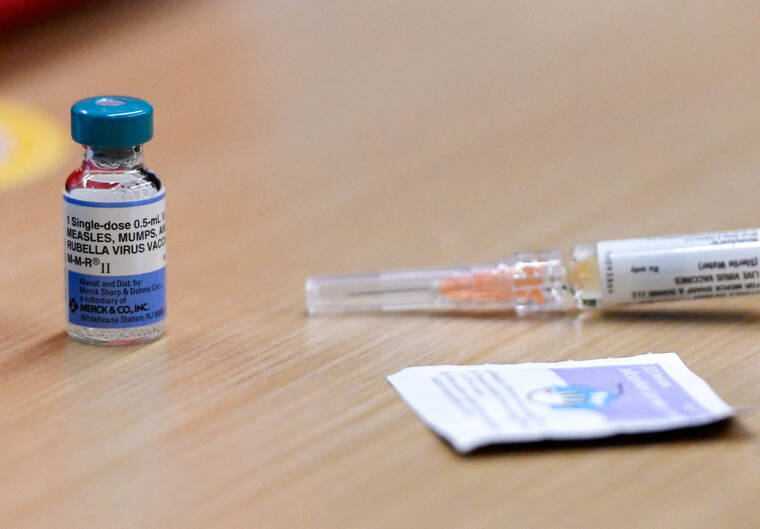
The Centers for Disease Control and Prevention recommends the MMR (measles, mumps, rubella) vaccine for children, with the first dose typically administered at 12-15 months of age and a second dose before starting school. The vaccine has a proven safety record spanning decades.
Governor Green, who worked as an emergency room physician before entering politics, brings a unique perspective to the debate. His medical background has frequently informed his approach to public health issues facing Hawaii, from the COVID-19 pandemic to the Maui wildfire disaster response.
Public health experts nationwide have echoed Green’s concerns. Dr. Samantha Moeller, infectious disease specialist at Pacific Health Systems, explained, “What we’re witnessing is the consequence of eroding trust in vital public health measures. Measles was essentially eliminated in this country through vaccination campaigns. Its return represents a significant step backward.”
The current measles outbreak has particularly affected communities with lower vaccination rates, demonstrating what epidemiologists call “herd immunity gaps” – areas where insufficient vaccination coverage allows the virus to gain footing and spread.
Several states have already reported measles outbreaks this year, with cases appearing in schools, daycare centers, and other community settings. Health departments across the country have had to implement emergency response measures, including contact tracing and isolation protocols, to contain these outbreaks.
For Hawaii, which depends heavily on tourism, any potential disease outbreak carries additional economic concerns beyond the immediate public health impact.
Green’s pointed criticism reflects growing tension between state-level health officials and federal leadership regarding public health policy direction and communication. As measles cases continue to rise, this divide threatens to complicate a coordinated national response to what many experts consider an entirely preventable public health emergency.
“We need to return to evidence-based policies that protect our communities,” Green emphasized. “Our children’s health depends on it.”
Fact Checker
Verify the accuracy of this article using The Disinformation Commission analysis and real-time sources.

7 Comments
Measles was once eliminated in the US, but now cases are rising due to vaccine hesitancy. This highlights the importance of evidence-based public health policies and combating the spread of misinformation.
This is a concerning trend. Vaccine hesitancy can have serious public health consequences. I hope leaders can find effective ways to address misinformation and improve vaccination rates.
The governor’s comments underscore the urgent need to address this issue. Measles is a highly contagious disease, and vaccination is the best way to protect individuals and communities.
I’m curious to see what specific steps the government and public health authorities will take to address this challenge. Restoring trust in vaccines and science should be a top priority.
Agreed. Effective public health communication and outreach will be key to countering misinformation and encouraging vaccination.
It’s disappointing to see a public health official like Kennedy spreading misinformation. Vaccines are safe and effective, and declining vaccination rates put vulnerable populations at risk.
I agree. Public trust in science and medicine is crucial, especially during health crises. Misinformation can have devastating impacts.