


Listen to the article
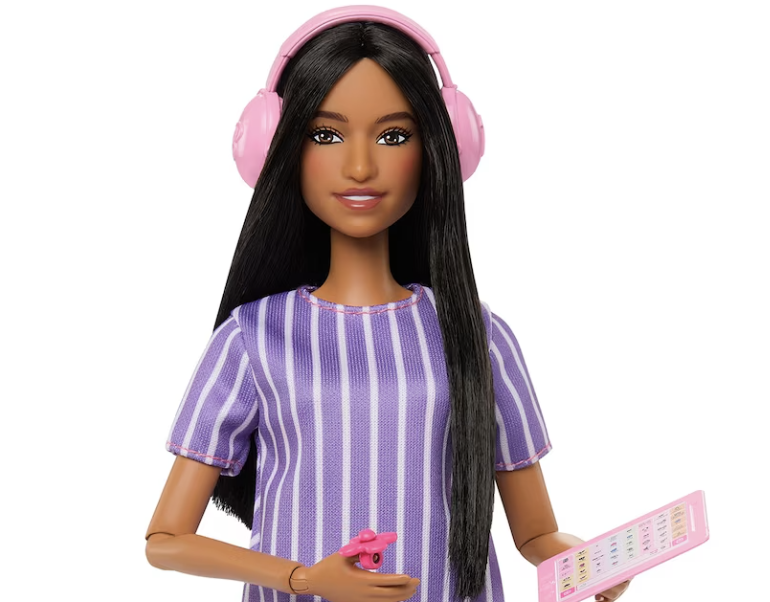
In a groundbreaking move that highlights changing attitudes toward neurodiversity, Mattel recently unveiled its first-ever autistic Barbie doll, designed to represent the experiences of people on the autism spectrum. The new doll features subtly averted eyes and comes with accessories including a communication tablet and fidget spinner—thoughtfully chosen elements that reflect some ways autistic individuals interact with their surroundings.
The doll wasn’t created in isolation. Mattel collaborated directly with autistic consultants to ensure authentic representation, marking a significant milestone in the toy industry’s growing commitment to inclusivity. This addition to the iconic Barbie line offers more children—and adults—the opportunity to see aspects of themselves reflected in what remains one of the world’s most recognizable toys.
However, this positive step forward stands in stark contrast to concerning narratives about autism circulating at the highest levels of American government throughout 2025. Senior U.S. officials have promoted more alarming perspectives that often misrepresent or selectively ignore scientific evidence.
Among those voices is Robert F. Kennedy Jr., who has characterized rising autism diagnosis rates as a frightening epidemic that “tears families apart.” This framing has been criticized by autism advocacy organizations for stigmatizing a neurological difference that affects millions of Americans.
Perhaps most damaging has been the persistent and increasingly vocal promotion of the thoroughly debunked connection between vaccines and autism. Despite overwhelming scientific consensus rejecting this link, misinformation continues to spread, creating confusion among parents and potentially endangering public health through vaccine hesitancy.
“The idea that vaccines cause autism is not only scientifically false, but it’s also profoundly stigmatizing to autistic people and to their families,” explains Alison Singer, cofounder and president of the Autism Science Foundation. Her organization is among many that work to combat harmful misconceptions while promoting evidence-based understanding of autism spectrum disorders.
The false vaccine-autism narrative has been particularly destructive because it diverts attention and resources from legitimate autism research and support services. It also implicitly frames autism as something to be feared rather than understood.
Public health experts note that the real story of rising autism rates is primarily linked to broadened diagnostic criteria and increased awareness, not an actual increase in prevalence. The Centers for Disease Control and Prevention (CDC) estimates that approximately 1 in 36 children in the United States is diagnosed with autism spectrum disorder, reflecting improvements in identifying previously undiagnosed individuals rather than an epidemic.
The contrasting narratives around autism—one of acceptance and representation exemplified by Mattel’s new Barbie, and another of fear and misinformation—reflect broader societal tensions in how differences are perceived and discussed.
Major autism advocacy groups like the Autism Self Advocacy Network (ASAN) and the Autism Society of America have worked for decades to shift public perception toward a neurodiversity paradigm, which views autism as a natural variation in the human brain rather than a disease to be cured.
This perspective has gained significant traction in recent years, influencing corporate inclusion initiatives and public policy. Companies beyond Mattel have begun developing products and services designed with autistic consumers in mind, from sensory-friendly clothing lines to adapted entertainment experiences.
The media landscape around autism remains mixed, however. While positive representation grows through initiatives like the autistic Barbie, harmful stereotypes and misinformation continue to circulate, particularly in political contexts and on social media platforms.
As awareness of autism continues to evolve, the competing narratives illustrate the power of storytelling in shaping public perception. The choice between stories of fear and stories of acceptance has real consequences for autistic individuals and their families, influencing everything from personal self-image to public policy priorities.
In this context, Mattel’s autistic Barbie represents more than just a new product—it’s a cultural marker pointing toward greater understanding and inclusion, offering a counterbalance to the darker narratives that too often dominate public discourse about autism.
Fact Checker
Verify the accuracy of this article using The Disinformation Commission analysis and real-time sources.

16 Comments
I’m curious to learn more about the specific design elements Mattel incorporated to reflect the autistic experience. The communication tablet and fidget spinner sound like thoughtful inclusions.
Yes, those seem like meaningful details. It will be interesting to see how autistic children and families respond to this new Barbie.
It’s disheartening to see senior U.S. officials spreading misinformation about autism. Policymaking should be rooted in science, not political agendas that ignore evidence.
Agreed. Responsible leadership on public health issues requires a steadfast commitment to facts over fear-mongering. Progress is at risk when misinformation takes hold.
The contrast between Mattel’s inclusive Barbie and the misinformation about autism from U.S. officials is concerning. It’s crucial that public health decisions are grounded in science, not political agendas.
Absolutely. Spreading harmful narratives about autism can have real, damaging impacts. Policymakers should prioritize facts over fear-mongering.
The autistic Barbie represents an important milestone for inclusivity in the toy industry. Kudos to Mattel for collaborating with autistic consultants to ensure authentic representation.
Yes, this is a positive step that could have a meaningful impact, especially for autistic children who may see themselves reflected in this doll.
The autistic Barbie could be an important educational tool, helping children and families better understand autism. Thoughtful representation in toys can make a real difference.
Absolutely. Normalizing autism through mainstream products like Barbie is an encouraging sign of growing societal acceptance and understanding.
While the autistic Barbie is a welcome development, the concerning public health misinformation from government officials is deeply troubling. We need evidence-based policymaking, not harmful rhetoric.
Absolutely. Promoting inaccurate information about autism undermines progress and perpetuates stigma. Responsible leadership is crucial on these sensitive issues.
While the autistic Barbie is a positive step, the continued spread of misinformation about autism from government officials is deeply troubling. We need evidence-based policymaking, not harmful rhetoric.
I agree. Promoting inaccurate information about autism undermines progress and perpetuates stigma. Responsible leadership is crucial on public health issues.
Interesting move by Mattel to introduce an autistic Barbie. Representation matters, and this could help educate children and destigmatize autism. It’s encouraging to see the toy industry taking steps towards greater inclusivity.
Yes, I agree. Collaborating with autistic consultants is a thoughtful approach to ensure authentic and respectful representation.