


Listen to the article
Three-quarters of breast cancer survivors encounter recurrence risk misinformation, study finds
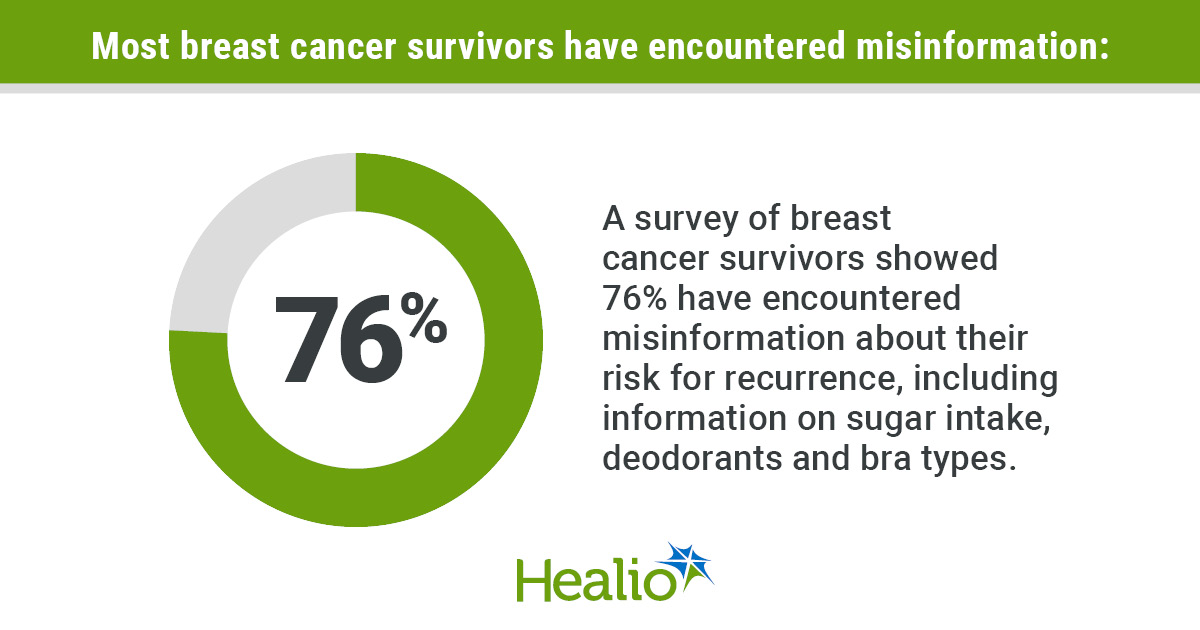
A new study by Breastcancer.org has revealed that more than 75% of breast cancer survivors have been exposed to misinformation about factors affecting cancer recurrence risks, though researchers found this exposure didn’t significantly impact treatment adherence or fear of recurrence.
Dr. Kaitlyn Lapen, a radiation oncology resident in her final year at Memorial Sloan Kettering Cancer Center, has fielded numerous questions from breast cancer patients about various factors they believe might influence recurrence.
“They ask about things they hear on the news, from friends, online forums,” Lapen told Healio. While some questions about diet and exercise have scientific grounding, others catch medical professionals off guard.
“Bra type, I don’t know where that myth came from,” Lapen said. “There’s some thought that maybe if it compresses the chest in a certain way, maybe it can impact the lymphatic drainage, but there’s no evidence to support that.”
The survey, conducted between July and August 2023, included 997 participants who had been diagnosed with breast cancer within the previous decade. The median age was 62, and 86% of respondents identified as white.
Researchers found that 65% of survivors had encountered misinformation about factors supposedly increasing recurrence risk, while 54% had heard claims about factors that could decrease risk. The most common misconceptions about risk-increasing factors included sugar consumption (61%), deodorant use (22%), vaccines (8%), cell phones (8%), and bra type (8%).
For factors incorrectly believed to decrease recurrence risk, organic food consumption (41%) topped the list, followed by oral vitamins and supplements (29%), alkaline diets or alkalized water (12%), vitamin infusions (7%), and various “natural” interventions like cleanses (5%), essential oils (5%), and oxygen therapy (4%).
“We’ll have patients come in and they’ll be on a long list of different supplements,” Lapen noted. “Even I get targeted ads — a multivitamin that costs $200 a month that will reduce your risk of cancer.”
This wave of misinformation reflects broader trends in medical misinformation. A previous study on cholesterol information on TikTok showed that over 40% of top-viewed videos contained inaccurate information, with more than a third potentially harmful. Another survey of clinicians found that 86% believe medical misinformation has worsened over the past five years, with 61% reporting it has influenced their patients’ decisions.
The prevalence of misinformation can erode trust in healthcare. A recent survey indicated an 8% reduction since November 2021 in the proportion of people who believe science positively impacts society.
“When that misinformation starts to evolve into mistrust of physicians and the evidence-based treatment pathways we typically recommend, that’s when it can be harmful,” Lapen emphasized.
Despite these concerns, the study’s results provided some reassurance: exposure to misinformation didn’t significantly alter patients’ fear of recurrence or their adherence to medical treatments compared to those who hadn’t encountered such misinformation.
“That was a little reassuring,” Lapen said. “We see all this misinformation, it’s good to see that it’s not really influencing patients’ fear or their treatment adherence.”
However, she acknowledged that misinformation can still affect individual patients. Some have challenged treatment recommendations or insisted on receiving treatments they’ve read about celebrities receiving. “It’s a very individualized thing in terms of their fear and how they process that information,” Lapen explained.
This underscores the critical importance of effective doctor-patient communication. “If patients are exposed to large amounts of information and we’re saying something that contraindicates what they’re being exposed to, that could potentially lead to mistrust,” Lapen said. “Distinguishing beliefs perpetuated by the media and society from what’s actually been sustained by evidence is important.”
Researchers acknowledged limitations in their study, including its online-only format and lack of data on misinformation sources. Lapen suggested future research should examine where patients get their information.
“With ChatGPT and AI, something we’ve been trying to do is look at these sources and see whether they provide accurate information as well,” she said. “A lot can be done in understanding how patients receive and perceive information, to enhance communication with clinicians and patient education.”
Fact Checker
Verify the accuracy of this article using The Disinformation Commission analysis and real-time sources.

10 Comments
This is a troubling trend. Breast cancer survivors have enough to worry about without being bombarded by pseudoscience and unfounded claims. Reliable, factual information should be the top priority for these vulnerable patients.
Exactly. Doctors and healthcare providers need to be proactive in educating patients and the public about the realities of breast cancer recurrence risk factors. Misinformation can have real consequences.
It’s concerning to hear that breast cancer survivors are exposed to so much misinformation. Patients should be able to trust the medical advice they receive, not be bombarded with unproven claims. Doctors need to stay vigilant in addressing these myths head-on.
Absolutely. Medical professionals play a vital role in separating fact from fiction and providing reliable, evidence-based guidance to patients dealing with serious health issues.
It’s concerning to hear that 75% of breast cancer survivors have been exposed to misinformation about recurrence risk. Patients need to be able to trust the medical advice they receive, not be led astray by unproven claims.
I agree. Healthcare providers should make it a priority to address these myths head-on and provide clear, evidence-based guidance to cancer patients. Maintaining trust is crucial during such a difficult time.
While some lifestyle factors like diet and exercise do have scientific backing, the claims about bra type and lymphatic drainage are clearly unfounded. It’s important for cancer patients to rely on their oncologists, not unsubstantiated rumors.
Agreed. Doctors should take the time to carefully explain the science to patients and debunk any misinformation they encounter. Open communication and trust are so crucial in cancer treatment.
While some lifestyle factors may have scientific grounding, the claims about bra type and lymphatic drainage are clearly unfounded. Breast cancer patients deserve access to reliable, fact-based information to guide their treatment and recovery.
Absolutely. Doctors and medical professionals need to be vigilant in debunking misinformation and ensuring patients receive trustworthy guidance, especially on sensitive topics like cancer recurrence risk.