


Listen to the article
Mediation Resolves Tensions Between DMI Microfinance and Ganta Business Community
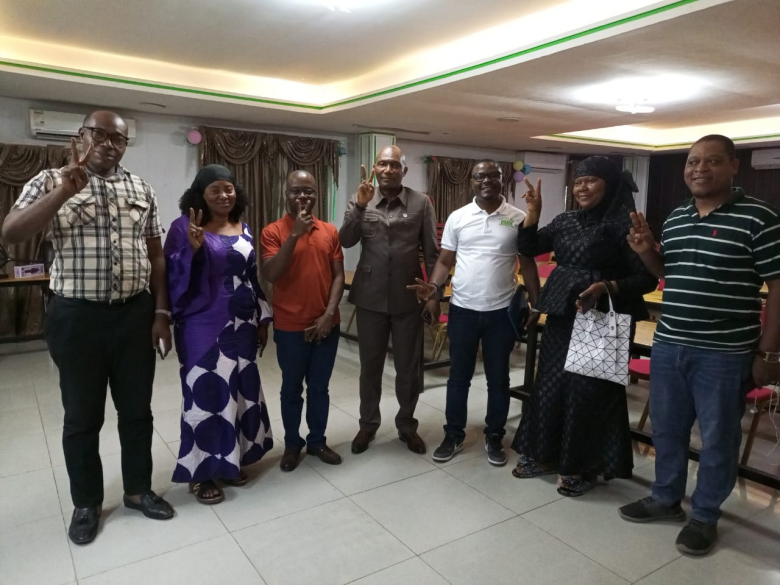
The Ministry of Commerce and Industry, in partnership with the Liberia Business Association (LBA), has successfully brokered peace between DMI Microfinance Institution and disgruntled business owners in Ganta, Nimba County, following protests over alleged mismanagement of World Bank funds.
The conflict erupted when local traders gathered outside DMI’s branch office in Ganta, accusing the institution of hoarding and selectively distributing funds from the Liberia Investment, Finance, and Trade (LIFT) Loan Credit program. The protesters, many operating small businesses in the bustling commercial hub known as Liberia’s “Gateway City,” demonstrated with placards and chants that briefly disrupted operations.
During a well-attended press conference in central Ganta, Acting Project Coordinator for the LIFT initiative, Julius Saye Keh-Nel, clarified that the US$6 million World Bank facility has not yet been disbursed to any financial institutions in Liberia.
“The funds are actually scheduled to arrive in early February 2026,” Keh-Nel explained, addressing widespread misinformation that had fueled the protests. “Distribution will be transparent and inclusive, not conducted behind closed doors.”
Ganta’s strategic location near the borders with Guinea and Côte d’Ivoire makes it a critical economic center where business disruptions can impact regional trade networks. The incident highlights the vulnerability of Liberia’s informal business sector, where access to capital remains a persistent challenge amid rising inflation.
Massa Kamara Sabra, spokesperson for the Ganta Business Community, acknowledged that the protest stemmed from misinformation and poor communication. She revealed that community members had been asked to deposit personal funds with DMI in anticipation of LIFT loans, creating expectations that went unfulfilled.
“We acted out of desperation, but now we see it was based on false hopes,” Sabra admitted, while urging DMI to improve its communication practices moving forward.
In response to the situation, DMI has issued a public statement clarifying that the LIFT program is an on-lending facility, not a grant. The institution emphasized that loans would only be available to eligible clients who pass credit assessments, with no upfront payments required to apply.
Lance Gonlakpor Kennedy, DMI’s Group Head for Business Development, welcomed the peaceful resolution. “DMI is committed to empowering Liberians, especially Nimbaans and the Ganta business community, through accessible financial products,” Kennedy stated. “Our doors remain open, and we’ll work hand-in-hand to support your growth.”
The microfinance sector plays a crucial role in Liberia’s economic ecosystem, particularly in areas like Nimba County where formal banking services are limited. Small loans often provide essential capital for traders, market women, and entrepreneurs who operate in the informal economy, which accounts for an estimated 85 percent of employment in the country.
LBA President James M. Strother praised the Boakai-Koung administration’s handling of the situation, highlighting its pro-business stance. “This government, under President Joseph Nyuma Boakai and Vice President Jeremiah Koung, is dedicated to uplifting businesses in all 15 counties,” he said.
Strother pointed to ongoing partnerships aimed at integrating the private sector into national empowerment programs, drawing parallels with previous interventions that stabilized markets following the Ebola crisis and during COVID-19 recovery efforts.
Financial inclusion remains a significant challenge in Liberia, where many citizens lack access to traditional banking services. World Bank-supported initiatives like the LIFT program are designed to bridge this gap by channeling funds through microfinance institutions that can reach underserved populations.
The successful mediation not only defused immediate tensions in Ganta but also established a precedent for resolving future disputes through dialogue rather than confrontation, a development that business leaders hope will contribute to a more stable investment climate in Nimba County and beyond.
Fact Checker
Verify the accuracy of this article using The Disinformation Commission analysis and real-time sources.

20 Comments
This loan dispute highlights the challenges that can arise when rolling out large-scale development finance initiatives. Proactive conflict resolution by the authorities is a positive sign.
You’re right. Managing stakeholder expectations and addressing grievances early on can go a long way in ensuring these programs achieve their intended impact.
While the protesters’ concerns seem to stem from misinformation, their frustration is understandable. I hope the mediation leads to greater transparency and trust between the community and the microfinance institution.
Agreed. Building that two-way dialogue and mutual understanding will be crucial for the long-term sustainability of the LIFT program.
Loan disputes like this can be tricky to navigate, but the government’s willingness to intervene and facilitate a resolution is a positive sign. Hopefully, this leads to a more harmonious relationship between the microfinance provider and the local businesses.
I agree. Striking the right balance between the needs of the financial institution and the community it serves is crucial for the long-term viability of these programs.
Interesting to see the Liberian government stepping in to mediate this dispute over access to World Bank funds. Maintaining trust in microfinance institutions is crucial for economic development.
Agreed. Clearing up the misinformation about the disbursement timeline was an important step to resolve the tensions.
It’s encouraging to see the government taking a proactive role in resolving this dispute. Maintaining social stability and community buy-in is just as important as the financial aspects of development programs.
Exactly. The human element is often overlooked, but it can make or break the success of these initiatives. This mediation seems like a step in the right direction.
The fact that the protesters were acting on misinformation is concerning, but I’m glad the authorities were able to clarify the timeline and work towards a resolution. Transparency and clear communication will be key going forward.
Absolutely. Dispelling rumors and ensuring all stakeholders have accurate information is an important first step in rebuilding trust and fostering a constructive dialogue.
This dispute highlights the complexities involved in development finance initiatives, where the interests of multiple parties need to be balanced. The government’s mediation efforts are a positive sign, and I hope the outcome benefits both the microfinance institution and the local business community.
Well said. Achieving that win-win scenario requires nuanced problem-solving and a willingness to compromise on all sides. The government’s role as an impartial facilitator is crucial in this context.
It’s good to see the Commerce Ministry and the Liberia Business Association working together to broker a solution. Maintaining harmony between microfinance providers and local businesses is vital for economic growth.
Absolutely. Bridging that gap and finding a mutually beneficial arrangement will be key to the program’s success.
The protests by local traders in Ganta over alleged mismanagement of the LIFT loan program highlight the importance of transparency and accountability in microfinance. I hope the mediation leads to a fair and sustainable resolution.
Me too. Microfinance can be a powerful tool, but only if it’s managed responsibly and with the community’s best interests in mind.
The protests over the alleged mismanagement of World Bank funds are concerning, but I’m glad to see the authorities taking swift action to address the issue. Maintaining transparency and accountability in the disbursement of development finance is essential.
I agree. The clarification on the actual disbursement timeline was an important first step, but the continued engagement and oversight of the government will be crucial to ensure the LIFT program achieves its intended objectives.