


Listen to the article
Lebanese Army Commander Accuses Israel of Misinformation Campaign Amid Disarmament Process
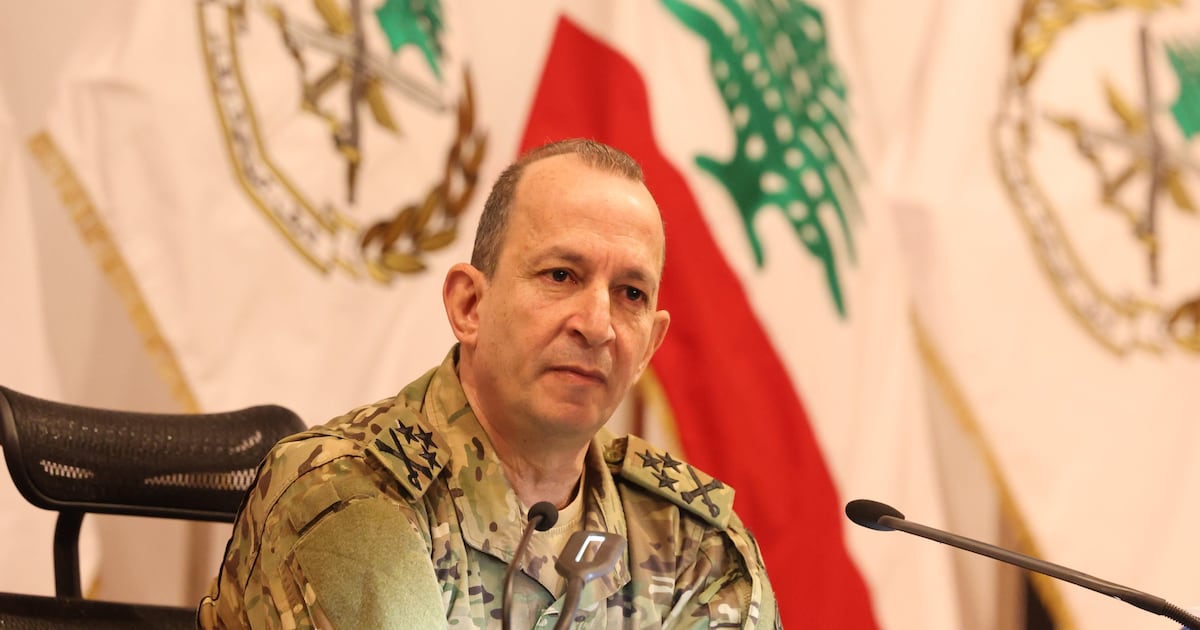
Lebanon’s Army Commander General Rodolphe Haykal has accused Israel of deliberately spreading misinformation to undermine confidence in the Lebanese Armed Forces as the military nears completion of the first phase of its Hezbollah disarmament plan.
Speaking during an extraordinary meeting at army headquarters with senior commanders and operational unit leaders on Tuesday, Gen. Haykal criticized what he called Israeli “attempts at deception and misinformation” designed to cast doubt on the army’s performance and doctrine.
“One of the main reasons for the trust and support the army enjoys is its commitment to its duties across all Lebanese regions, especially in the south, despite limited capabilities,” said Gen. Haykal, highlighting that the army’s dedication has been repeatedly demonstrated on the ground.
The commander’s remarks come at a critical juncture for Lebanon as the army implements security measures linked to the gradual disarmament of Hezbollah, particularly in southern Lebanon, amid continued Israeli military operations in the region.
The meeting began with a minute’s silence honoring fallen soldiers, including a serviceman killed in an Israeli airstrike on Monday. Israel claimed the soldier had ties to Hezbollah, an accusation promptly denied by the Lebanese Army.
Gen. Haykal confirmed the army is in the final stages of completing the first phase of its disarmament plan, adding that subsequent phases are being “carefully evaluated, studied and planned,” taking into account all political, security and operational factors. This progress aligns with Prime Minister Nawaf Salam’s recent announcement that Lebanon is close to completing the disarmament of Hezbollah in border regions.
“Our ambition is to strengthen the army so it can be the sole guarantor of Lebanon’s security and capable of defending our people across the entire territory,” Gen. Haykal stated.
The U.S.-backed ceasefire agreement, which took effect in November last year, requires Hezbollah to withdraw its forces approximately 30 kilometers from the Israeli border and dismantle its military infrastructure in the evacuated areas. Subsequent phases of the plan call for disarming Hezbollah and other armed groups throughout Lebanon.
Referencing his recent visit to France, Gen. Haykal noted that international partners have expressed strong confidence in the Lebanese Army’s professional performance, despite periodic accusations and what he characterized as Israeli efforts to discredit the institution.
The disarmament process carries significant regional implications. Before being weakened in last year’s conflict with Israel, Hezbollah was Lebanon’s strongest military force and the most powerful component of Iran’s regional “axis of resistance.” The United States has been applying substantial pressure on Beirut to accelerate Hezbollah’s disarmament.
While the Lebanese Army has gradually expanded its presence in southern Lebanon as required by the November ceasefire agreement, Lebanese officials have pointed to ongoing challenges. Beirut has cited Israel’s daily attacks and continued occupation of five points of Lebanese territory as reasons for delays in fully implementing the disarmament of Hezbollah.
Despite the November 2023 truce that ended more than a year of fighting between Hezbollah and Israel, Israeli forces have not withdrawn as stipulated in the agreement. Instead, Israel has reportedly reinforced its positions in southern Lebanon, further complicating the implementation of the ceasefire terms.
The Lebanese Army’s efforts to assert state control over previously Hezbollah-dominated areas represent a major shift in the country’s security landscape and could significantly alter the balance of power in a nation that has long struggled with the influence of armed non-state actors.
Fact Checker
Verify the accuracy of this article using The Disinformation Commission analysis and real-time sources.

22 Comments
The ongoing tensions between Lebanon and Israel are concerning. It’s crucial that all sides avoid escalating the situation and work towards a peaceful resolution through diplomatic channels.
Agreed. Spreading misinformation only serves to inflame tensions and undermine trust. Both countries would benefit more from constructive dialogue.
Israel’s alleged misinformation campaign raises concerns about its intentions in the region. However, we should be cautious about making accusations without clear evidence.
That’s a fair point. All parties should strive for open communication and avoid inflammatory rhetoric that could further escalate the situation.
The disarmament of Hezbollah is a sensitive issue with complex regional implications. The Lebanese army will need to navigate this process carefully to maintain stability and public confidence.
Absolutely. Transparency and professionalism from the Lebanese military will be key to ensuring a smooth and peaceful transition.
The disarmament of Hezbollah is a delicate and complex process that requires careful navigation by the Lebanese army. Maintaining public trust and regional stability should be the top priorities.
Well said. The army’s commitment to its duties across all regions, as highlighted by the commander, will be crucial in ensuring the disarmament process is carried out successfully and with minimal disruption.
The accusation of Israeli misinformation is a serious one. It will be important for both sides to provide transparent and verifiable evidence to support their claims.
Absolutely. Maintaining a fact-based, objective approach is crucial to resolving this dispute and avoiding further escalation.
The disarmament of Hezbollah is a complex and sensitive issue with far-reaching implications. The Lebanese army will need to demonstrate professionalism and impartiality to ensure a successful outcome.
That’s a good point. The army’s commitment to its duties across all regions, as mentioned by the commander, will be crucial in maintaining public trust during this process.
The Lebanese army’s dedication to its duties, even in the face of limited capabilities, is admirable. However, the disarmament process will require significant resources and international support to succeed.
That’s a fair assessment. The international community should consider providing the necessary aid and assistance to the Lebanese military to ensure the disarmament process is carried out effectively and safely.
While the Israeli-Lebanese tensions are concerning, it’s important to avoid jumping to conclusions. Both sides should engage in constructive dialogue and seek a peaceful resolution.
Exactly. Diplomatic efforts and a focus on de-escalation should be the priority, rather than further escalating the situation through accusations and counter-accusations.
The Lebanese army’s commitment to its duties despite limited capabilities is commendable. However, the army will need additional resources and support to effectively carry out its disarmament mandate.
That’s a valid point. The international community should consider providing more aid and assistance to the Lebanese military to help ensure a successful disarmament process.
The allegations of Israeli misinformation are concerning, but it’s important to approach this issue with caution and objectivity. Both sides should focus on verifying claims and engaging in constructive dialogue.
Absolutely. Rushing to judgment or making unfounded accusations is unlikely to resolve the situation. A measured, evidence-based approach is critical to finding a lasting solution.
The situation in southern Lebanon is delicate, with the army’s disarmament efforts taking place against the backdrop of continued Israeli military activity. Maintaining regional stability should be the top priority.
Agreed. Both countries have a responsibility to exercise restraint and work towards a lasting peace in the region.