


Listen to the article
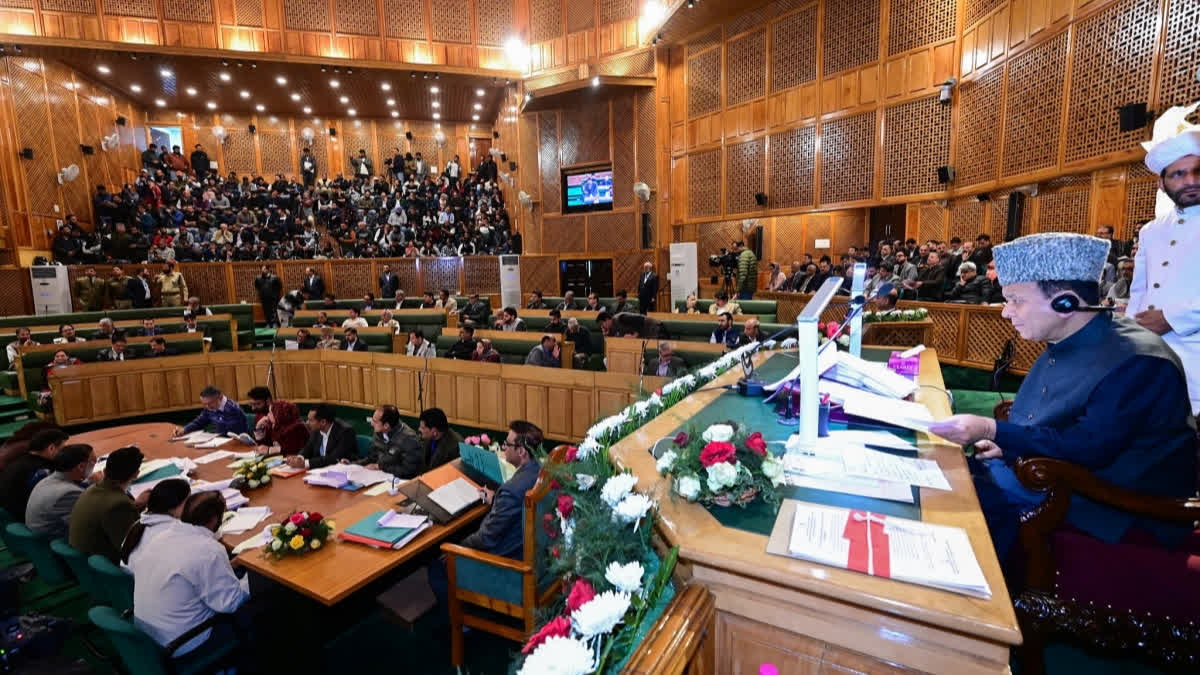
Jammu and Kashmir’s legislative assembly is taking steps to combat the growing issue of fake news and misinformation circulating across the union territory, as Speaker Abdul Rahim Rather instructed the Omar Abdullah-led National Conference government to draft comprehensive legislation on the matter.
The directive came after a substantive discussion in the House initiated by BJP MLA Ranbir Singh Pathania, who emphasized the challenges posed by the proliferation of unregulated social media platforms operating without accountability in the region.
“There is a mushroom growth of online portals, pages and channels due to which there is no accountability to them. There are also no fact-checking units which can cross-check the news and act accordingly,” Pathania said during the session. He advocated for mandatory registration requirements for all online platforms to ensure greater transparency and responsibility.
The discussion drew participation from 14 MLAs and a cabinet minister, reflecting the issue’s significance across party lines. Several legislators pointed to the influx of inadequately qualified individuals into media roles as a contributing factor to the spread of misinformation. They suggested these individuals are sometimes exploited by political entities to advance narrow agendas through misleading content.
Deputy Chief Minister Surinder Choudhary, responding to the debate, placed partial responsibility on media organizations themselves, calling for introspection within the industry. “To address the fake news issue, basic things will have to be done by the media itself if they want to strengthen the system and the nation on the whole,” Choudhary stated.
He also urged political parties to examine their own role in the ecosystem of misinformation, particularly regarding who supplies controversial material that frequently becomes the basis for divisive coverage.
Following the discussion, Speaker Rather directed the government to conduct a comparative analysis of similar legislation implemented in other states before drafting a bill specifically tailored to Jammu and Kashmir’s context. The proposed legislation aims to establish a framework for combating the spread of false information while maintaining appropriate freedoms.
The initiative comes at a critical time for the union territory, which has experienced significant political transitions following the abrogation of Article 370 in 2019 and the subsequent restructuring of the former state. Media regulation in conflict-sensitive regions like Jammu and Kashmir presents particular challenges, requiring a delicate balance between preventing harmful misinformation and preserving press freedoms.
The proliferation of unverified news sources has become increasingly problematic across India, with various states exploring regulatory approaches. Digital media’s rapid growth has outpaced traditional regulatory frameworks, creating enforcement challenges for authorities attempting to distinguish between legitimate journalism and deliberately misleading content.
The proposed legislation in Jammu and Kashmir would join a growing body of state-level initiatives aimed at regulating digital news platforms, which have multiplied exponentially in recent years due to low entry barriers and minimal infrastructure requirements.
Experts suggest that any effective approach will need to combine regulatory oversight with industry self-regulation and media literacy initiatives to create a more resilient information ecosystem.
The Omar Abdullah government now faces the task of crafting legislation that addresses legitimate concerns about misinformation while avoiding potential overreach that could stifle legitimate journalistic activities in a region where press freedoms have frequently been a matter of international attention.
Fact Checker
Verify the accuracy of this article using The Disinformation Commission analysis and real-time sources.

16 Comments
Protecting freedom of expression while also ensuring accountability and responsibility online is a delicate balance. Kashmir’s legislative efforts to address fake news and misinformation are a step in the right direction.
I’m curious to see how the proposed bill will navigate this balance and what specific measures it will include to effectively combat the spread of misinformation in the region.
Addressing the issue of fake news and misinformation is a complex challenge, but Kashmir’s legislative efforts demonstrate a proactive approach to tackle the problem. Balancing free speech with accountability will be a key consideration.
It’s encouraging to see the government taking this issue seriously and engaging with stakeholders across party lines. Effective implementation will be key to the success of this initiative.
It’s good to see Kashmir taking steps to address the growing issue of fake news and misinformation. Regulating social media platforms and improving media accountability is crucial for maintaining trust and combating the spread of harmful content.
Mandatory registration requirements for online platforms could help improve transparency and responsibility. Fact-checking units will also be important to verify news claims.
Fake news and misinformation can have serious consequences, especially in sensitive regions like Kashmir. This legislative effort to establish a regulatory framework is a positive step towards addressing the problem.
It will be interesting to see the specifics of the proposed bill and how it aims to balance free speech with the need for accountability. Proper implementation will be key.
Cross-party support for this issue is encouraging, as it shows the widespread recognition of the problem. A comprehensive legislative approach could set a valuable precedent for other regions to follow.
I’m curious to see how the proposed bill will address the specific challenges faced in Kashmir, such as the proliferation of unregulated social media platforms. Targeted solutions may be needed.
The influx of unqualified individuals into media roles is a concerning factor contributing to the spread of misinformation. Improving standards and training for journalists could help improve the quality of reporting.
Overall, this seems like a timely and necessary initiative by the Kashmir government. Tackling fake news and misinformation is crucial for maintaining an informed and engaged citizenry.
The mushroom growth of online portals and channels without accountability is a valid concern. Mandatory registration and fact-checking units could be steps in the right direction, but the devil will be in the details.
Overall, this seems like a timely and necessary move by the Kashmir government. Combating the spread of misinformation is crucial for maintaining an informed and engaged citizenry.
Regulating online platforms and improving media accountability are important steps, but education and media literacy initiatives could also be valuable in empowering citizens to critically evaluate information.
Fact-checking units and mandatory registration requirements for platforms could help, but enforcement and ensuring compliance will be crucial for the success of this initiative.