


Listen to the article
Misinformation Crisis Requires Philosophical Approach, Scholars Argue
Six years after the January 6 Capitol riots, Americans remain deeply divided not just in their political views, but in their fundamental understanding of what occurred. For some, it was an insurrection fueled by misinformation; for others, a justified response to election fraud; and for others still, a misunderstood protest.
This persistence of incompatible realities, despite extensive investigations, court rulings, and fact-checking efforts, highlights a profound challenge in our digital age. According to researchers Uyiosa Omoregie and Kirsti Ryall, the problem goes deeper than false claims or low-quality information sources.
“Even the most meticulously fact-checked content cannot reach people who do not perceive the world through the same basic structure of experience,” they argue in their analysis of the modern misinformation landscape. This fragmentation of shared reality has become one of today’s greatest metaphysical challenges.
Omoregie and Ryall, authors of “Misinformation Matters: Online Content and Quality Analysis,” initially focused on developing a structured, evidence-based model for evaluating online information quality. Their approach emphasized evidence-based claims, explainable ranking algorithms, user choice, and credibility signals over engagement metrics.
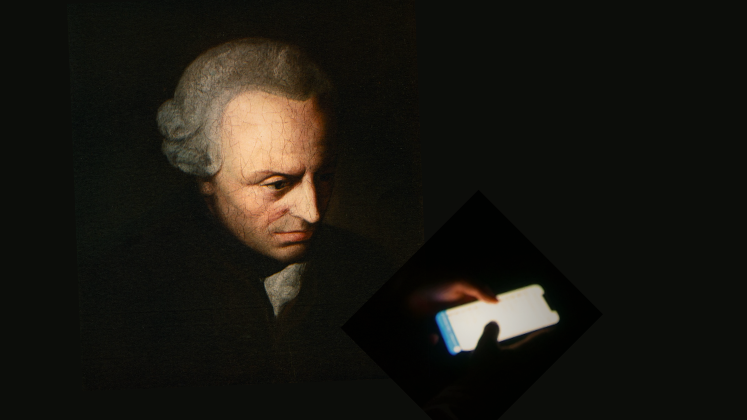
However, their continuing research revealed a persistent puzzle: even when the information environment improves, people exposed to the same content still develop radically different understandings. This led the researchers to draw upon the philosophical framework of Immanuel Kant to explain this phenomenon.
Kant’s philosophy provides crucial insights into why misinformation persists despite factual corrections. In his “Critique of Pure Reason,” Kant argues that humans never experience the world directly but only as it appears through mental structures such as causality, unity, and necessity. These are not learned ideas but the fundamental conditions that make experience possible.
“If two people use different conceptual structures to interpret the same event, they inhabit different worlds of appearance,” the researchers explain. “This is not simply an epistemological disagreement but a metaphysical divergence.”
Digital platforms significantly amplify this divergence. Personalized feeds construct individualized realities, allowing users on the same platform to encounter entirely different representations of the world. This technological architecture accelerates the fragmentation of our shared reality.
The problem has worsened in recent years. Since the COVID-19 “infodemic,” misinformation has not only spread faster but has become more realistic through artificial intelligence. “AI’s capabilities to fool us are becoming more sophisticated, and humanity is struggling to keep up,” the researchers note. “AI is creating different realities.”
For those immersed in conspiracy worldviews, the basic categories of evidence and probability are replaced with intention and hidden design. In such frameworks, randomness becomes impossible, coincidence becomes evidence, and complexity transforms into orchestration. This represents a fundamental metaphysical shift, not merely mistaken beliefs.
The breakdown of shared public institutions further erodes our metaphysical baselines. Without agreed-upon authorities for interpreting reality—such as public broadcasters, scientific institutions, and independent journalism—individuals rely on communities that supply alternative categories of meaning.
This explains why traditional fact-checking and content moderation often fail. These approaches treat misinformation as a problem of incorrect knowledge, when the underlying issue is divergent structures of perception. By the time a fact-check appears, the user’s metaphysical framework has already shaped how the original claim was experienced.
Omoregie and Ryall propose a more philosophical approach for policymakers and platforms. They recommend rebuilding shared conditions for sense-making by strengthening the minimal conceptual scaffolding for interpreting events: evidence, probability, transparency, and causality.
They argue that misinformation regulation must become “worldview-aware” rather than focusing solely on content removal or correction. Fact-checking needs reframing to target the assumptions behind interpretation rather than simply presenting “objective truth” to communities living in different epistemic worlds.
The researchers also call for platforms to recognize epistemic divergence as a structural harm, acknowledging how algorithmic design reshapes cognition. Digital literacy programs must include meta-cognition, helping users understand not just how to spot falsehoods but how they know what they think they know.
“The real challenge is not ‘How do we correct false claims?’ but ‘How do we restore a common world of shared appearance in which truth is once again possible?'” the authors conclude. Until we rebuild the metaphysical basis for public sense-making, misinformation will continue to flourish—not because falsehood is persuasive, but because we no longer inhabit the same shared reality.
Fact Checker
Verify the accuracy of this article using The Disinformation Commission analysis and real-time sources.

18 Comments
The January 6th Capitol riots highlight how deeply divided Americans are, not just politically, but in their very understanding of reality. This is a complex issue that deserves a rigorous philosophical examination.
Fact-checking alone seems insufficient when people don’t perceive the world through the same basic structure of experience. A more fundamental approach is needed.
Applying Kant’s philosophical framework to the modern misinformation landscape is a fascinating approach. I look forward to reading the authors’ analysis and how they connect these ideas to the digital age challenges.
Developing a structured, evidence-based model for evaluating online content quality could be a valuable contribution to addressing the fragmentation of shared reality.
The authors’ focus on the metaphysical challenges of the misinformation crisis is an intriguing angle. Kant’s philosophical ideas around the structure of experience could provide important insights into this complex issue.
Fact-checking alone may not be enough when people don’t perceive the world through the same basic framework. A more comprehensive philosophical approach seems necessary.
Exploring the metaphysical challenges of the misinformation crisis is a fascinating angle. I look forward to reading more about how the authors apply Kant’s philosophical ideas to this pressing issue.
The persistence of incompatible realities, despite extensive investigations and fact-checking, points to a deeper problem that requires a philosophical approach.
Interesting take on the philosophical underpinnings of the misinformation crisis. Looks like a deep dive into the challenges of establishing shared reality in the digital age.
The persistence of incompatible realities, despite evidence, does point to a fundamental issue beyond just false claims. A philosophical framework could shed light on this.
Analyzing the misinformation crisis through the philosophical lens of Kant’s ideas around the structure of experience is a unique and intriguing perspective. I’m curious to see how the authors make this connection.
The persistence of incompatible realities, despite overwhelming evidence, suggests that the problem goes beyond just false claims. A deeper philosophical exploration could yield important insights.
Kant’s philosophical ideas around the structure of experience could provide a valuable lens for analyzing the modern misinformation landscape. I’m curious to learn more about this analysis.
Fragmentation of shared reality is a pressing challenge. A structured, evidence-based approach to evaluating online content quality seems necessary to address this.
The idea of using Kant’s philosophical framework as a lens for understanding the misinformation crisis is an innovative and thought-provoking approach. I’m eager to see how the authors develop this analysis.
Addressing the fragmentation of shared reality in the digital age is a critical challenge. A structured, evidence-based model for evaluating online content could be a valuable tool.
This analysis of the misinformation crisis through the lens of Kant’s philosophical framework is intriguing. I’m interested to see how the authors connect his ideas around the structure of experience to the modern digital landscape.
Developing a structured model for evaluating online content quality could be a valuable tool in addressing the fragmentation of shared reality.