


Listen to the article
The former vice president’s measured comments about disinformation sparked a wave of criticism from the Barbz, highlighting the growing tension between politics, pop culture and online influence.
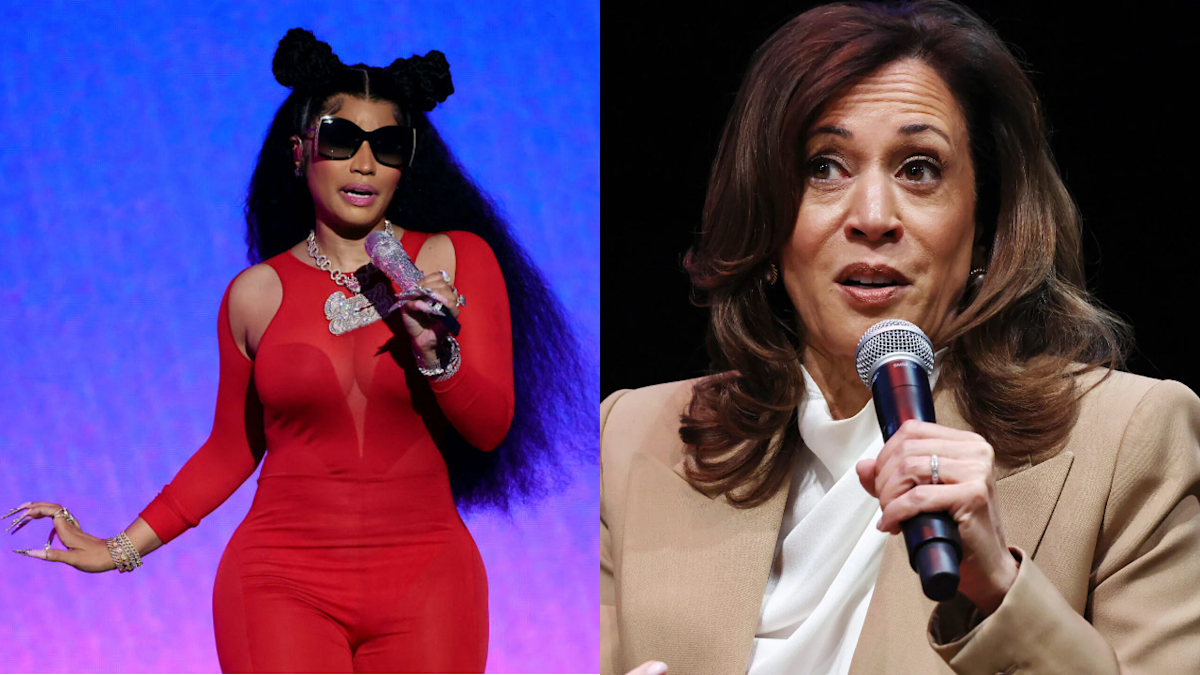
Kamala Harris has found herself embroiled in a digital controversy at the intersection of politics, celebrity influence, and fan loyalty after recent remarks that indirectly referenced rapper Nicki Minaj sparked backlash from the artist’s dedicated fanbase.
During her appearance on the “Now You Know with Knowa De Baraso” podcast, Harris addressed the broader issue of misinformation in American political discourse, making a nuanced point about how false information spreads in today’s media landscape.
“I think there are many people who are doing it intentionally, and I think there are others who are doing it unintentionally,” Harris explained, suggesting that misinformation requires both accountability mechanisms and better public education. She emphasized the importance of establishing a common factual foundation, noting that “two plus two will always equal four.”
When the conversation specifically turned to Minaj and her increasing engagement with controversial political narratives, Harris avoided direct criticism of the rapper. Instead, she offered a diplomatic perspective: “One of the things about mis- and disinformation is, we have to, when we disagree with someone, take that into account. We may just not be working with the same information.”
Despite Harris’s careful framing, Minaj’s supporters—known collectively as the Barbz—quickly interpreted these comments as dismissive and condescending. The rapid mobilization of Minaj’s fanbase across social media platforms demonstrated the extraordinary power that celebrity fan communities now wield in political conversations.
The controversy highlights Minaj’s evolution into a significant political voice. In recent years, the rapper has increasingly aligned herself with right-wing talking points and figures associated with the MAGA movement. Her platform, with millions of devoted followers across social media, has amplified various disputed claims, including narratives about religious persecution and vaccine skepticism.
Media analysts note that this incident reflects a fundamental shift in American political communication. Celebrity influencers now command attention that rivals or exceeds traditional political platforms, creating new dynamics in public discourse. When artists with massive followings engage politically, they bring with them communities that often respond with intensity and loyalty that traditional political constituencies rarely match.
“What we’re seeing is the collapsing boundary between entertainment and politics,” explains Dr. Mariana Velasquez, a digital media researcher at Columbia University. “Fan communities like the Barbz operate with different rules of engagement than traditional political groups. They’re organized, passionate, and extremely protective of their idol’s reputation and perceived authenticity.”
Harris, meanwhile, appears focused on broader initiatives beyond this single controversy. During the same podcast appearance, she discussed her efforts to combat misinformation and promote fact-based conversations ahead of upcoming electoral cycles.
The former vice president also addressed speculation about her political future, dismissing rumors about a potential California gubernatorial run by stating simply, “It’s not my calling.” Regarding a possible 2028 presidential campaign, Harris remained noncommittal, emphasizing that her current priority is supporting Democratic candidates in the 2026 midterm elections.
Political strategists suggest this incident underscores the complex new landscape facing mainstream politicians. When engaging with issues of misinformation or media literacy, they must now navigate the passionate defenders of celebrities who may feel personally attacked when their favorite artists face scrutiny.
“Politicians are still adapting to a world where stan culture and political discourse are increasingly overlapping,” notes Democratic strategist Marcus Thompson. “These aren’t just aesthetic differences—they represent fundamentally different approaches to determining what’s true and who deserves trust in public conversations.”
As of publication, Minaj has not directly responded to Harris’s comments, though the continued activity of her fanbase suggests the conversation remains very much alive in digital spaces where politics, entertainment, and identity increasingly converge.
Fact Checker
Verify the accuracy of this article using The Disinformation Commission analysis and real-time sources.

11 Comments
The Nicki Minaj situation highlights the need for better media literacy education. Fans should be empowered to think critically about the information they consume online.
While the Nicki Minaj backlash is concerning, I appreciate VP Harris’ measured and thoughtful response. Addressing misinformation is critical for a healthy democracy.
This is a complex issue without easy solutions. I’m glad to see VP Harris acknowledging the dual challenges of intentional and unintentional misinformation.
Exactly. It’s an issue that requires a multifaceted approach involving accountability, education, and a shared commitment to facts.
Nicki Minaj’s fans, known as the ‘Barbz’, seem to have strongly reacted to VP Harris’ comments. Celebrity influence on political discourse is a growing challenge.
Indeed, the backlash highlights how passionate fan bases can amplify misinformation and make it harder to have a fact-based dialogue.
The intersection of politics, pop culture, and online influence is a delicate balance. It’s good to see leaders addressing misinformation concerns, even if it sparks controversy.
Agreed. Navigating this space requires care and nuance to avoid further polarization while still upholding the truth.
This is an interesting intersection of politics, celebrity influence, and the spread of misinformation online. It’s a complex issue that requires nuanced solutions, as VP Harris pointed out.
I agree, it’s a fine line between accountability and education when it comes to tackling misinformation. Curious to see how this plays out.
I appreciate VP Harris’ emphasis on the importance of establishing a common factual foundation. That’s crucial for addressing the spread of misinformation.