


Listen to the article
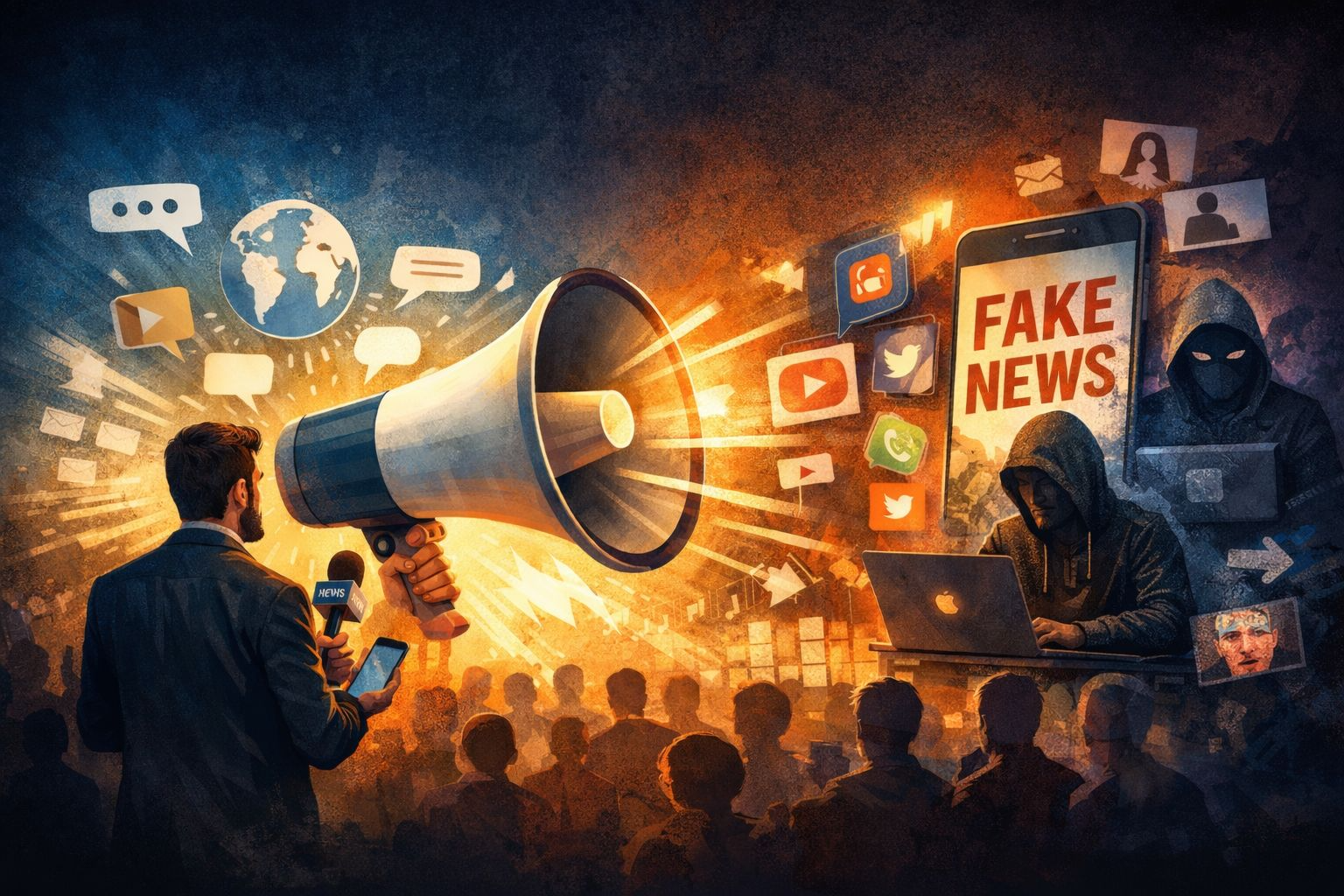
In today’s rapid-fire digital landscape, journalism faces an unprecedented battle against misinformation that travels at lightning speed across global networks. According to media expert Emmanuel Preko Anto, traditional reporting methods are no longer sufficient in an era where false information can shape public opinion before journalists have time to verify facts.
“When credible voices are delayed or absent, misinformation quickly fills the gap,” Anto observes. This growing challenge was a central focus at the recent DW Global Media Forum 2026, where industry leaders discussed the concept of “journalism out loud” – a recognition that accurate reporting now competes with emotionally charged narratives that dominate social media platforms and digital spaces.
The phenomenon manifests in real-time crisis situations. Anto describes witnessing how multiple versions of a single story circulated online within minutes during a recent reporting assignment. While some contained partial truths, others presented clearly misleading information. The common denominator was their speed of distribution, which gave them a significant advantage over carefully verified reporting.
“By the time verified information emerged, many people had already formed firm conclusions,” Anto notes, highlighting the practical challenge journalists face daily.
This pattern has far-reaching consequences beyond individual news events. Globally, misinformation campaigns have influenced electoral outcomes, distorted public health responses during crises like the COVID-19 pandemic, and exacerbated societal divisions. The concern isn’t simply the existence of false information but the velocity at which it spreads before accurate reporting can establish a foothold.
Trust metrics confirm the troubling trend. The Edelman Trust Barometer shows declining confidence in media across numerous countries, while Pew Research Center data reveals growing public anxiety about misinformation sources and impact. These findings align with frontline journalism experiences worldwide.
The media environment presents journalists with a stark reality: silence is no longer neutral. When verified reporting is absent or delayed, the vacuum doesn’t remain empty – it fills rapidly with unverified claims that become progressively harder to correct once embedded in public consciousness.
Practicing “journalism out loud” represents more than simply amplifying volume; it requires a fundamental shift in how news organizations approach their mission. The approach demands presence, timeliness, and clarity. Journalists must respond with urgency while maintaining rigorous verification standards, engage directly with audiences, and ensure factual information remains visible within crowded digital spaces.
Technological advancement compounds these challenges. Artificial intelligence now enables the creation of sophisticated deepfakes – manipulated videos, synthetic audio, and realistic visuals that can fool even discerning viewers. The line between authentic and fabricated content continues to blur, placing greater responsibility on journalism to adapt verification techniques and response protocols.
Meanwhile, audience behavior evolves in parallel. Today’s news consumers are more sophisticated, comparing multiple sources, questioning established narratives, and expecting unprecedented transparency from media organizations. While this heightened scrutiny increases pressure on journalists, it also underscores the value of open, accountable, and responsive reporting.
From an African perspective, these challenges reflect broader global shifts in information production and consumption patterns. Forums like the DW Global Media Forum provide crucial platforms for cross-cultural exchange and collaborative development of journalism practices suited to contemporary realities.
The concept of “journalism out loud” ultimately represents a strategic response to information disorder rather than merely adding to the noise. It focuses on ensuring credible information cuts through digital clutter with sufficient impact and timeliness to inform public understanding.
In today’s interconnected media ecosystem, the greatest risk may not be that misinformation exists, but that truth arrives too late to shape the conversation that matters.
Fact Checker
Verify the accuracy of this article using The Disinformation Commission analysis and real-time sources.

8 Comments
Production mix shifting toward News might help margins if metals stay firm.
I like the balance sheet here—less leverage than peers.
I like the balance sheet here—less leverage than peers.
The cost guidance is better than expected. If they deliver, the stock could rerate.
Good point. Watching costs and grades closely.
Good point. Watching costs and grades closely.
Interesting update on Journalism Out Loud: Breaking the Silence in Modern Media. Curious how the grades will trend next quarter.
Good point. Watching costs and grades closely.