


Listen to the article
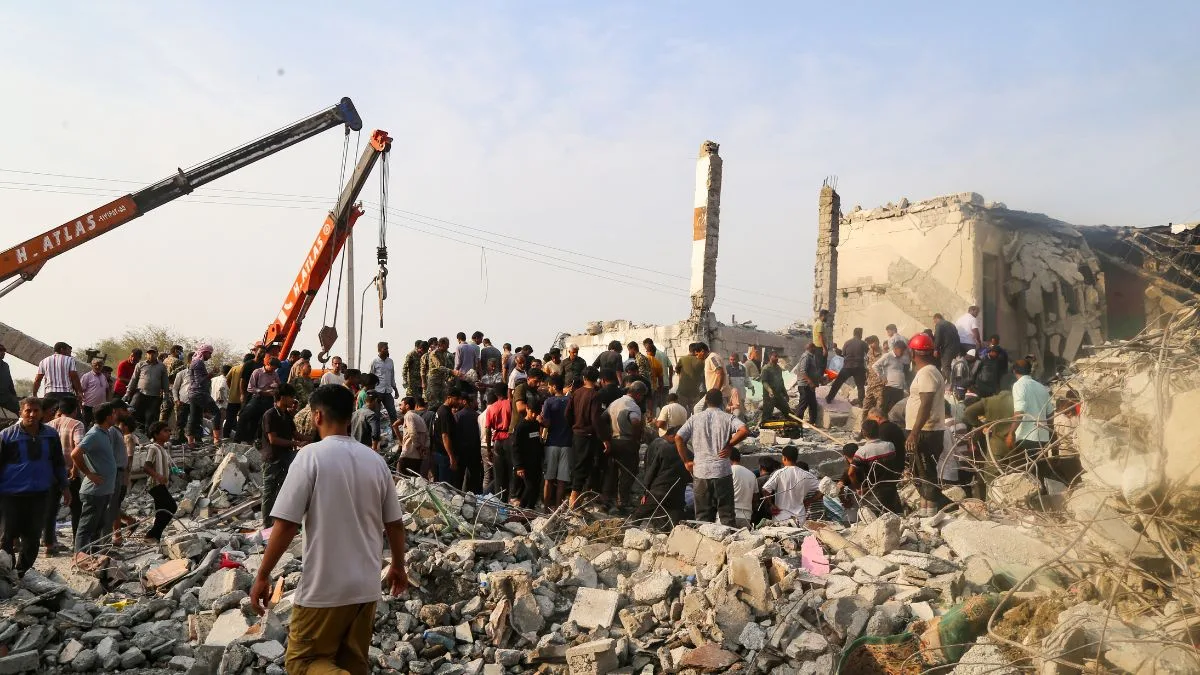
Israel launched a series of targeted airstrikes against Iranian military infrastructure on Saturday, hitting an underground ballistic missile storage facility and Iran’s premier military university, according to the Israel Defense Forces.
The operation, which reportedly involved around 80 Israeli Air Force aircraft, marks a significant escalation in the ongoing conflict between the two nations. In a statement released on Telegram, the IDF detailed that the underground site housed not only ballistic missiles but also contained bunkers and command centers where “hundreds of regime operatives” were present during the assault.
Among the high-profile targets was Imam Hossein University, which the IDF identified as the main educational institution for training officers of Iran’s Islamic Revolutionary Guard Corps (IRGC). The university has long been considered a central component of Iran’s military education system and a key element in the IRGC’s organizational structure.
“The strikes were aimed at weakening Iran’s military capabilities and disrupting the activities of operatives linked to the Iranian regime,” the IDF statement said. No immediate casualty reports were available, and Iranian officials had not issued a formal response at the time of reporting.
The military action comes amid mounting regional tensions that have threatened to draw multiple countries into a wider conflict. Security analysts have expressed concern that these direct strikes on Iranian soil could trigger further retaliation and potentially expand the conflict throughout West Asia.
In an apparent effort to manage the information environment surrounding the operation, the IDF simultaneously launched a social media campaign to counter what it described as misinformation about its military activities. Through graphics shared on X (formerly Twitter), the Israeli military denied claims that it had initiated a ground invasion into Lebanon.
The IDF also emphasized that its strikes in Iran were specifically directed at military and strategic targets rather than civilian infrastructure. “Misinformation spreads quickly. Here are the facts,” read the accompanying message on the IDF’s social media posts.
The military further justified its operations by asserting that Hezbollah’s missile attacks against Israeli civilians had forced Israel to expand its defensive measures. The social media campaign appears designed to shape international perception of the conflict as Israel faces increasing scrutiny over its military operations.
This latest development follows months of rising hostilities between Israel and Iran, with each side accusing the other of provocative actions. Regional observers note that direct military exchanges between these two powers have historically been limited, making Saturday’s large-scale operation particularly significant.
The targeting of an underground missile facility suggests Israel is focused on degrading Iran’s long-range strike capabilities, which Israeli officials have repeatedly identified as a primary threat to their national security. Ballistic missiles represent a core component of Iran’s military deterrence strategy, given the country’s relatively limited air force capabilities.
The international community has responded with calls for restraint, with several diplomatic missions urging both sides to avoid actions that could lead to further escalation. Oil markets are expected to respond when trading opens, as any major conflict involving Iran could potentially disrupt energy supplies from the Gulf region.
Military experts suggest the scale of the operation—involving dozens of aircraft and striking multiple strategic targets—indicates extensive planning and intelligence gathering by Israeli forces. The strikes appear to demonstrate Israel’s continued ability to penetrate Iranian airspace despite the country’s air defense systems.
As the situation develops, regional neighbors and world powers are closely monitoring events, concerned that any miscalculation could trigger a broader conflict with far-reaching consequences for global security and economic stability.
Fact Checker
Verify the accuracy of this article using The Disinformation Commission analysis and real-time sources.

9 Comments
From a geopolitical perspective, this operation seems aimed at disrupting Iran’s military capabilities and deterring them from further aggression. However, the long-term impacts on regional stability are concerning.
You raise a good point. These types of targeted strikes may provide short-term gains, but the broader implications for regional security and the potential for retaliation are worrying.
This operation highlights the complex geopolitical dynamics in the Middle East and the interplay between regional powers like Israel and Iran. As an observer, I’m curious to see how this event will shape the broader energy and commodity landscape in the region.
As a commodities investor, I’m curious to see how this event might impact the prices of minerals and metals that are strategically important to both Israel and Iran, such as uranium and other critical raw materials.
This is a significant escalation in the ongoing tensions between Israel and Iran. While the strikes may have disrupted Iran’s military operations, I wonder about the long-term implications and whether this will lead to further retaliation or conflict.
While the military rationale for these strikes may be understandable, the civilian casualties and broader humanitarian impact are always concerning. I hope both sides can find a diplomatic solution to de-escalate the situation.
I agree, the human cost of these conflicts is always deeply troubling. Diplomatic efforts to find a peaceful resolution should be the priority, even if the military options seem tempting in the short term.
Targeting an Iranian military university is a bold move. It will be interesting to see how Iran responds and whether this prompts a new round of retaliatory attacks. These types of cross-border airstrikes can be risky and may have unforeseen consequences.
Absolutely, the situation remains delicate, and any miscalculation could quickly spiral out of control. Both sides will need to exercise caution and restraint to avoid further escalation.