


Listen to the article
The false narrative surrounding the US sinking of Iranian ship IRIS Dena highlights concerns about misinformation, according to a new analysis released Thursday. The incident, which occurred after the vessel participated in events hosted by the Indian Navy, has sparked widespread debate about military operations and regional responsibility.
T.S.V. Ramana, a former Indian Navy officer, examined the social media fallout in an article for the Politeia Research Foundation. He identified a troubling pattern in online discourse that attempted to implicate India in the incident.
“Excessive attention to the fact that IRIS Dena was returning from IFR at Visakhapatnam and use of phrases like ‘it was a guest of India’, ‘it happened in India’s backyard’, ‘the US did not take the bad optics into consideration’, ‘the US should have kept India in the loop’ […] seem to have attempted to somehow make India responsible in some way for this incident, while conveniently forgetting that the US and Iran are at war,” Ramana wrote.
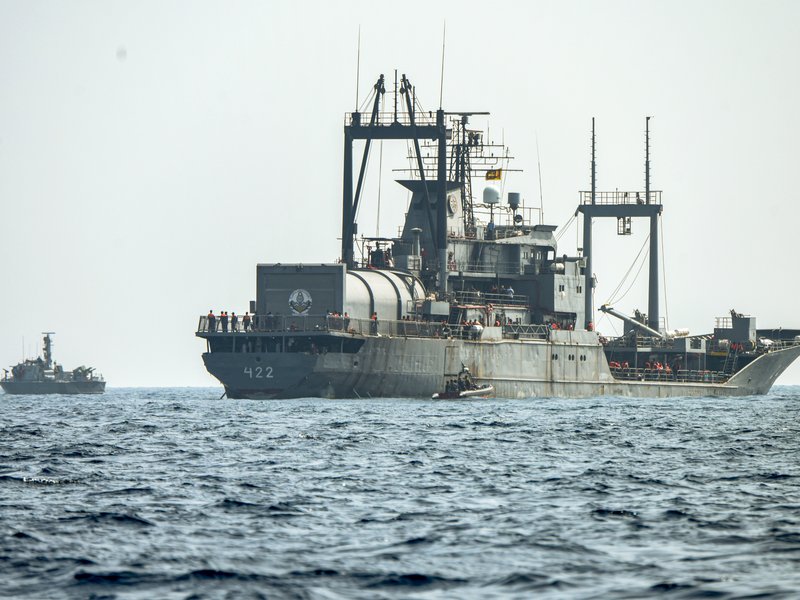
The Iranian vessel had participated in the International Fleet Review (IFR) and Milan 2026 naval exercises off Visakhapatnam before the incident occurred. On March 4, a U.S. Navy submarine attacked the Dena with a Mk 48 torpedo. The U.S. military subsequently released periscope photographs and videos of the strike, which intensified discussions around legal, moral, and diplomatic considerations.
Maritime security experts note that the incident underscores the volatile nature of U.S.-Iran relations, which have deteriorated significantly in recent years. The attack occurred within the broader context of ongoing tensions between the two nations, with naval confrontations becoming increasingly common in strategic waterways.
Ramana emphasized that the incident offers critical lessons for naval operations and intelligence gathering. “The most significant lesson from this incident is that assessment of the strategic situation in the vicinity of one’s own country, and also in the vicinity of the areas where one’s warships would operate in the near future, has to be a 24x7x365-day affair,” he stated.
He dismissed suggestions that the Indian Navy should have been aware of the U.S. submarine’s presence, pointing out the immense challenges of monitoring the vast Indian Ocean Region (IOR). “It is clear that the people making such statements have no idea of the sheer size and complexity of the maritime domain, where nothing is ever static,” Ramana noted.
The report also challenged misconceptions about naval vessels operating in ceremonial capacities. “For a warship, there is no such thing as a ‘ceremonial role’; even when on diplomatic or ceremonial missions, it is always prepared for war,” Ramana explained, highlighting the dual nature of naval assets regardless of their immediate mission.
Maritime security analysts point out that this incident reflects the increasingly complex nature of naval operations in contested waters, where multiple powers have overlapping interests. The Indian Ocean Region has seen heightened military activity in recent years as China expands its presence and traditional naval powers like the U.S. and India respond to maintain strategic balance.
The case also demonstrates the power of social media to shape narratives around international incidents, often before all facts are established. Defense experts recommend that nations develop more robust capabilities to monitor and counter misleading information that could impact diplomatic relations or undermine security objectives.
As tensions continue between the U.S. and Iran, naval forces operating in the region will likely maintain heightened alert status, balancing ceremonial and diplomatic engagements with operational readiness for potential confrontations.
Fact Checker
Verify the accuracy of this article using The Disinformation Commission analysis and real-time sources.

8 Comments
It’s worrying to see the Iranian ship sinking become a vector for online disinformation. While the US-Iran tensions are the root cause, attempts to scapegoat India are concerning. We need more rigorous fact-checking and less sensationalism in coverage of these events.
The report’s findings are a sobering reminder of how quickly misinformation can take hold, especially around sensitive military incidents. Attempts to implicate India are concerning and distract from the complex geopolitical realities. Maintaining impartiality and scrutinizing sources is crucial in these situations.
This incident underscores the challenges of navigating military conflicts in the digital age. While the US-Iran tensions are the primary driver, the social media fallout highlights the need for more discerning consumption of information online. Fact-based analysis should take priority over inflammatory narratives.
Interesting report on the spread of online misinformation around the sinking of the Iranian ship. It’s concerning to see attempts to implicate India, when the US-Iran tensions are clearly the underlying cause. We need to be vigilant against the distortion of facts on social media.
This incident highlights the need for more transparency and responsible reporting around military operations. The public deserves accurate information, not conspiracy theories that obscure the real issues at play.
Agreed. Misinformation can have real consequences, especially when it involves geopolitical conflicts. Careful analysis of the facts, rather than speculation, is crucial in these situations.
The report raises important points about the spread of misinformation around this incident. Attempts to unfairly implicate India are troubling and distract from the real geopolitical dynamics at play. Responsible reporting and public discourse are essential in these sensitive situations.
This incident demonstrates the perils of online discourse around military operations. While the US-Iran conflict is the root cause, the attempt to scapegoat India is worrying. We need more rigorous reporting and less sensationalism to ensure the public has access to accurate information.