


Listen to the article
U.S. and Iranian Delegations Begin Crucial Peace Talks in Islamabad
Delegations from the United States and Iran arrived in Islamabad, Pakistan on Saturday morning for their first face-to-face meeting aimed at negotiating an end to the ongoing conflict. The high-stakes talks, which began under a conditional two-week ceasefire agreement reached earlier this week, have already stretched into Sunday with mixed signals about progress.
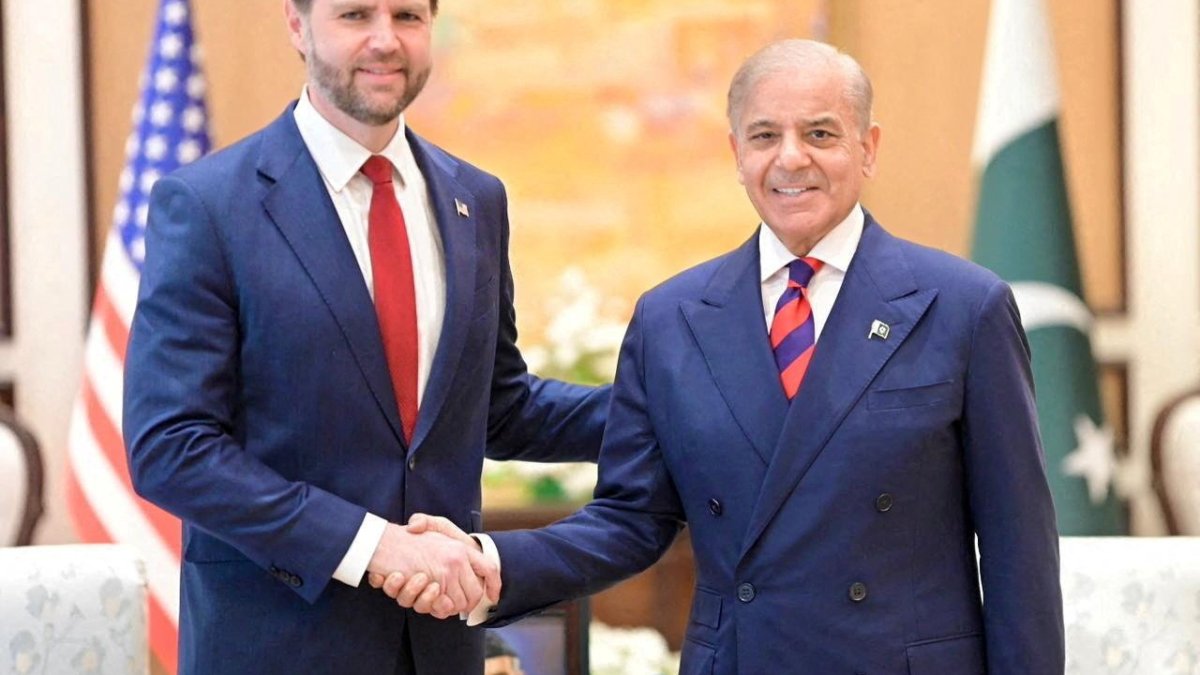
The White House confirmed that Vice President JD Vance, special envoy Steve Witkoff, and former presidential adviser Jared Kushner represented the American side, meeting directly with Iranian parliamentary speaker Mohammad Baqer Qalibaf and Foreign Minister Abbas Araqchi.
After more than six hours of initial discussions, Pakistani officials described the atmosphere as “largely positive,” though sources indicated that the status of the Strait of Hormuz remains a significant point of contention. The negotiations are expected to continue into Sunday and potentially beyond as both sides work against the two-week deadline established in Tuesday’s conditional ceasefire agreement.
While the precise discussion points have not been made public, analysts believe the talks are focused on three critical issues: reopening the strategically vital Strait of Hormuz, addressing Iran’s nuclear program, and resolving the situation in Lebanon, where Israeli military operations continue unabated despite the broader ceasefire.
The negotiations have been complicated by contradictory statements and actions from both sides. On Saturday, tensions flared over U.S. naval movements in the Strait of Hormuz, a critical maritime chokepoint through which approximately 20% of global oil shipments pass.
President Trump claimed on his Truth Social platform that the U.S. was “clearing the Strait as a favor to Countries all over the world,” while criticizing allies for not taking more responsibility. “Incredibly, they don’t have the courage or will to do this work themselves,” he wrote.
Iranian state television reported that Iran had warned Pakistan it would target a U.S. Navy vessel in the Strait within 30 minutes if movements continued, forcing it to turn back. U.S. officials denied receiving such a warning and maintained that their warships had successfully transited the waterway before returning.
The conflicting narratives highlight the fragility of the ceasefire agreement and the deep mistrust between the two nations, even as their representatives engage in direct talks.
Lebanon’s status within the ceasefire framework has emerged as another contentious issue. The Lebanese health ministry reported Saturday that more than 2,000 people have been killed since the conflict began, with an additional 6,400 wounded and 1.2 million displaced.
Pakistan, serving as the key mediator, has insisted that the ceasefire agreement covers Lebanon. However, both Israel and the United States have contradicted this claim, maintaining that Lebanon is not included in the deal. Israeli strikes have continued throughout the week, with over 100 casualties reported in just the past three days.
An Iranian minister told the BBC that these ongoing strikes represent a “grave violation” of the ceasefire agreement. Separate diplomatic talks between Israel and Lebanon are scheduled for next week, though Lebanese Prime Minister Nawaf Salam has postponed a planned visit to the United States, citing domestic concerns.
The release of frozen Iranian assets has emerged as another potential roadblock in the negotiations. Before the talks began, Iranian parliamentary speaker Ghalibaf insisted that his delegation would not start negotiations until the U.S. released all Iranian funds and frozen assets currently held by Americans.
At issue is $6 billion in Iranian funds held in Qatar, which were originally frozen in 2018. These funds were slated for release in 2023 as part of a prisoner exchange but were refrozen by the Biden administration following Hamas’ October 7, 2023 attacks on Israel.
Conflicting reports about whether these assets have been unfrozen as part of the current negotiations have further complicated the diplomatic landscape. U.S. officials quickly denied Iranian claims that the assets had been released, a move that would likely face significant domestic political opposition in the United States.
While negotiations continue in Islamabad, President Trump has repeatedly claimed that the U.S. has “destroyed” Iran’s navy, air force, and leadership. “Regardless what happens, we win. We’ve totally defeated that country,” he stated, projecting confidence about the outcome of the talks despite their uncertain trajectory.
As the world watches these historic negotiations unfold, the stakes could not be higher for regional stability and global energy markets, with the outcome potentially reshaping power dynamics throughout the Middle East.
Fact Checker
Verify the accuracy of this article using The Disinformation Commission analysis and real-time sources.

13 Comments
The conditional ceasefire offers a glimmer of hope, but much will depend on the negotiators’ ability to bridge the gaps on thorny issues like the Strait of Hormuz. Cautious optimism is warranted.
With the US midterm elections looming, there may be political pressures on both sides to make at least some symbolic progress, even if a comprehensive deal remains elusive. We’ll have to see how it plays out.
I’m curious to see if this round of talks can lay the groundwork for a more durable diplomatic solution, or if it will just be another temporary pause in the tensions. The regional dynamics are so complex.
Exactly, the regional geopolitics make this a hugely challenging negotiation. But the potential payoffs of even a partial agreement are significant.
The involvement of experienced figures like Vance, Witkoff and Kushner suggests the US is taking these talks seriously. Iran’s delegation also seems high-profile. Let’s hope cooler heads can prevail.
This situation is so tense and multifaceted, with concerns over nuclear proliferation, regional stability, and economic factors like oil/gas flows. I’m curious to see what kind of compromise they can reach.
Yes, the pressure is on to find a workable solution. Misinformation and sabre-rattling from certain quarters aren’t helping matters either.
Ultimately, I hope the negotiators can find a way to de-escalate the situation and create the space for more substantive dialogue. The risks of continued conflict are simply too high for the region and the world.
Well said. Even modest steps toward dialogue and diplomacy would be a welcome development after so much tension and brinksmanship.
While I’m skeptical about the prospects for a comprehensive deal, even modest progress on de-escalating tensions and establishing some guardrails would be welcome. The risk of miscalculation is so high.
Agreed, the stakes are extremely high. Even a partial agreement could help build trust and momentum for further negotiations down the line.
Interesting to see these high-level talks between the US and Iran. Negotiations on such complex geopolitical issues are always delicate, but hopefully they can make some progress within the ceasefire timeline.
Agreed, the Strait of Hormuz is a major sticking point that will require careful diplomacy to resolve. Both sides have a lot at stake here.