


Listen to the article
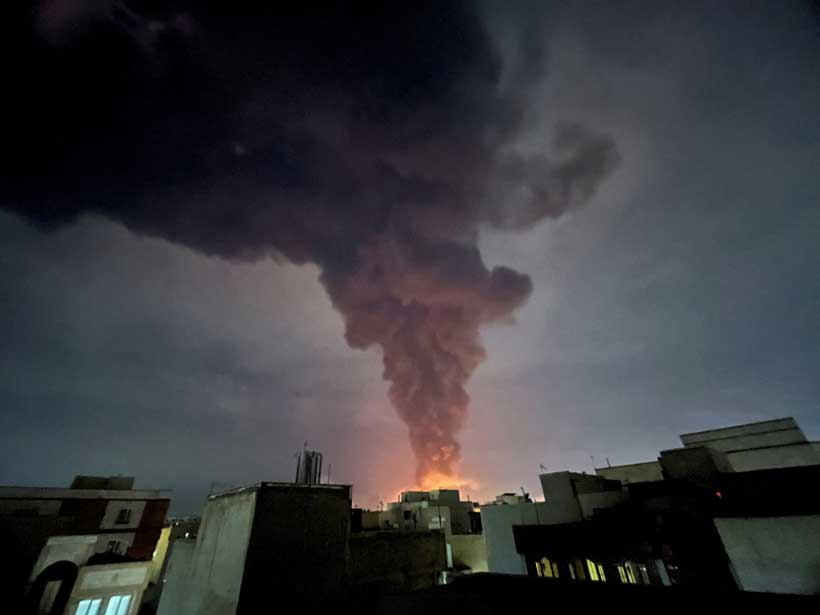
Iran escalated its conflict with Israel on Tuesday, launching multiple waves of missiles at major cities including Tel Aviv. Air raid sirens echoed across Israel as projectiles struck residential areas, though remarkably, no fatalities were reported despite extensive property damage.
The missile barrage comes amid a confusing diplomatic backdrop. Former U.S. President Donald Trump unexpectedly claimed to have held “productive” talks with Iranian officials, suggesting he had personally intervened to delay a planned military strike against Iran’s energy infrastructure. Tehran immediately contradicted this assertion, with high-ranking officials dismissing Trump’s statements as fabrications designed to manipulate global markets.
Mohammad Baqer Qalibaf, Iran’s parliamentary speaker, categorically denied any negotiations with American representatives. “These are deliberate falsehoods meant to influence oil prices and create financial uncertainty,” Qalibaf said in a statement carried by Iranian state media. Meanwhile, the Revolutionary Guards Corps described American messaging as “psychological operations” aimed at undermining Iranian resolve.
The conflicting narratives highlight how information itself has become weaponized in the conflict, with both sides attempting to shape international perceptions and gain leverage through strategic communication.
At the heart of global concern is the Strait of Hormuz, a critical maritime chokepoint through which approximately 20 percent of the world’s oil supply travels daily. Iranian threats to disrupt shipping through this vital corridor have sent shockwaves through international energy markets.
Oil prices have demonstrated extreme volatility in response to the crisis, initially dropping on Trump’s suggestion of diplomatic progress before rapidly rebounding as hostilities resumed. The uncertainty surrounding energy security has emerged as a primary channel through which the Middle East conflict is affecting the global economy.
“Even the perception of Hormuz disruption can move markets dramatically,” explained energy analyst Sarah Emerson of ESAI Energy. “Actual closure would represent an unprecedented shock to global energy supplies.”
Despite public denials from both sides, diplomatic efforts appear to be continuing below the surface. Sources familiar with the situation indicate that regional powers including Pakistan, Egypt, and Gulf states are facilitating indirect communication between Washington and Tehran. Reports suggest Islamabad may host discreet talks involving U.S. intermediaries, potentially including real estate developer Steve Witkoff and former presidential advisor Jared Kushner.
This parallel track of public confrontation and private engagement follows established patterns in high-stakes international conflicts, where formal negotiations are typically preceded by unofficial communications through trusted intermediaries.
The situation on the ground remains precarious. Israeli Prime Minister Benjamin Netanyahu has indicated that military operations will continue while maintaining openness to diplomatic solutions that protect Israel’s security interests. Iran, for its part, has threatened to expand attacks beyond Israel to infrastructure linked to U.S. allies across the region, raising the specter of a broader Middle East conflict.
“We’re watching a dangerous escalation spiral where each side feels compelled to demonstrate resolve,” said Sanam Vakil, director of the Middle East program at Chatham House. “The risk of miscalculation grows with each exchange.”
The immediate consequence has been heightened volatility across both security and economic domains. Financial markets are responding in real-time to perceived shifts between escalation and de-escalation, with energy markets particularly vulnerable. Analysts warn that prolonged disruption in the Strait of Hormuz could trigger sustained price spikes, exacerbate inflation, and potentially slow global economic growth.
The conflict has now entered a more complex and uncertain phase where military actions are intertwined with strategic ambiguity. For the United States, suggesting openness to talks while maintaining pressure may be intended to create diplomatic leverage. For Iran, publicly rejecting negotiations while preserving backdoor channels allows the regime to maintain domestic credibility while retaining strategic flexibility.
This calculated ambiguity, however, carries significant risks. Misinterpreted signals or misaligned expectations could accelerate hostilities rather than contain them. The involvement of multiple intermediaries further complicates efforts to establish coherent communication channels.
The ultimate trajectory of the conflict hinges on whether unofficial diplomatic efforts can evolve into formal negotiations before military dynamics harden positions beyond reconciliation. For now, the situation remains highly unstable, with military and diplomatic tracks advancing in parallel but without clear convergence.
Fact Checker
Verify the accuracy of this article using The Disinformation Commission analysis and real-time sources.

8 Comments
The conflicting narratives coming from Iran and the US highlight the complexities involved. It’s important to get an accurate, unbiased understanding of the facts before drawing conclusions.
Agreed. Cutting through the spin and misinformation will be key to finding a path forward. Transparent and honest communication between all parties is needed.
It’s a complex situation with no easy solutions. I hope the parties involved can find a way to de-escalate tensions and work towards a peaceful resolution, for the sake of the people in the region and the global economy.
Tensions in the Middle East always have implications for global energy markets and commodity prices. Investors will be watching closely to see how this situation develops and impacts the wider economy.
As an investor in mining and energy equities, I’m concerned about how these geopolitical tensions could disrupt supply chains and project timelines. Stable global cooperation is crucial for the sector.
Absolutely. Prolonged instability in the region would likely create volatility and uncertainty for commodity producers and investors alike. Careful risk management will be essential.
Concerning developments in the Middle East. The collapse of peace talks and escalating missile strikes only heighten regional tensions. One hopes all sides can return to the negotiating table to find a diplomatic solution.
Yes, de-escalating the conflict through peaceful dialogue is crucial. Further military confrontation risks spiraling out of control with severe consequences for the entire region.