


Listen to the article
In the midst of the Iran conflict, a surge of digital misinformation has inundated social media platforms and online spaces, creating significant challenges for those seeking reliable information about the ongoing war. Since hostilities erupted last weekend, fabricated videos, manipulated images, and misleading content have proliferated across the internet at an alarming rate.
Intelligence experts have identified a coordinated influence operation known as “Operation Overload” – also referred to as Matryoshka or Storm-1679 – that appears to be aligned with Russian interests. This sophisticated campaign has been producing videos designed to impersonate legitimate intelligence agencies and established news outlets. The operation’s primary objective appears to be undermining people’s sense of security and safety, ultimately influencing their behavior and perceptions of the conflict.
This isn’t the first time this network has employed such tactics. Similar approaches have been documented during previous election cycles, suggesting an established pattern of information manipulation aimed at destabilizing public discourse during critical moments.
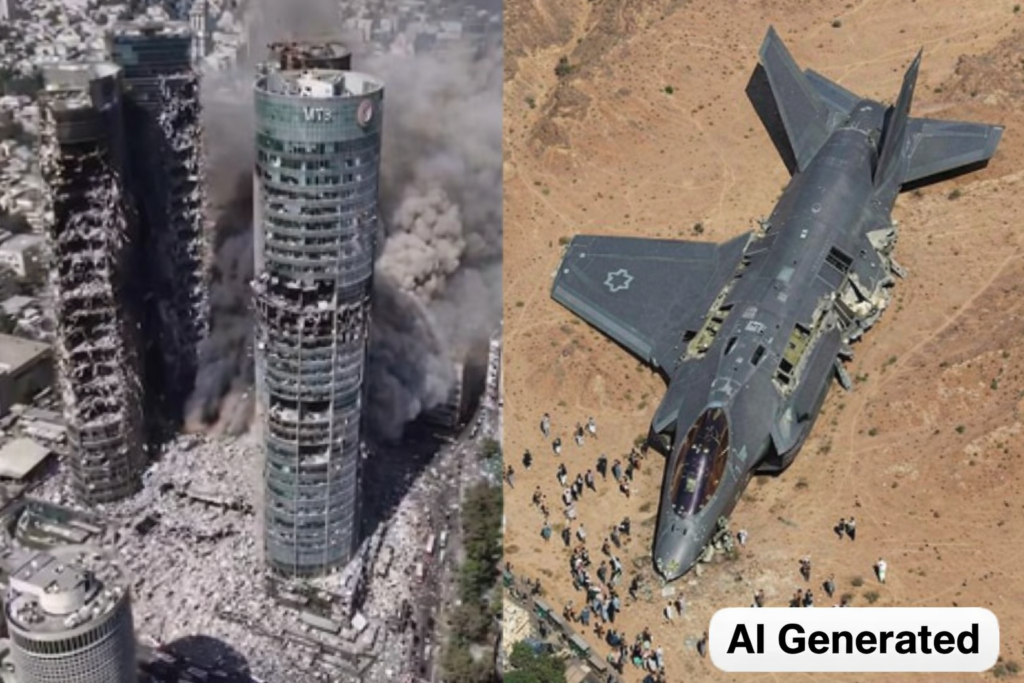
While state-linked propaganda accounts for a significant portion of the misleading content, they aren’t the only contributors to the problem. Opportunistic social media users seeking to capitalize on the conflict for clicks, views, and engagement have amplified the issue considerably. These individuals have repurposed old footage from entirely different conflicts, presented video game clips as authentic combat footage, and even deployed artificial intelligence to generate entirely fabricated content.
The emergence of sophisticated AI tools has fundamentally transformed the misinformation landscape in ways that were unimaginable during previous conflicts, even those that occurred just a few years ago. The technology now enables the rapid production of convincing fake images, videos, and audio that can be difficult for average users to identify as inauthentic.
Media analysts note that the combination of state-sponsored disinformation campaigns, opportunistic content creators, and advanced AI technology creates a particularly dangerous environment where factual information struggles to compete with sensationalized falsehoods. The situation is further complicated by targeted censorship in certain regions, creating information vacuums that can be readily filled with propaganda.
A significant portion of the misleading content focuses on key narrative battlegrounds: casualty figures, military successes, and the overall trajectory of the conflict. By controlling these narratives, interested parties can shape public opinion both domestically and internationally.
Fact-checking organizations have been working overtime to identify and debunk the most prominent examples of misinformation, but the sheer volume of content makes comprehensive verification nearly impossible. Social media platforms have implemented various measures to flag potentially misleading content, though critics argue these efforts remain insufficient against the tide of false information.
For consumers of news, the situation underscores the importance of information literacy and source verification. Experts recommend relying on established news organizations with strong track records for accuracy and on-the-ground reporting capabilities, while approaching unverified social media claims with heightened skepticism.
As the conflict continues, the battle for information integrity remains as critical as the physical confrontation itself. The current situation serves as a sobering reminder of how modern warfare extends beyond traditional battlefields into the realm of information and perception, where victory often belongs to those most skilled at manipulating the digital landscape.
Fact Checker
Verify the accuracy of this article using The Disinformation Commission analysis and real-time sources.

8 Comments
This is a serious issue that goes beyond just the current Iran conflict. The proliferation of digital misinformation is a global challenge that requires a multi-pronged response from policymakers, tech companies, and the public.
Agreed. Building media literacy and critical thinking skills in the public is key to combating the spread of misinformation.
It’s alarming to see how advanced these tactics have become. Impersonating intelligence agencies and news outlets is a sophisticated approach to sowing confusion. We must stay vigilant and rely on credible sources.
These coordinated influence operations are a growing threat to global security. Undermining public trust in information is a powerful tactic, and we must counter it with transparency and accountability.
Absolutely. Governments and tech platforms need to work together to identify and shut down these networks of disinformation.
This is deeply concerning. Spreading misinformation during a conflict is especially dangerous and can lead to escalation. We need to be vigilant in verifying information from reliable sources.
Agreed. Fact-checking and cross-referencing multiple credible outlets is crucial to cut through the noise of false narratives.
It’s concerning to see how these influence operations are evolving and becoming more sophisticated. Maintaining a healthy information ecosystem is vital for preserving democracy and global stability.